On Sunday afternoon, Jane was looking through some travel brochures and mentioned a day trip to Bosnia-Herzegovina. Since I felt that we had already covered Dubrovnik’s Old Town and didn’t really feel like spending a day at the beach (we live at one), I told her I was up for it. Besides, while I’m interested in visiting more Balkan countries, Bosnia-Herzegovina had never been particularly high on the list.
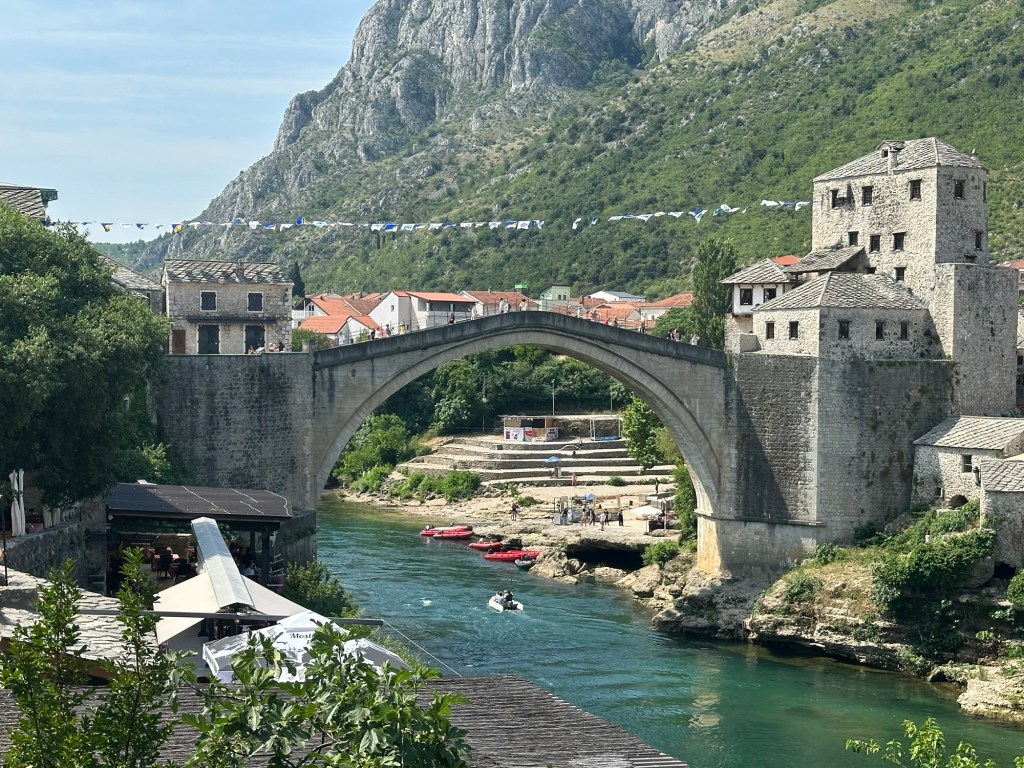
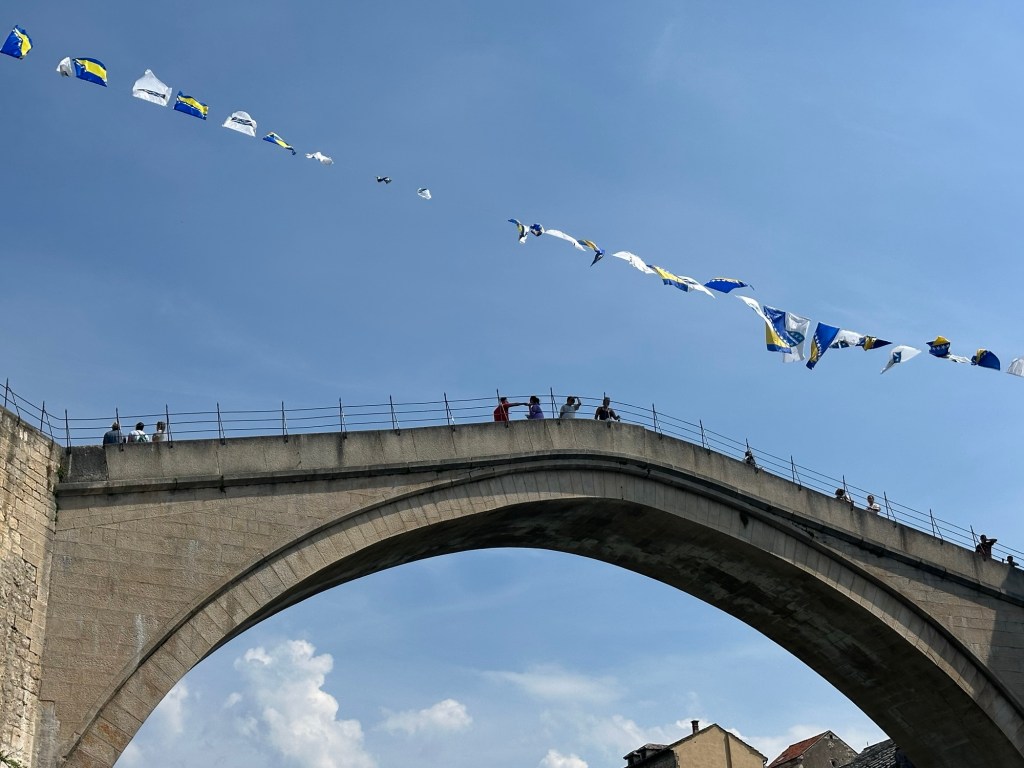
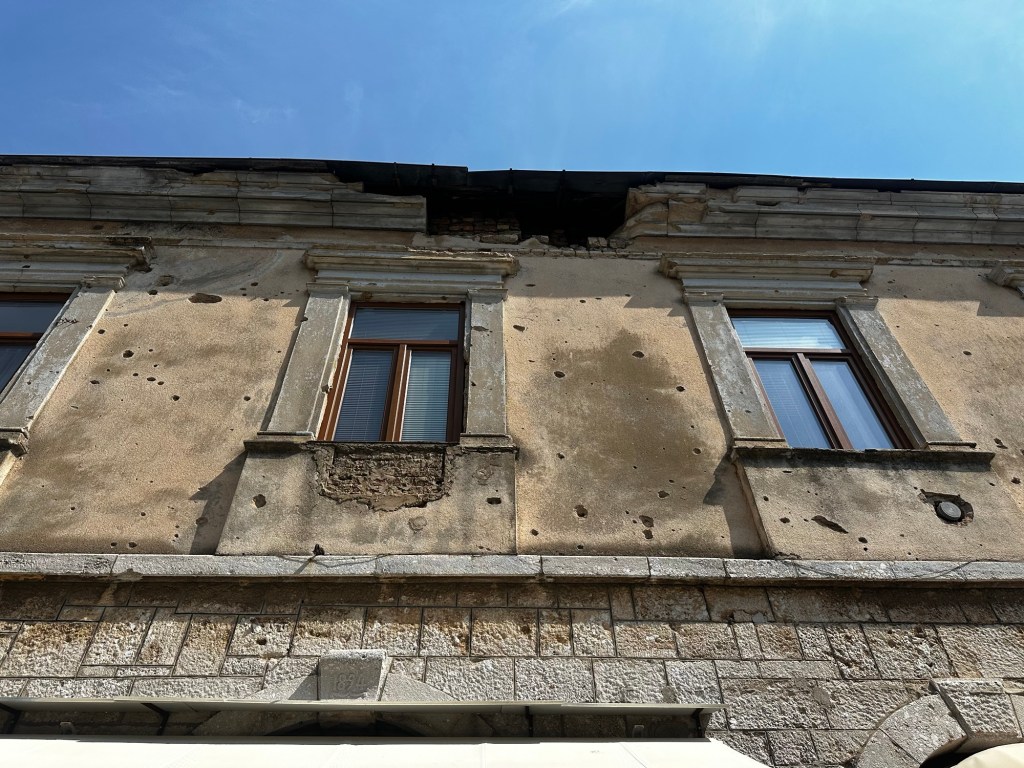
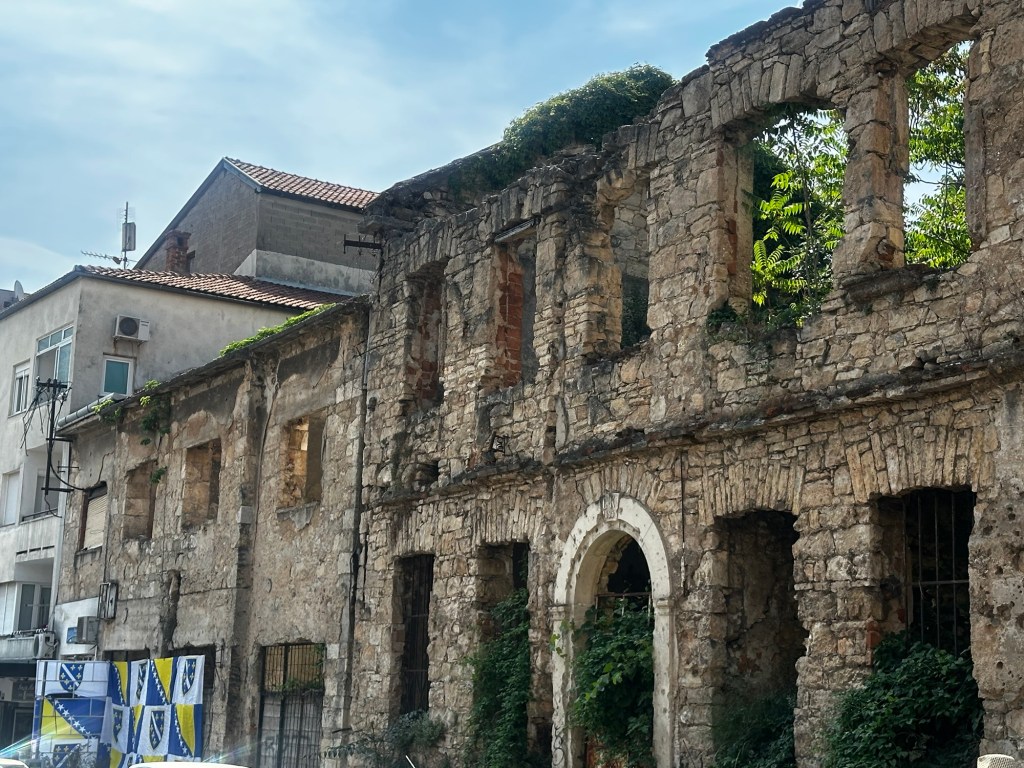
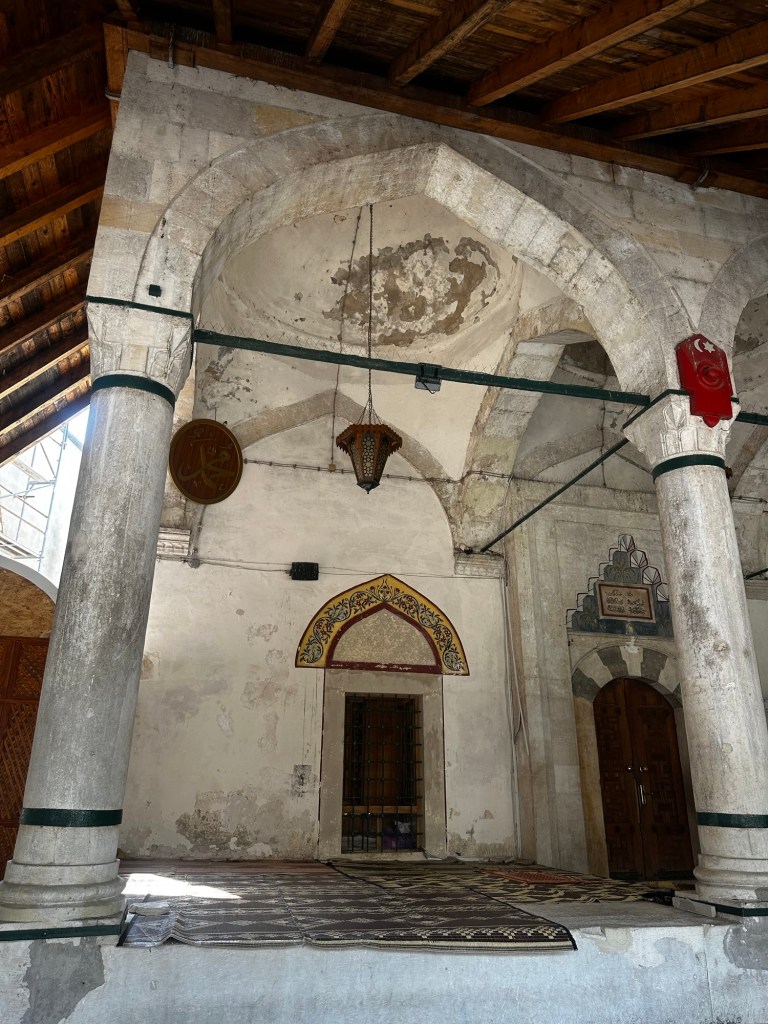
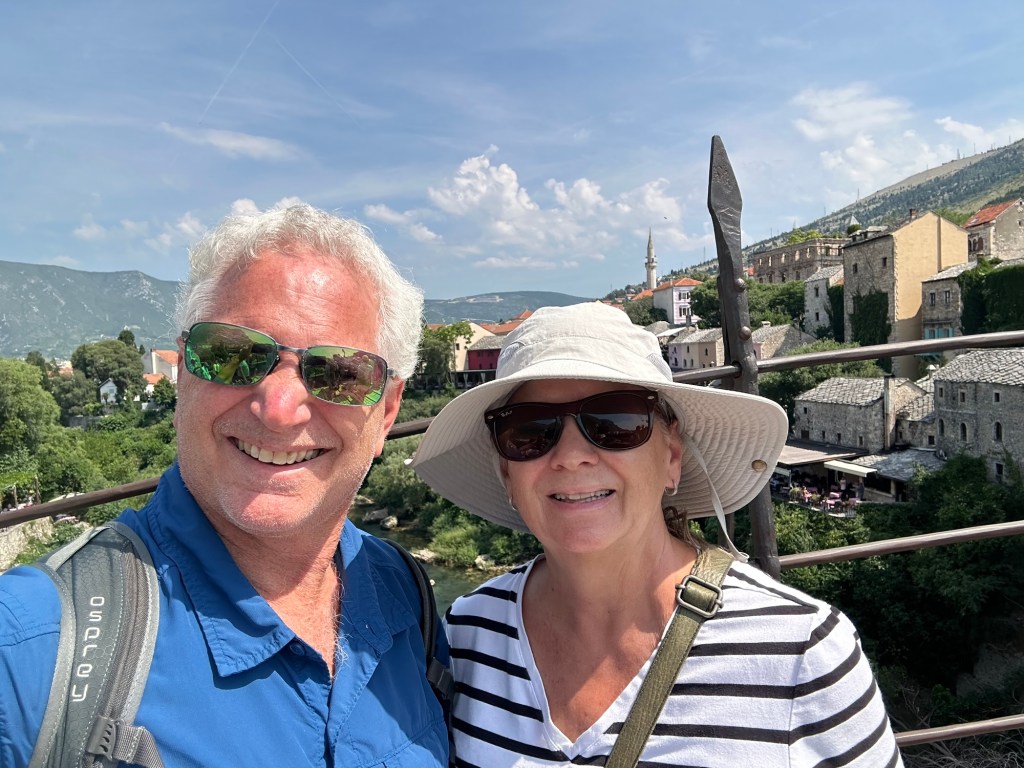
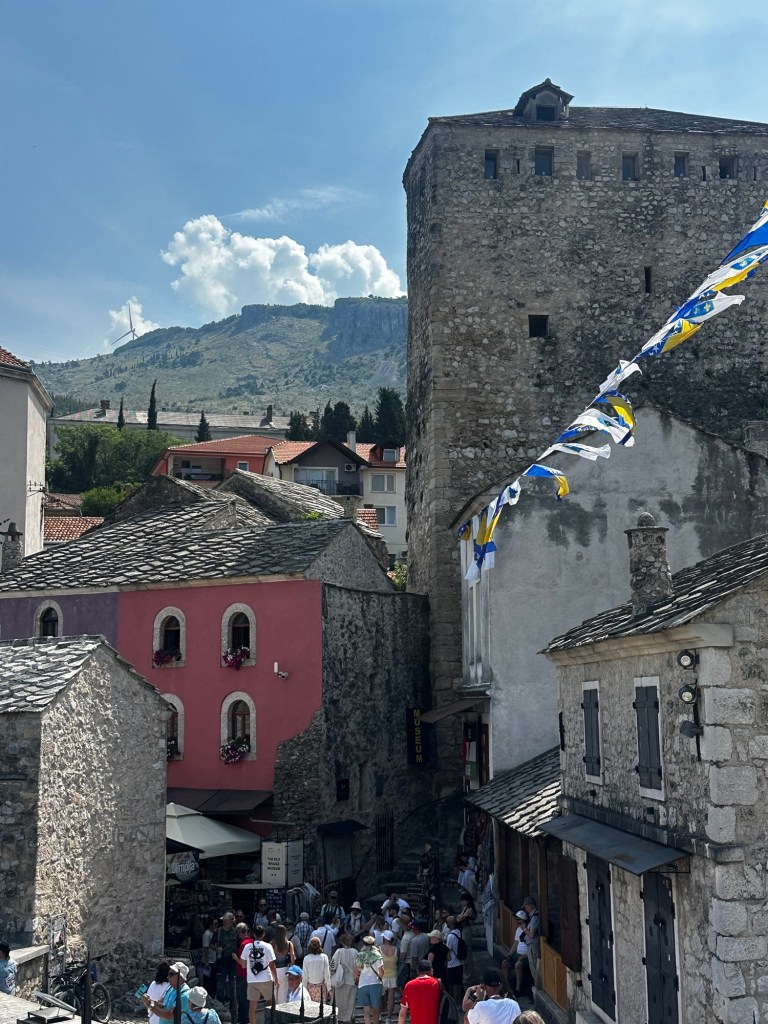
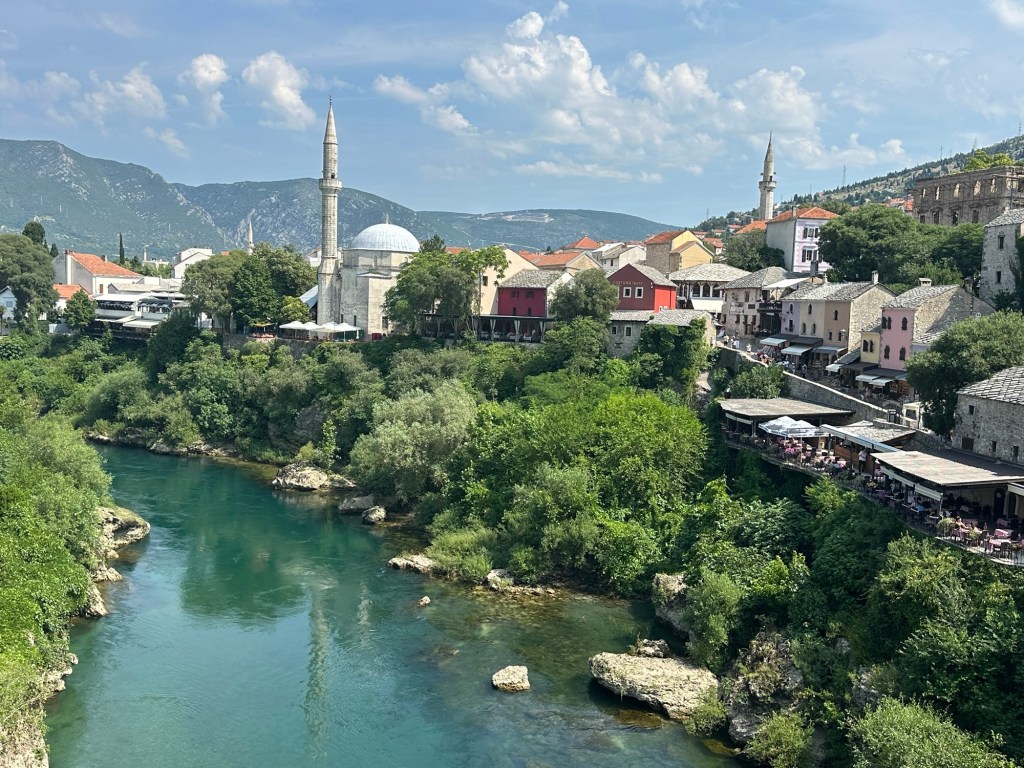
We soon booked the excursion and learned that we would actually be spending our time in Herzegovina, the smaller southern region of the country. The main destination on our tour was Mostar, the largest city and historical capital of Herzegovina, famous for Stari Most (the Old Bridge). The Old Town of Mostar is dominated by Ottoman-style architecture, and during the Bosnian War in the 1990s, many of its historic structures were heavily damaged.
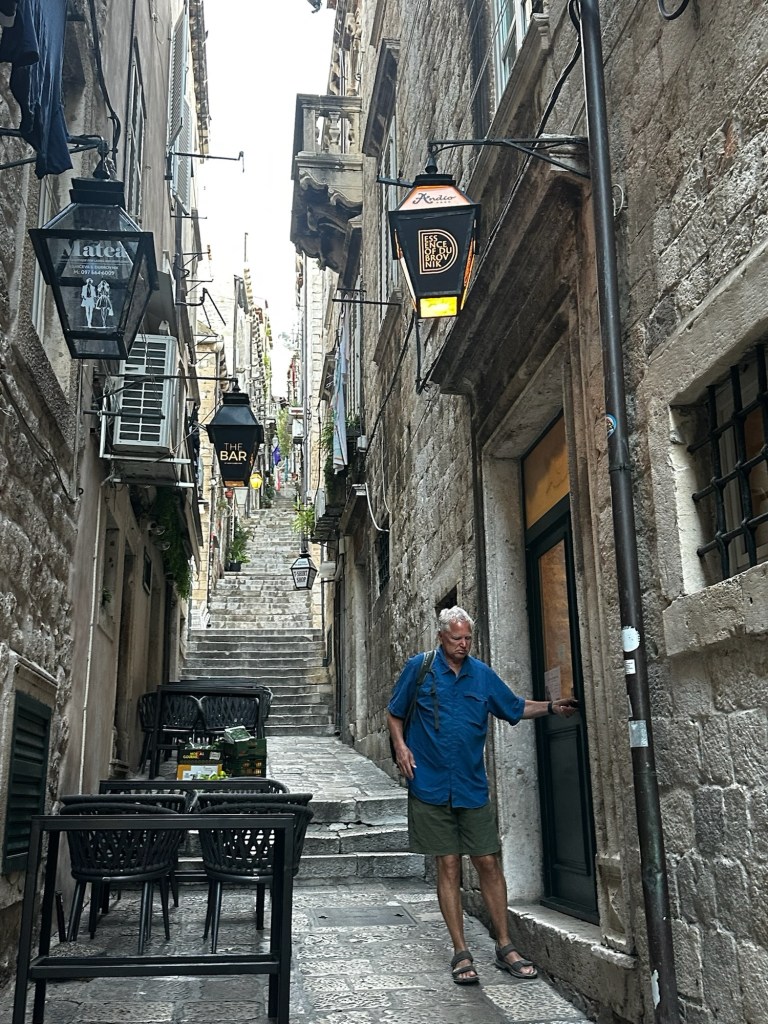
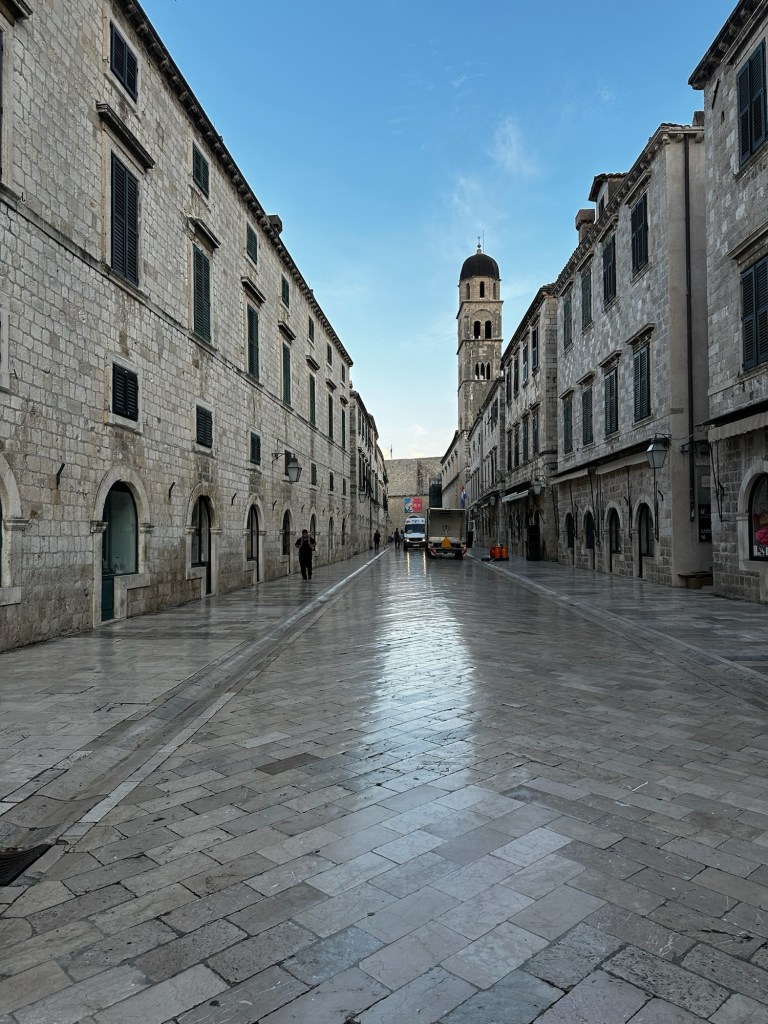
With our 6:00 am departure, we had the rare opportunity to see Dubrovnik’s Old Town before the crowds arrived. The only people on the streets and staircases were street-cleaning crews, restaurant and bar delivery workers, and a handful of other tourists with early morning departures.
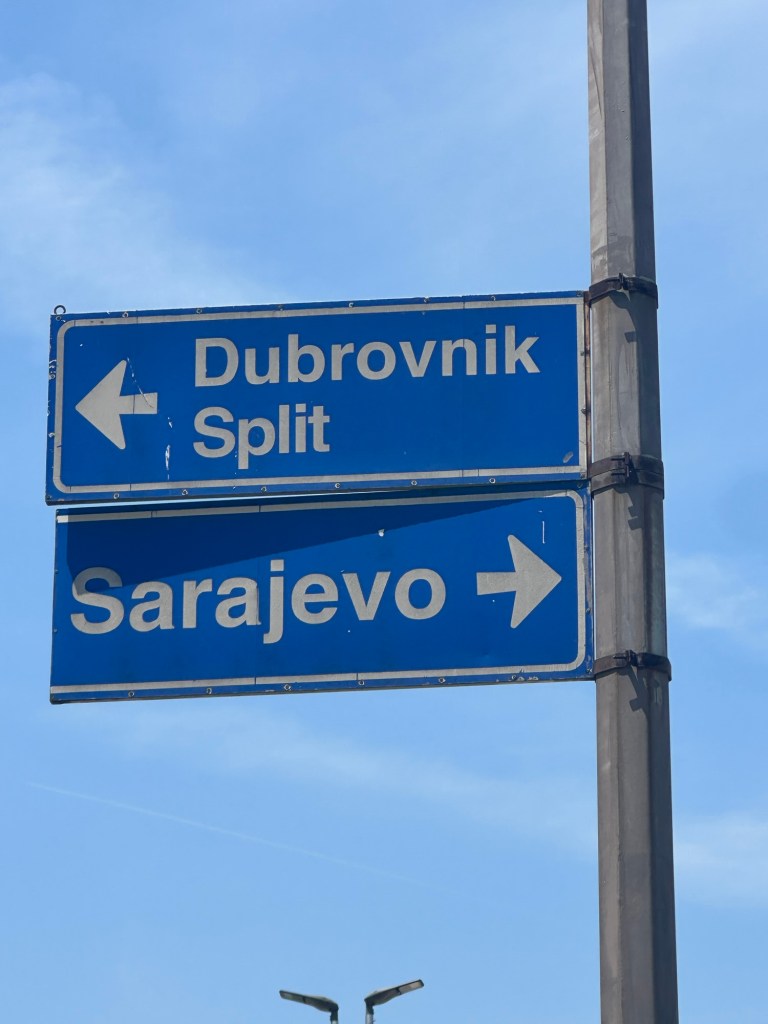
The bus ride took 2 1/2 hours and midway through the journey, we stopped in Neum, where we exited the bus to pass through border control and have our passports stamped before reboarding. Shortly afterward, we stopped at a bakery for coffee and breakfast.
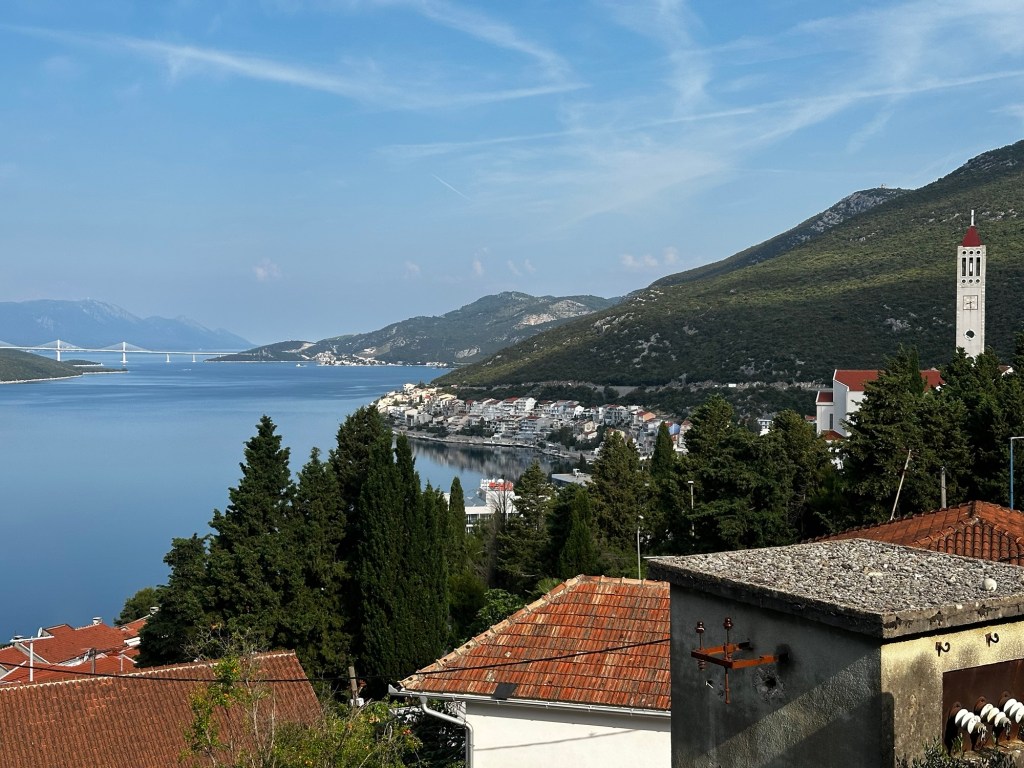
During the drive, our guide shared the history of the region, the lasting impact of the Bosnian War, the area’s ethnic makeup, and the structure of the country’s current government. We drove through the town of Stolac and the town of Capljina, where our guide pointed out a concentration camp which was used in the Bosnian War.
As a result of the Dayton Accords, the peace agreement signed in December 1995 that ended the Bosnian War, Bosnia-Herzegovina is governed by a three-member, multiethnic Presidency that collectively serves as the head of state. The members represent the country’s three constituent peoples – Bosniaks, Serbs, and Croats, and the chairmanship rotates every eight months. According to our guide, this system creates a top-heavy government with many inefficiencies, making it difficult to address economic challenges. He noted that the country relies heavily on imports and everything has to be written in three languages, even the warning on cigarettes.
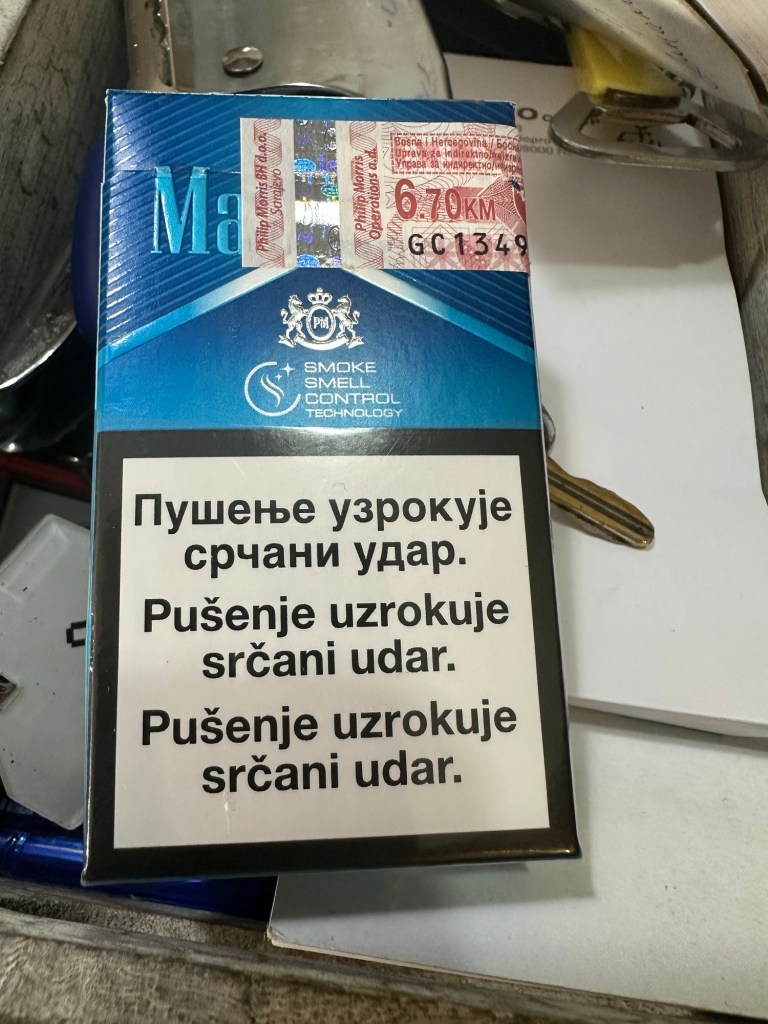
Bosnia-Herzegovina uses the convertible mark (KM) instead of the Euro. At most shops and restaurants, the exchange rate was effectively 2 convertible marks for 1 euro, making prices feel quite reasonable for us.
We spent nearly three hours exploring Mostar, browsing the shops, and enjoying a delicious lunch at Kaldrma Restaurant.
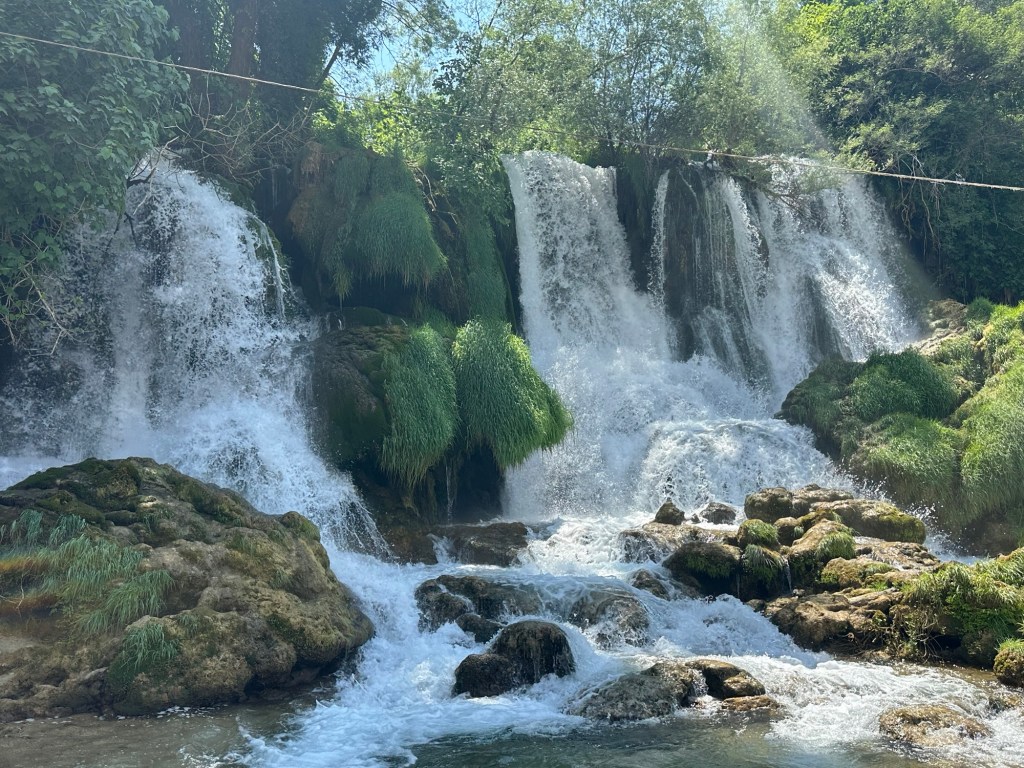
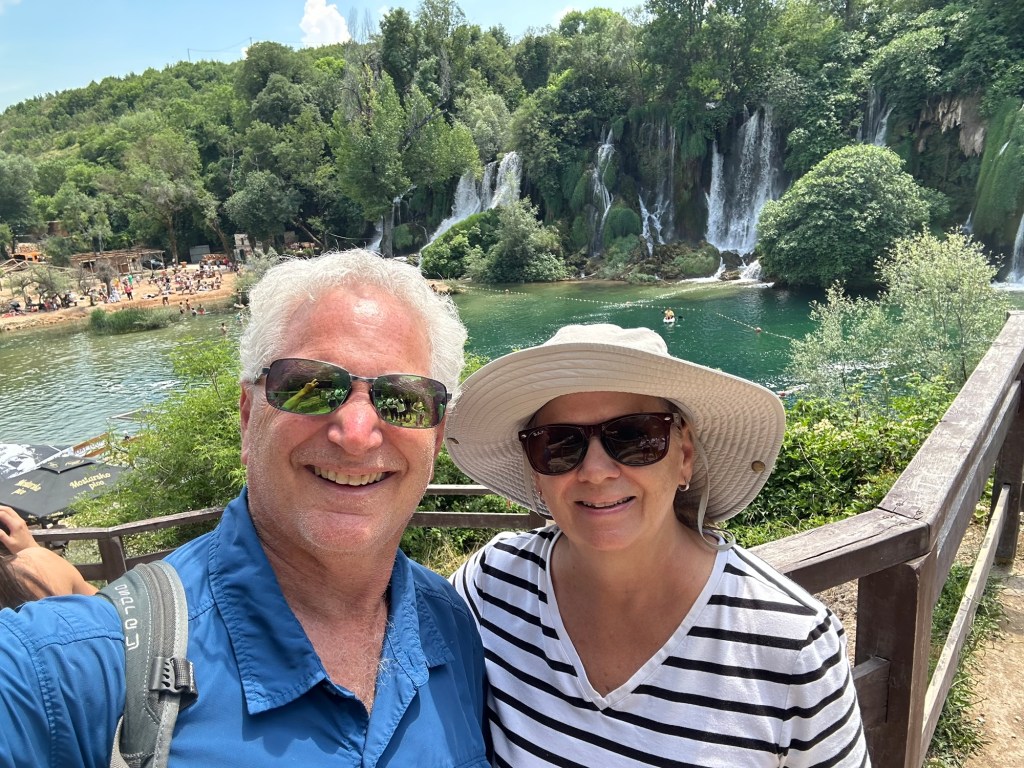
Our next destination was Kravica Waterfalls, less than an hour from Mostar. Although we had packed our swimsuits, we decided not to change because the water was surprisingly cold, even on a warm day. I settled for putting my feet in the water, which was more than enough to cool off.
On the drive back, we did another border crossing and arrived in Dubrovnik around 6:00 pm just outside the gates to the Old Town. While we spent a significant amount of time on the bus, I thought the day trip was worth it. We experienced another culture, learned a great deal about a country we knew relatively little about, and enjoyed a fantastic lunch. Plus, when will we have another opportunity to visit Bosnia-Herzegovina?
We had our final meal of the trip at Richeta in Dubrovnik’s Old Town before returning to Bed & Breakfast Andio to pack for our early morning departure. We were booked on the same 6:30 am flight the kids had taken on Sunday.
During the last two weeks, Jane and I spent most of our time in Croatia with our kids. We thoroughly enjoyed traveling with them and sharing so many wonderful experiences together. Without question, the highlight of the trip was our sailing adventure.


