It’s Sunday morning, and we’ve just departed Agra on a train bound for Jhansi. The train, originally scheduled to leave at 7:50 AM, was delayed by fog and didn’t leave the station until 9:15. Ahead of us is a three-hour journey.

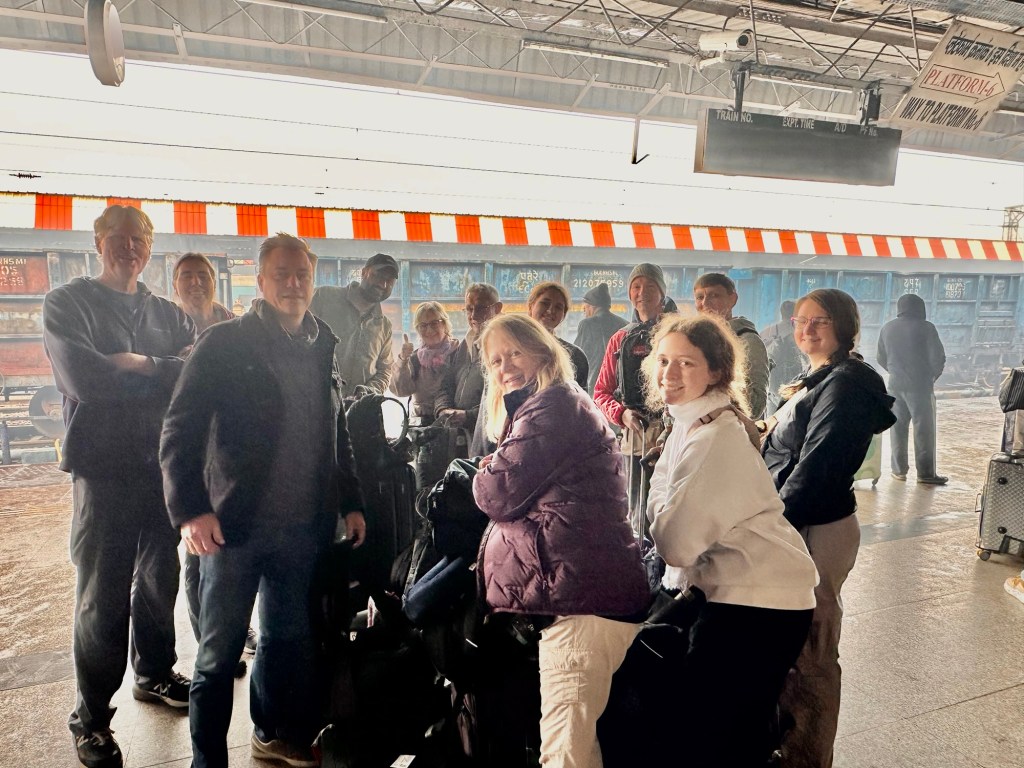
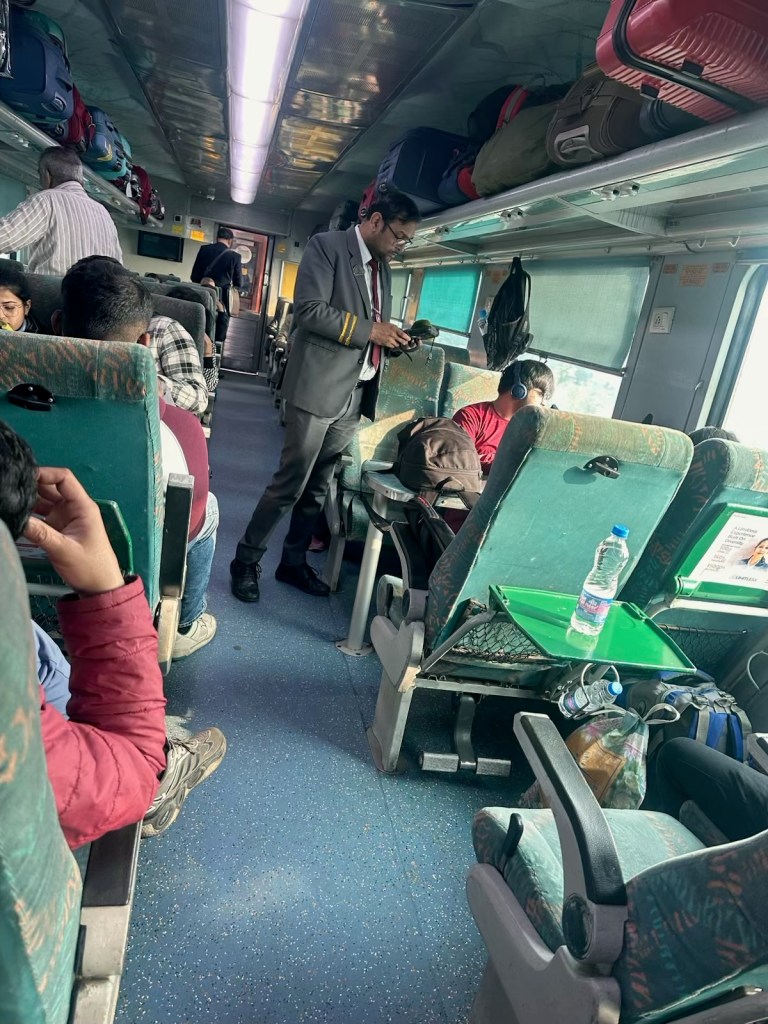
Fun Fact: According to Manu, our tour guide, 20 million people take 15,000 trains across India every day!
The past few days have been incredible. After spending Thursday night sleeping in (very cold) platform tents, we enjoyed a lovely breakfast on Friday morning before hitting the road toward Agra.
The freezing temperatures in the tents made for a chilly night, and with limited hot water available, showers weren’t an option that morning. After breakfast, we began our journey.
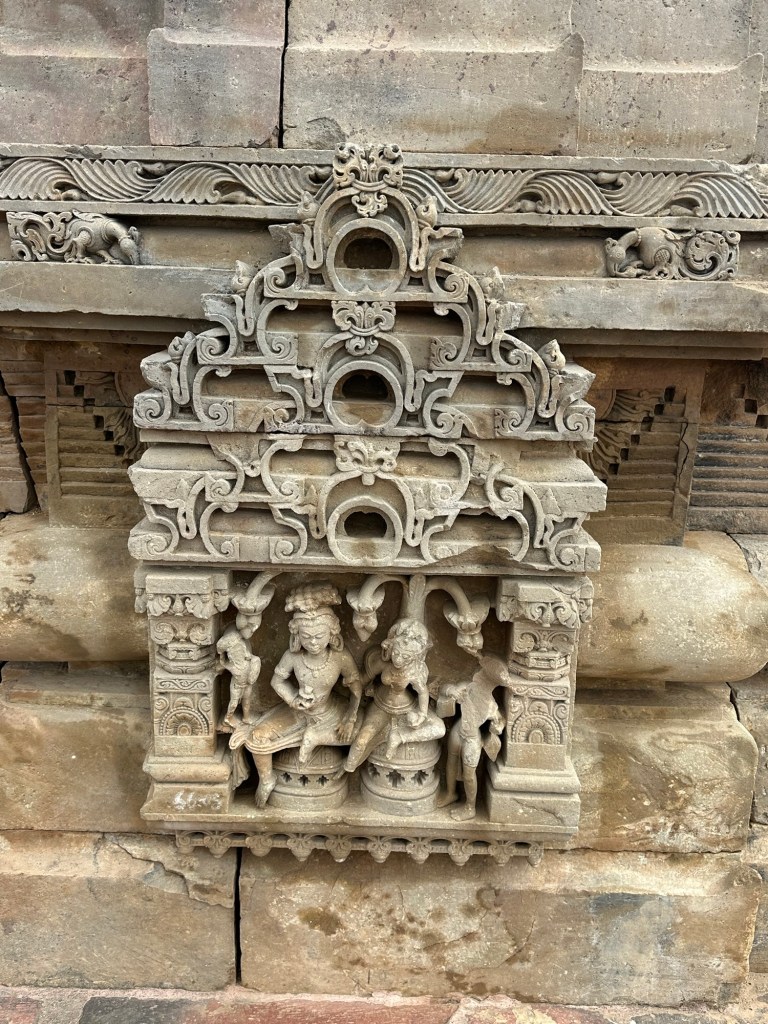
Our first stop was the Step Well in Abhaneri, built in the 9th century. It was designed to collect and store rainwater for the local community. Today, the Step Well is also a popular filming location for Bollywood movies and was even featured in the 2012 Batman film.


Directly across the street, we visited the Harshat Mata Temple, an active Hindu temple dating back to the 8th century.
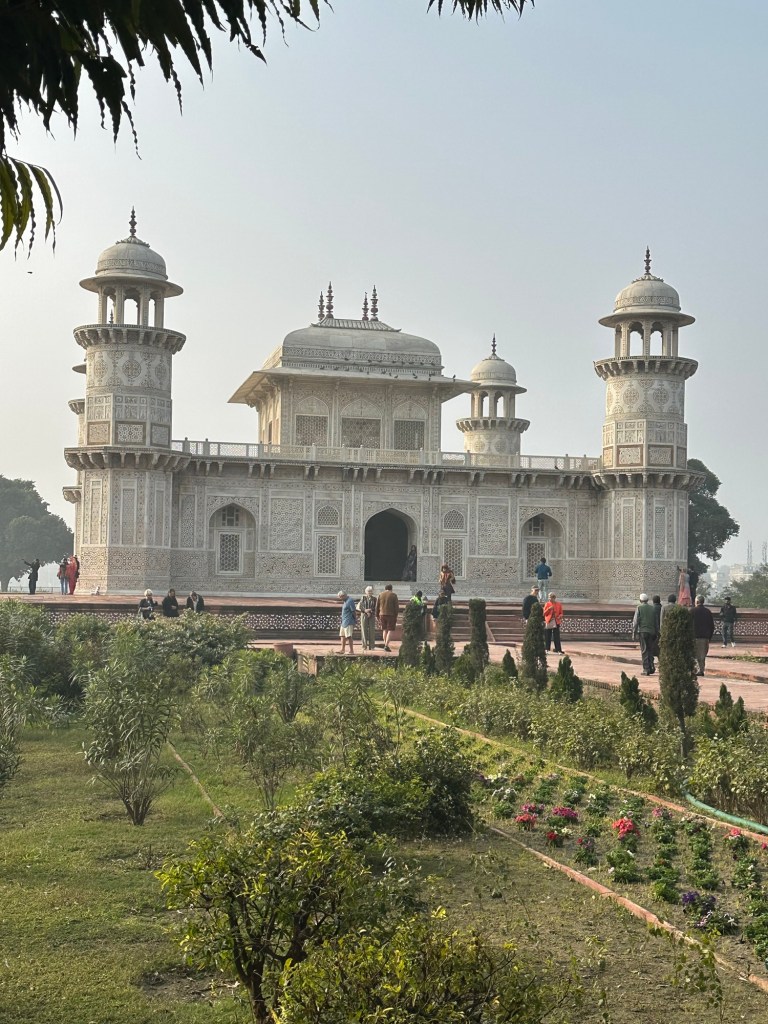
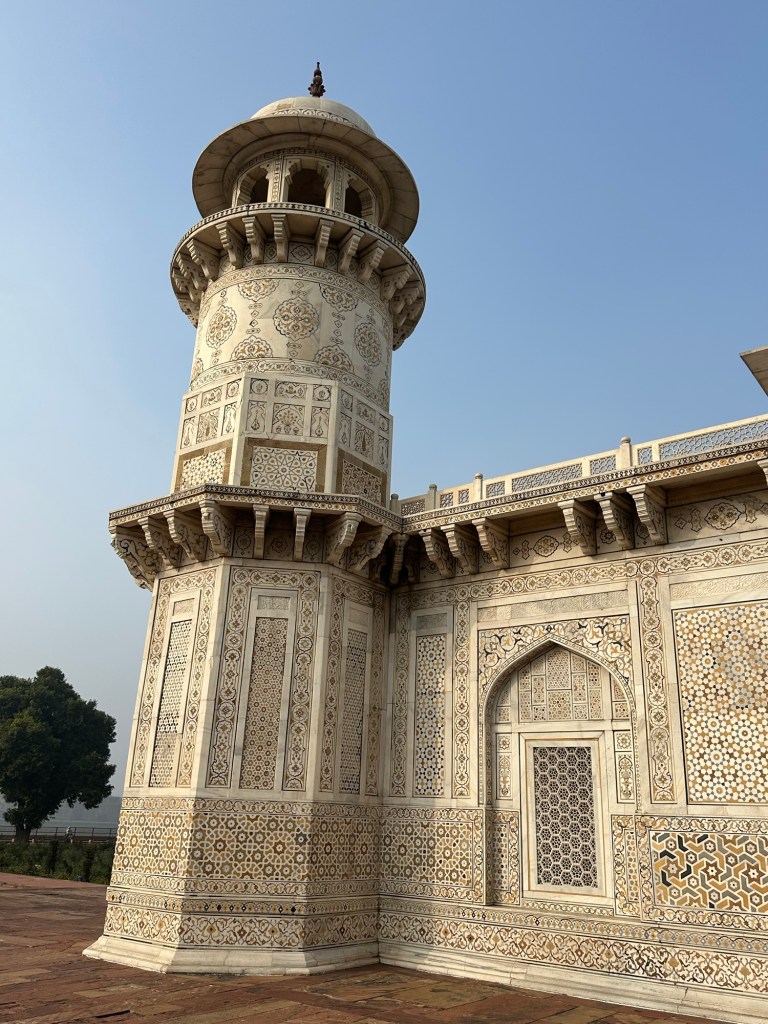
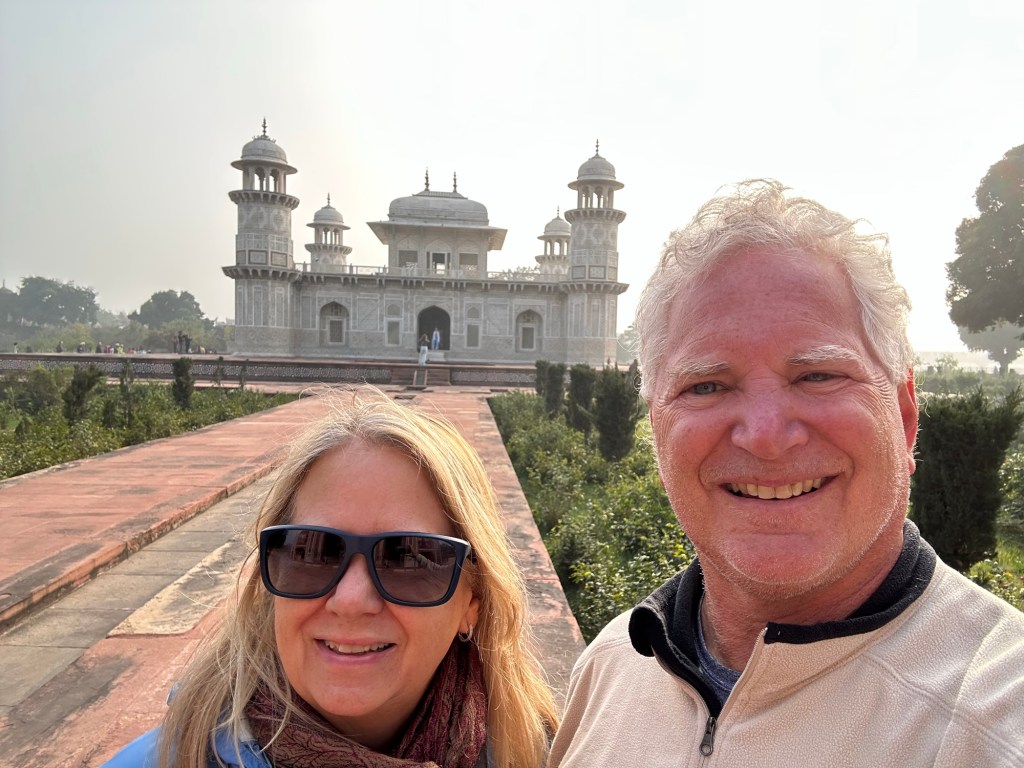
As we arrived in Agra, our first stop was the Tomb of Itimad-ud-Daulah, often referred to as the “Baby Taj.” Constructed between 1622 and 1628, the tomb features a stunning combination of red sandstone and marble decorations.

Dinner that evening was at Molecule, where all of us—except for Manu—opted for Western food. The Hotel Marine House offered the best accommodations of the trip so far. After a long, hot shower, I felt completely rejuvenated.
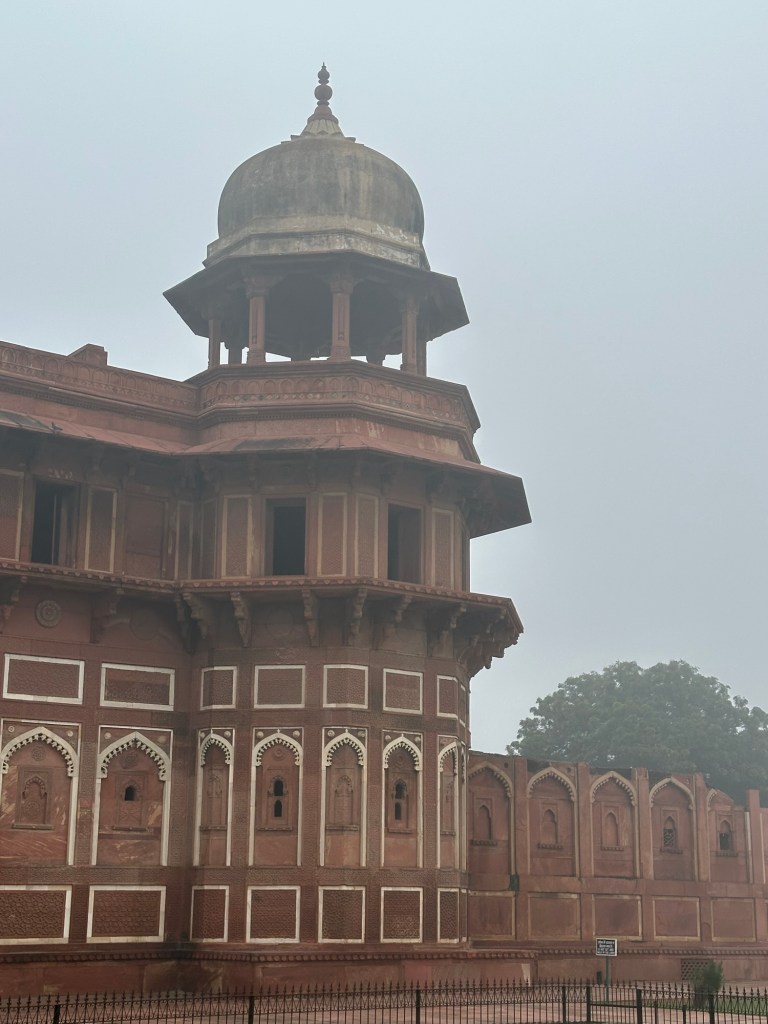
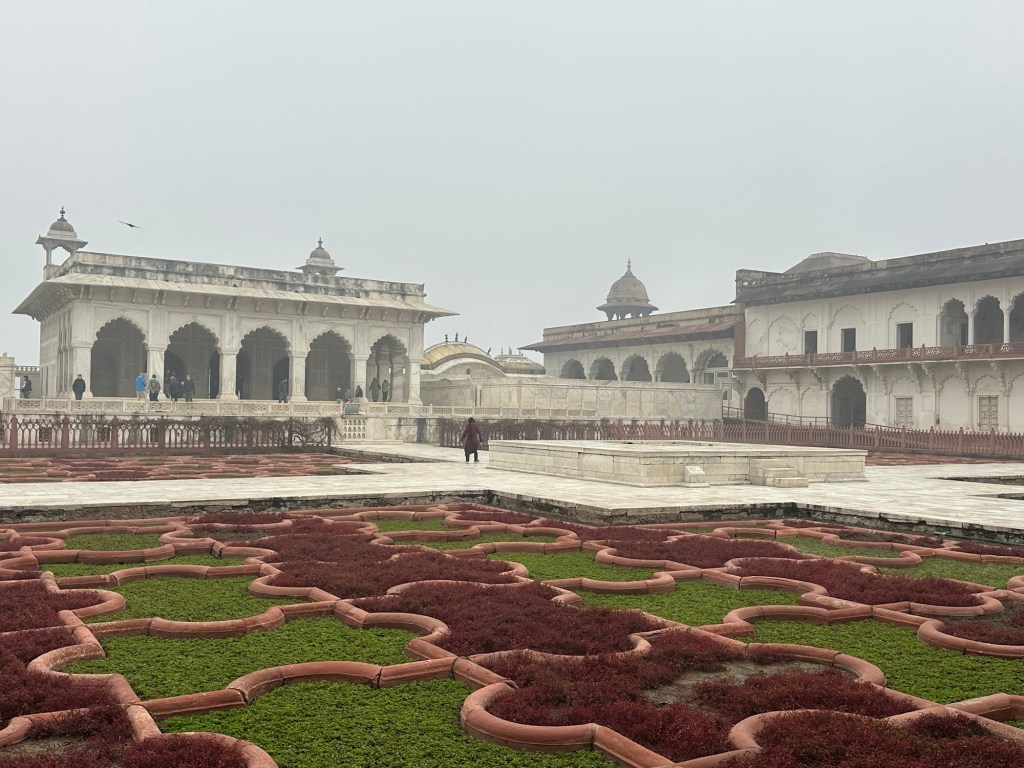
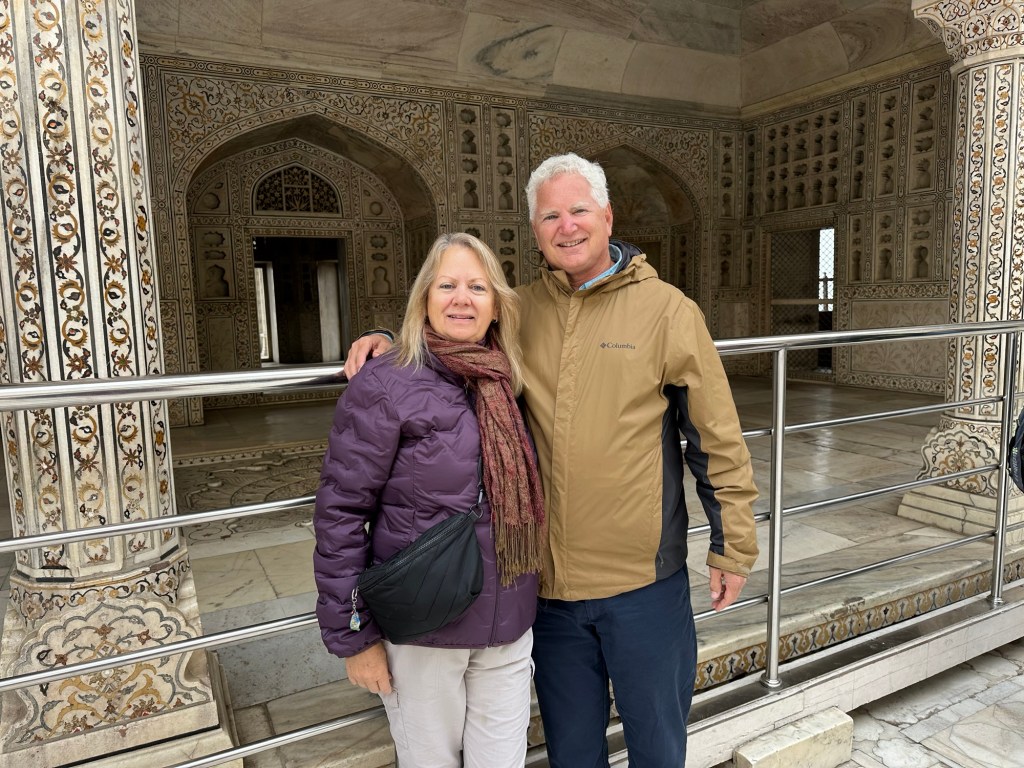
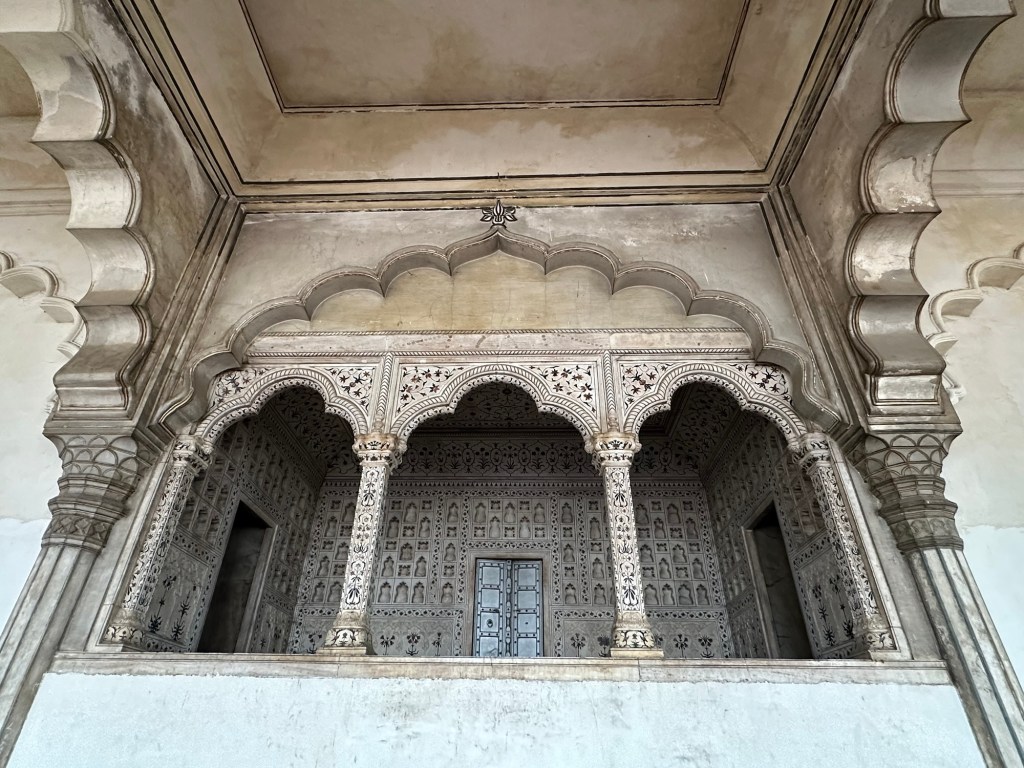
Friday was a whirlwind of sightseeing. We started with the Agra Fort, built in the 1500s and once the main residence of the Mughal dynasty. The fort was expansive, housing the ruler’s three wives—one Muslim, one Hindu, and one Christian—along with a harem of 5,000 women. The fort covers 94 acres, though only 25% is accessible to visitors, as the northern portion is still used by the Indian military.

Next, we visited Sheroes Hangout, a charity supporting women who have survived acid attacks, often inflicted by family members. Over tea and lunch, we watched a moving video about the organization’s efforts. Our tour group, G Adventures, is proud to support this cause.

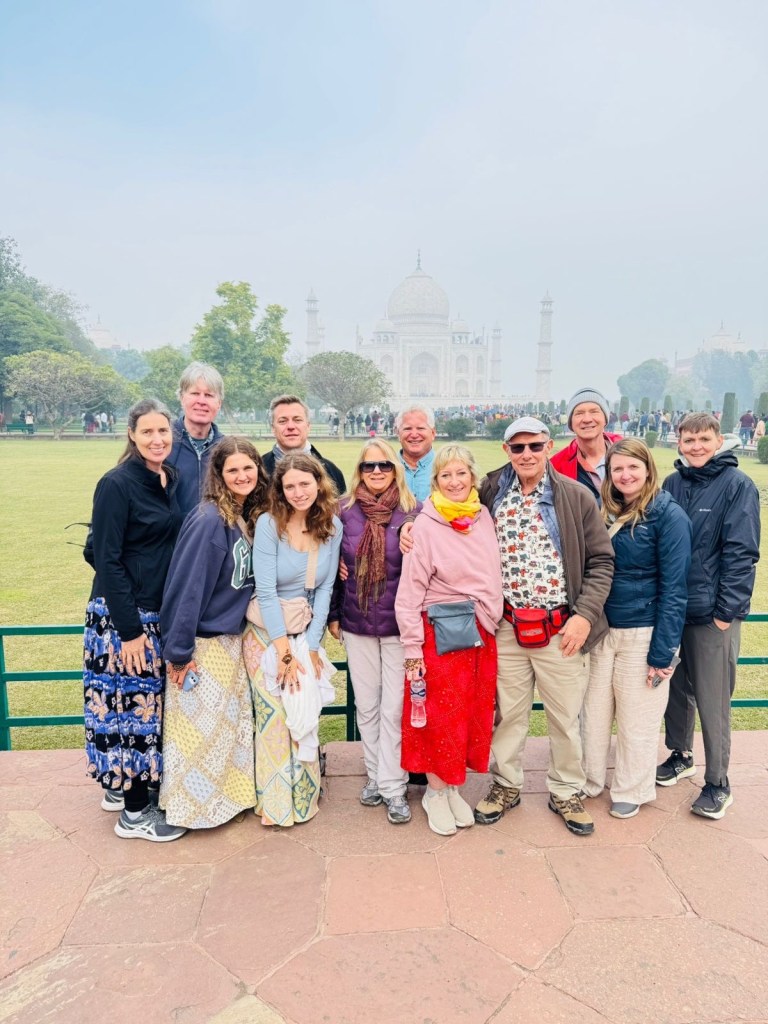
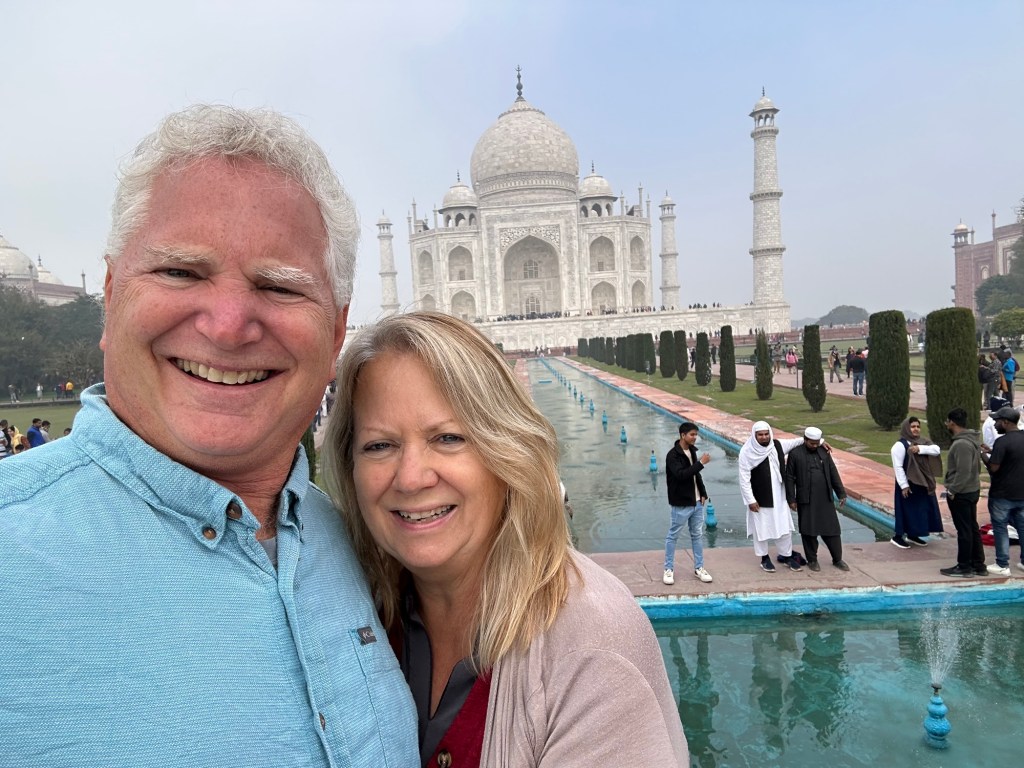
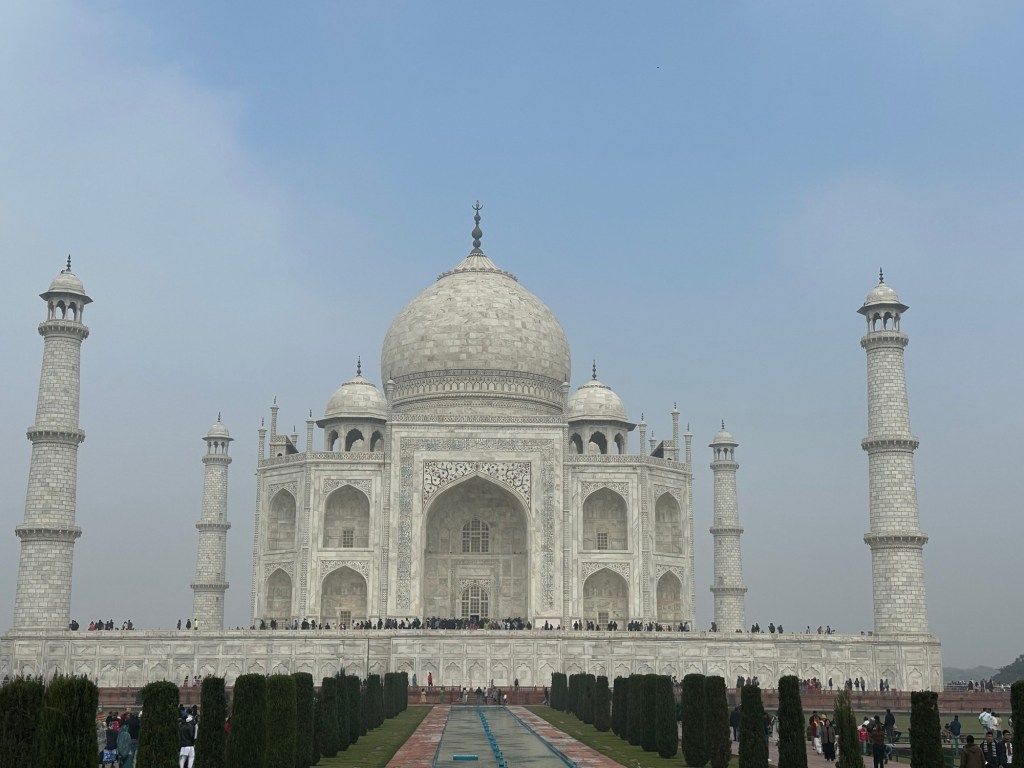
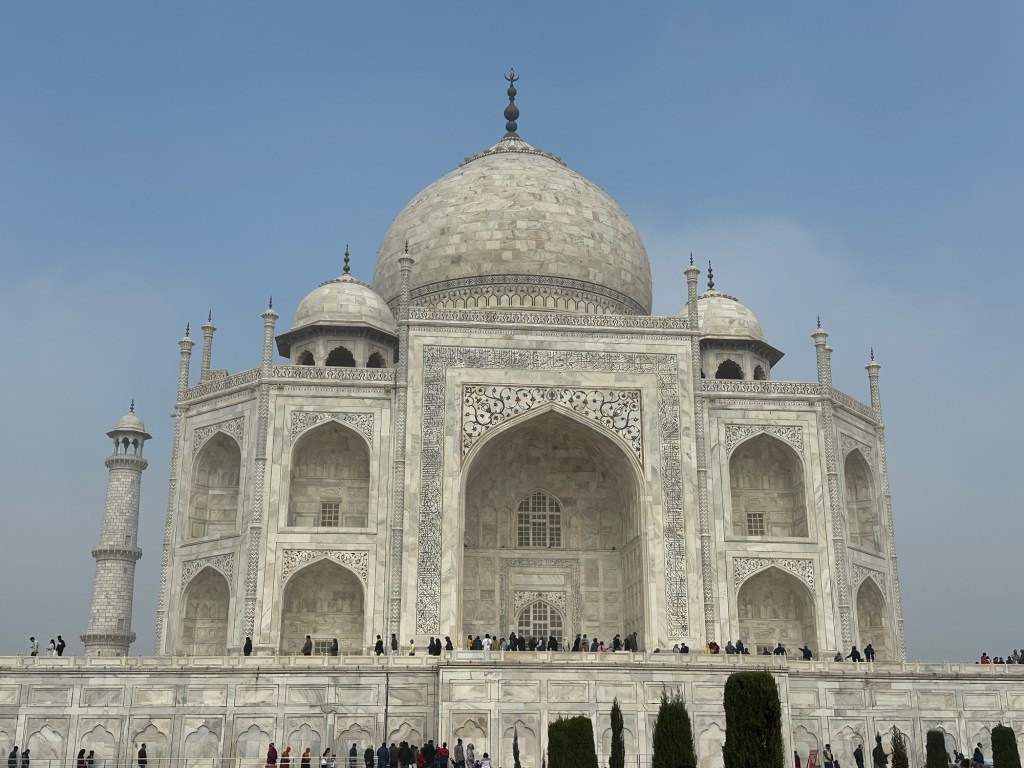
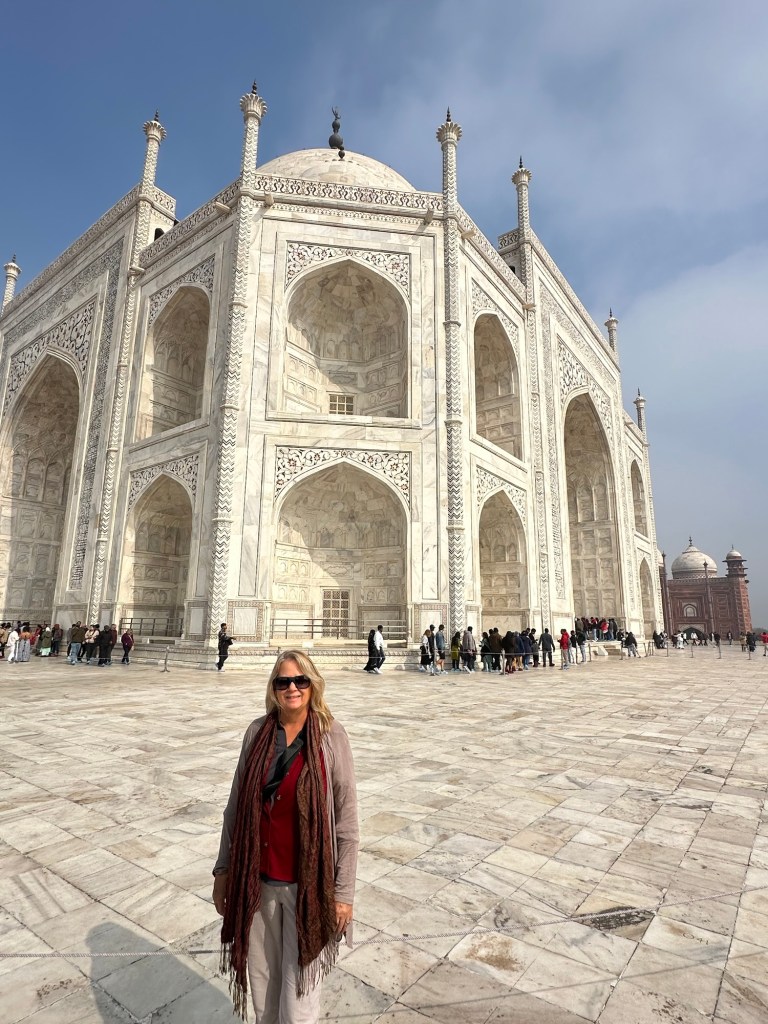
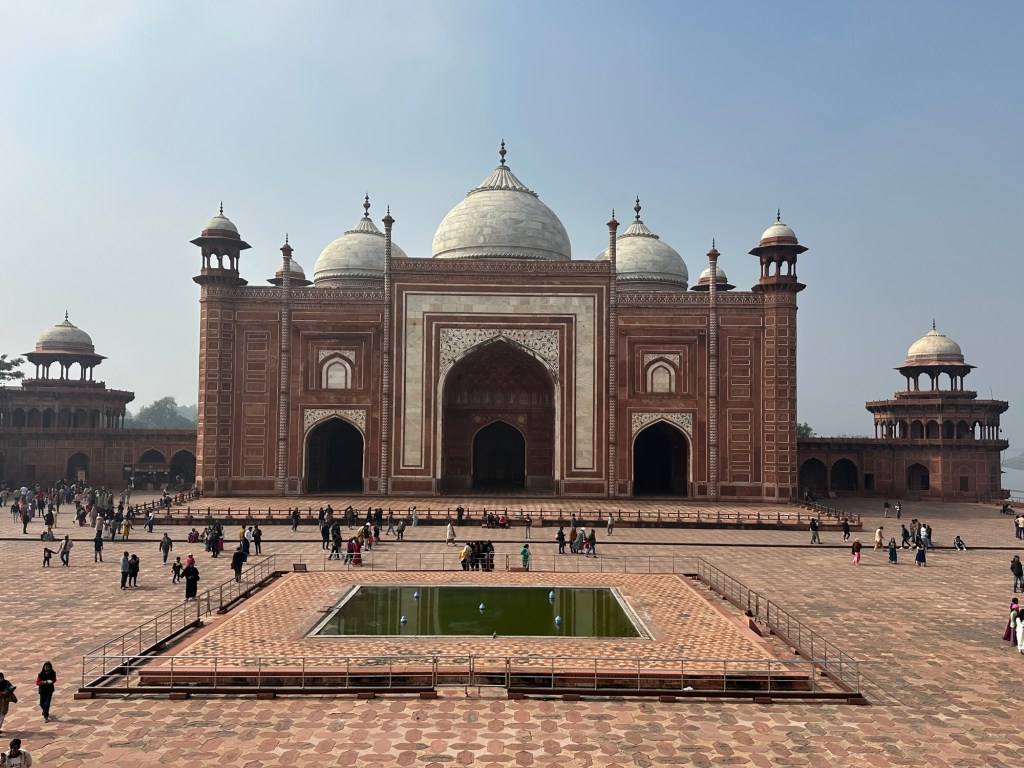
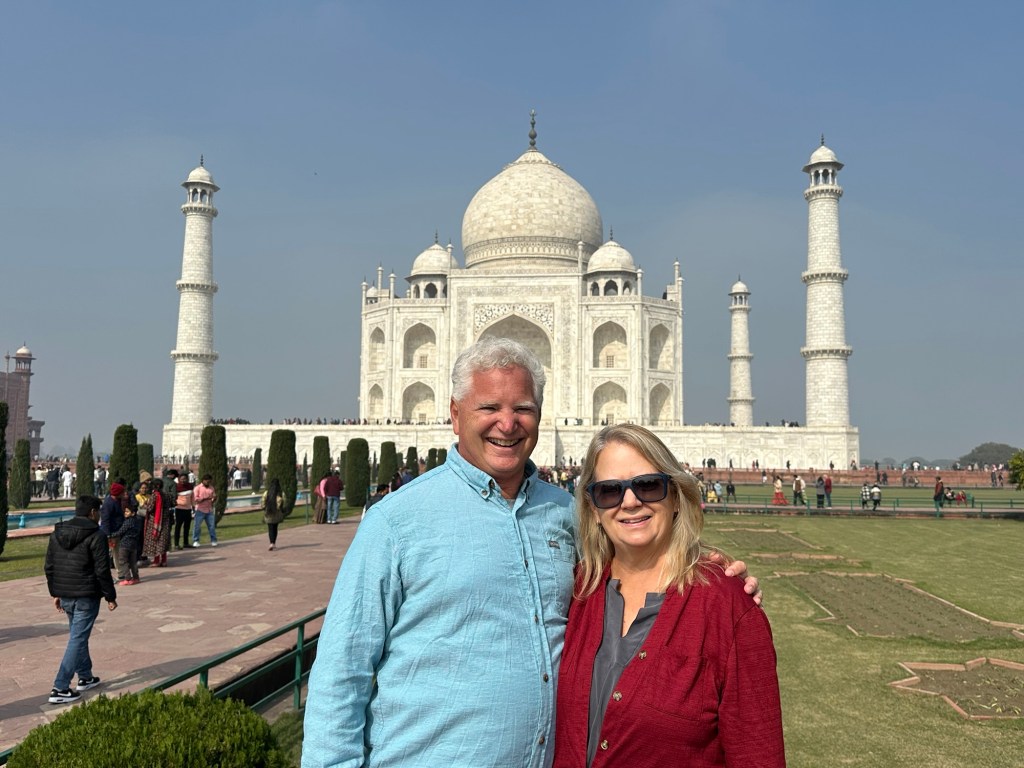
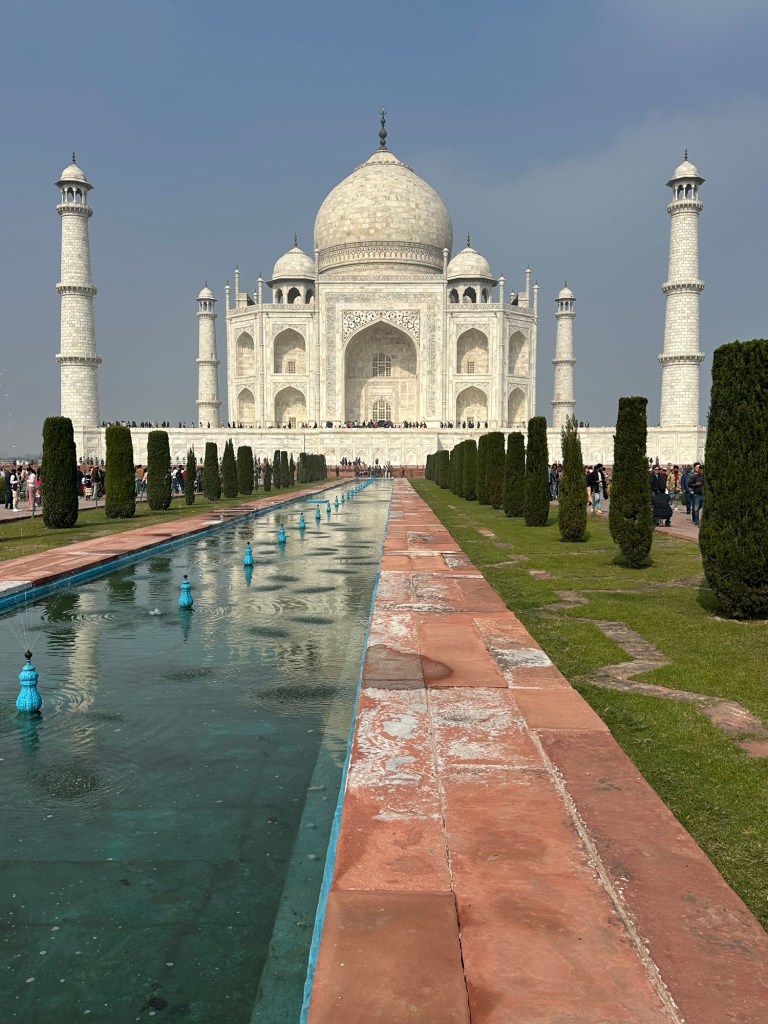
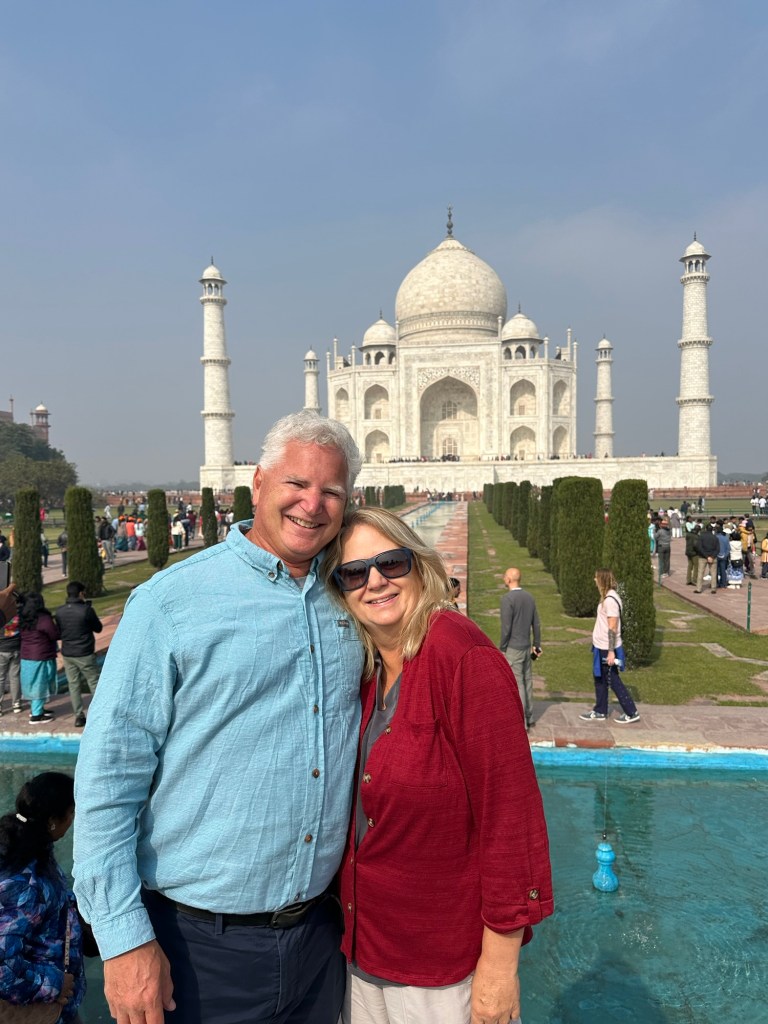
The highlight of the day—and the entire tour—was visiting the Taj Mahal. When we arrived, a light fog lingered around the dome. Commissioned in 1631 by the fifth Mughal emperor, Shah Jahan, the Taj Mahal is a mausoleum for his beloved wife, Mumtaz Mahal, and also houses his own tomb. Spanning 42 acres, the iconic structure, made of white marble, exemplifies Indo-Islamic and Mughal architecture. The complex also includes a mosque and a guesthouse built of red sandstone. By the time we entered the main building, the sun had burned off the fog, revealing a brilliant blue sky—perfect for photos.
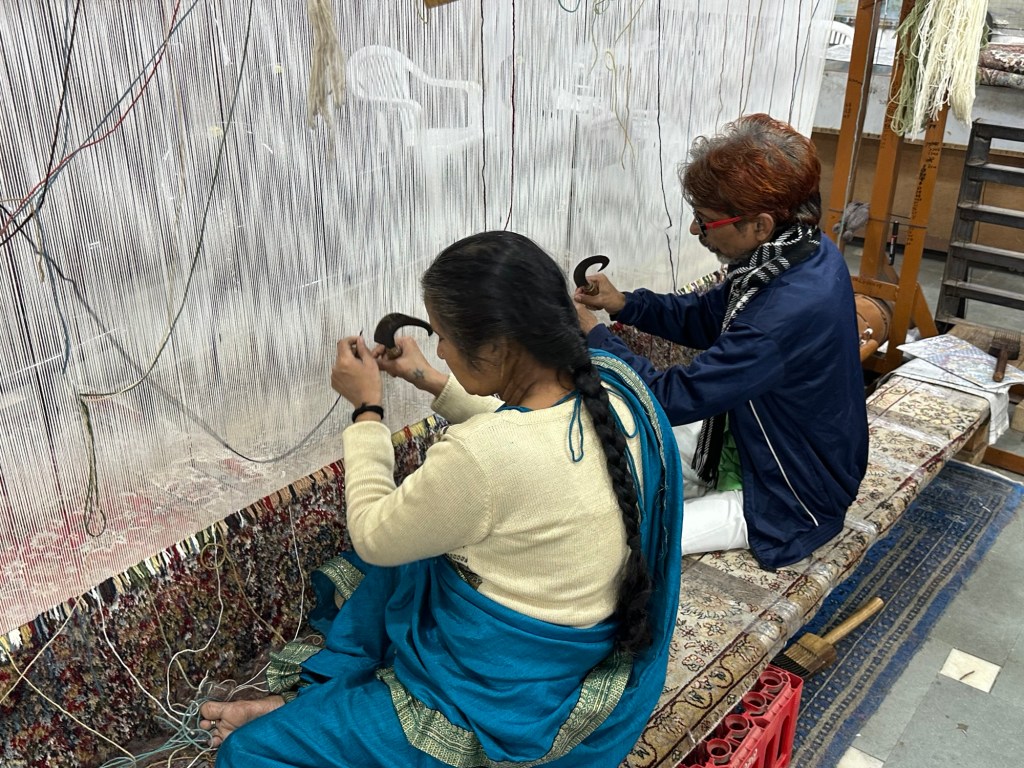
After a short rest back at the hotel, we visited a carpet cooperative, where we learned about the painstaking process of making authentic Indian carpets. Some take as long as 13 months for two artisans to complete. Naturally, there was a sales pitch at the end!
Our next stop was a workshop specializing in jeweled inlaid marble, a craft unique to Agra and Florence. This held special meaning for us, as Jane’s mother, Shirley, had purchased a marble slab with a jeweled inlay design 25 years ago during her trip to India. That piece now graces our dining room table. The shopkeeper mentioned that the piece might have appreciated sevenfold since then and encouraged us to send photos when we return home.
We ended the day with a delicious dinner before heading back to the hotel.
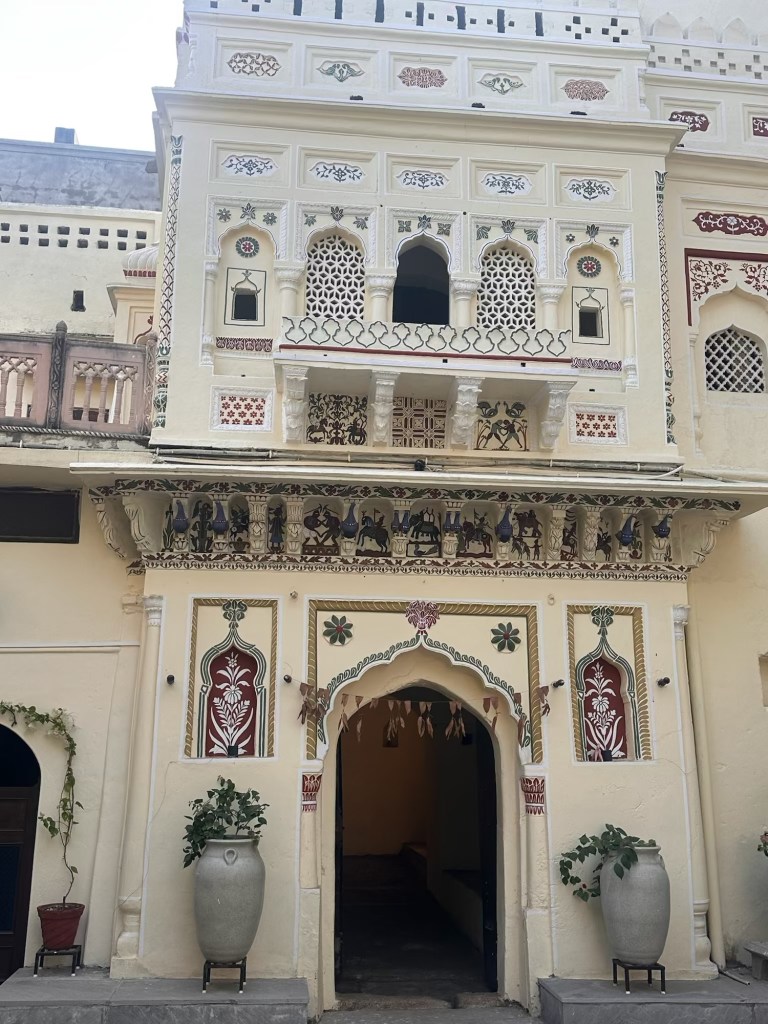
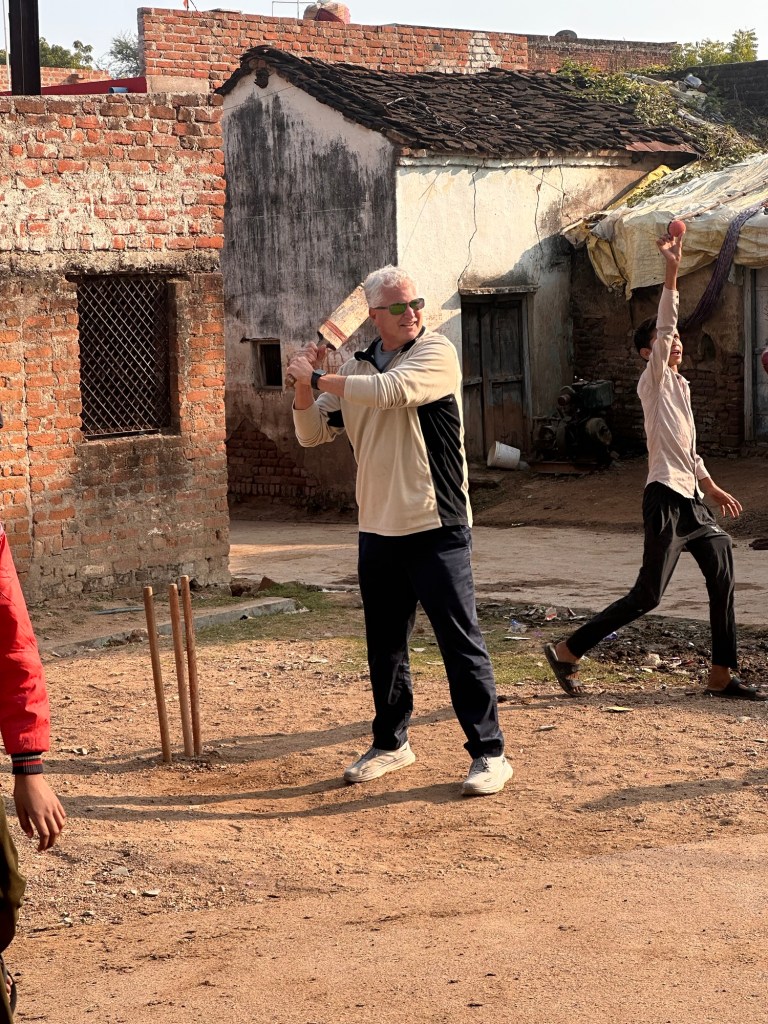
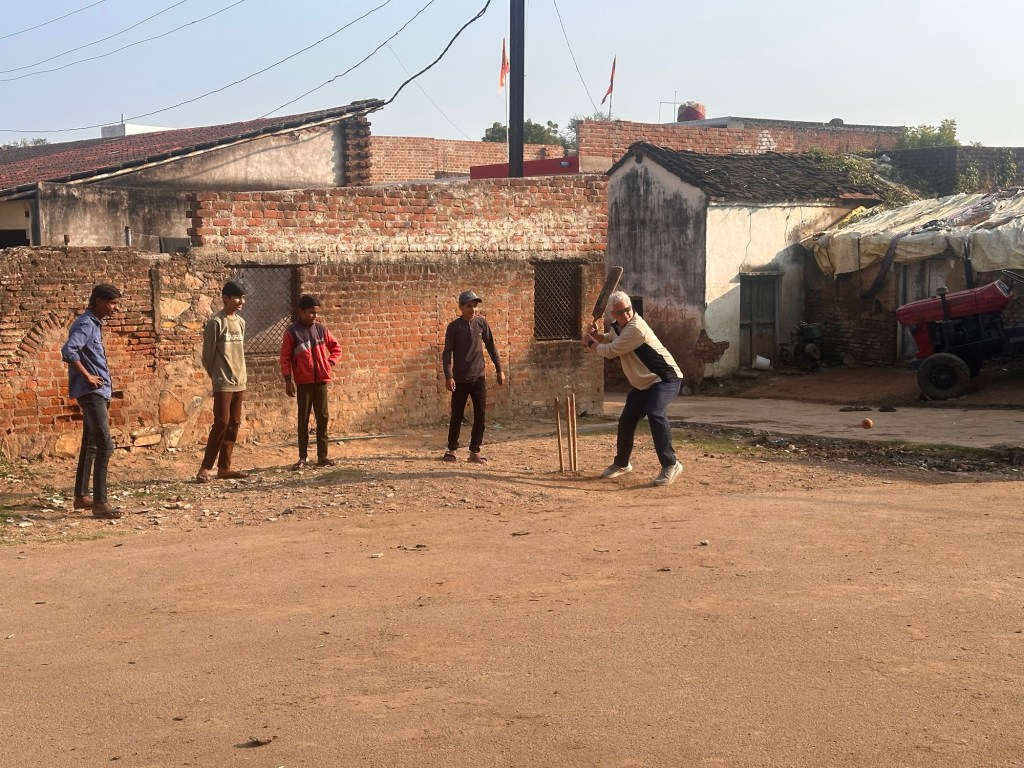
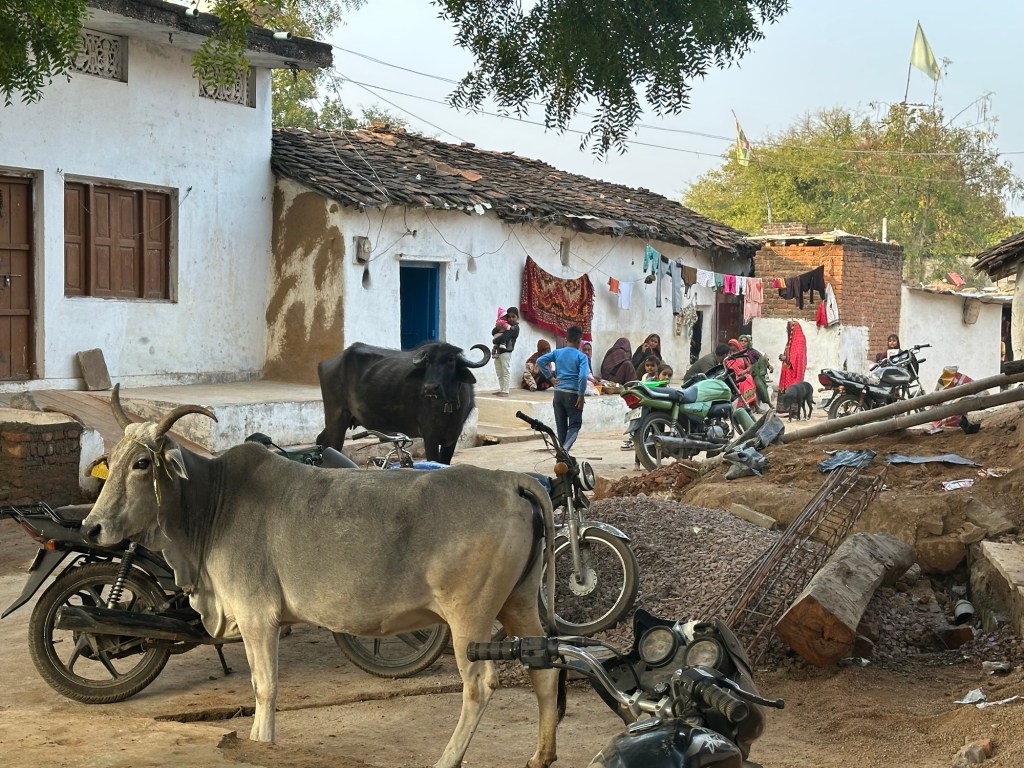
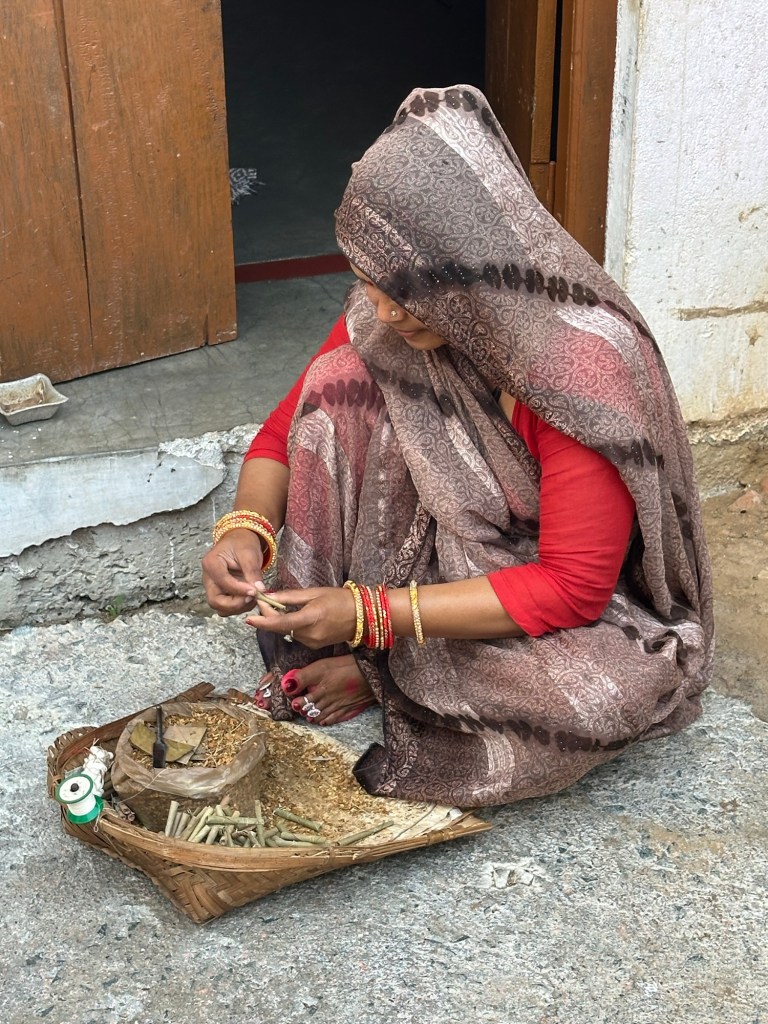
We are spending the night in the Alipura Palace. The royal family live on one side of the palace, while we’ll stay on the other. After having lunch in the palace, we spent some time meeting local children and I gave cricket a try. We then did a walk through the village of Alipura.



Sent from my iPhone
LikeLike