This past Monday we arrived in Kyoto, my favorite city in Japan. Upon arrival, we set out to explore the former imperial capital. Kyoto is the heart of traditional Japanese culture, home to countless Buddhist temples, Shinto shrines, gardens, and historic geisha districts.
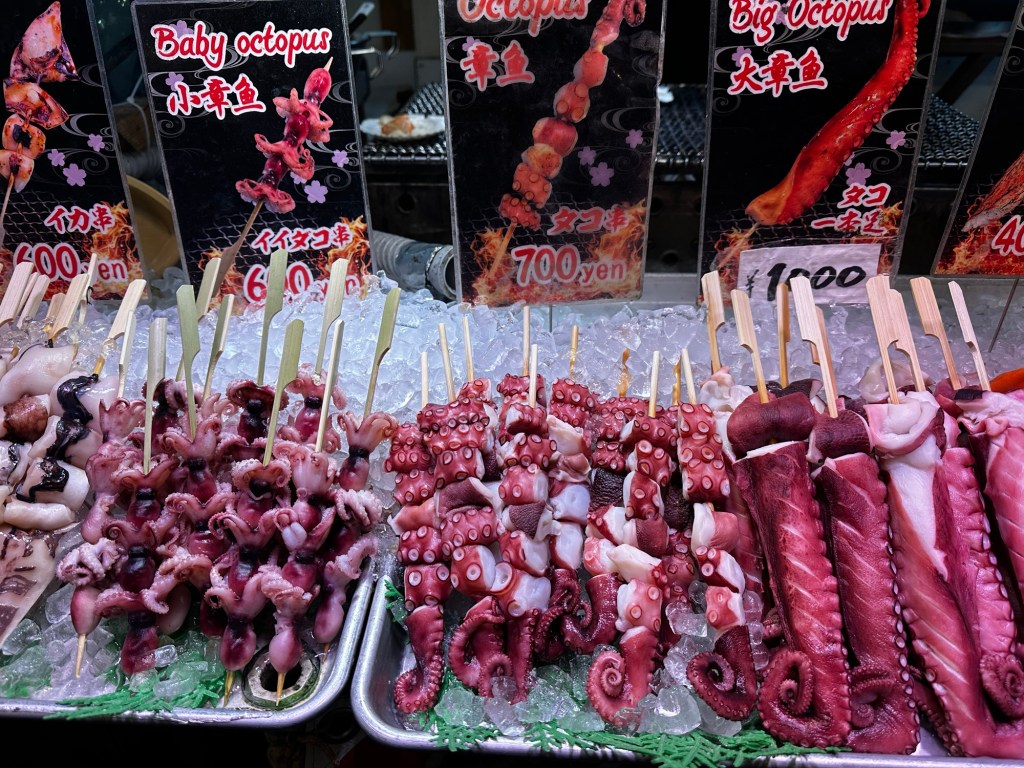
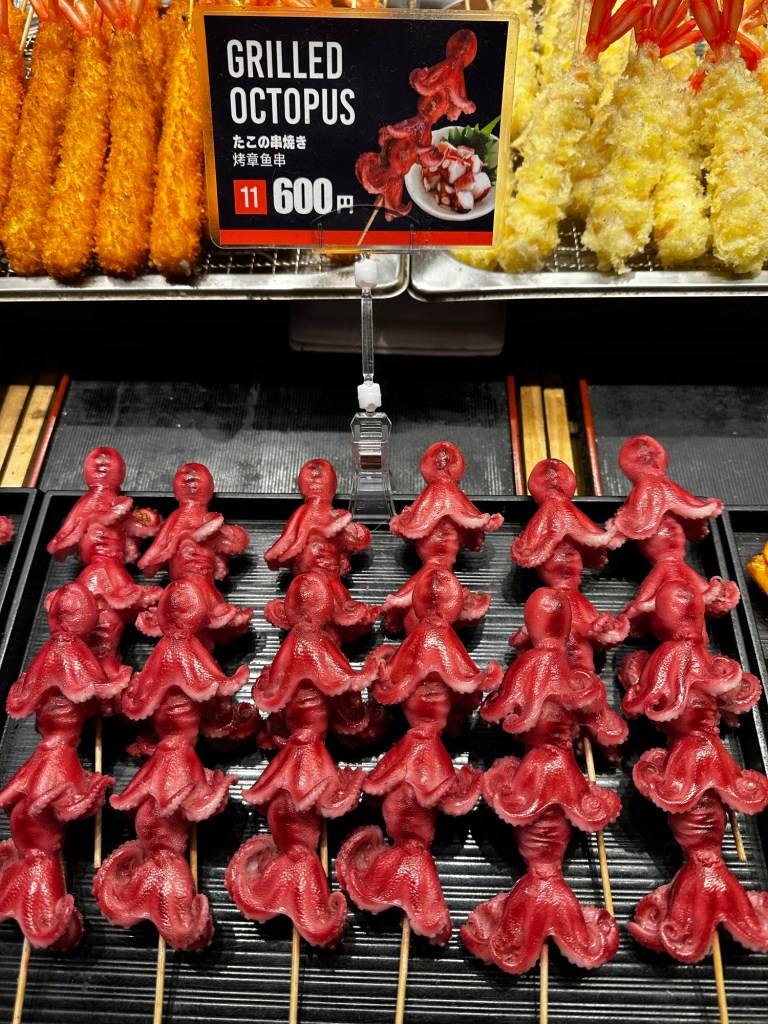
On our way, we walked through Nishiki Market where I enjoyed one of my favorite food in Japan—tempura crab on a stick. We then joined a walking tour of Kyoto, strolling through the geisha district and learning about the fascinating culture of geishas and ceremonial tea houses. Unfortunately, we were unable to participate in a geisha ceremony; a formal invitation is required, and we had no “juice” here.

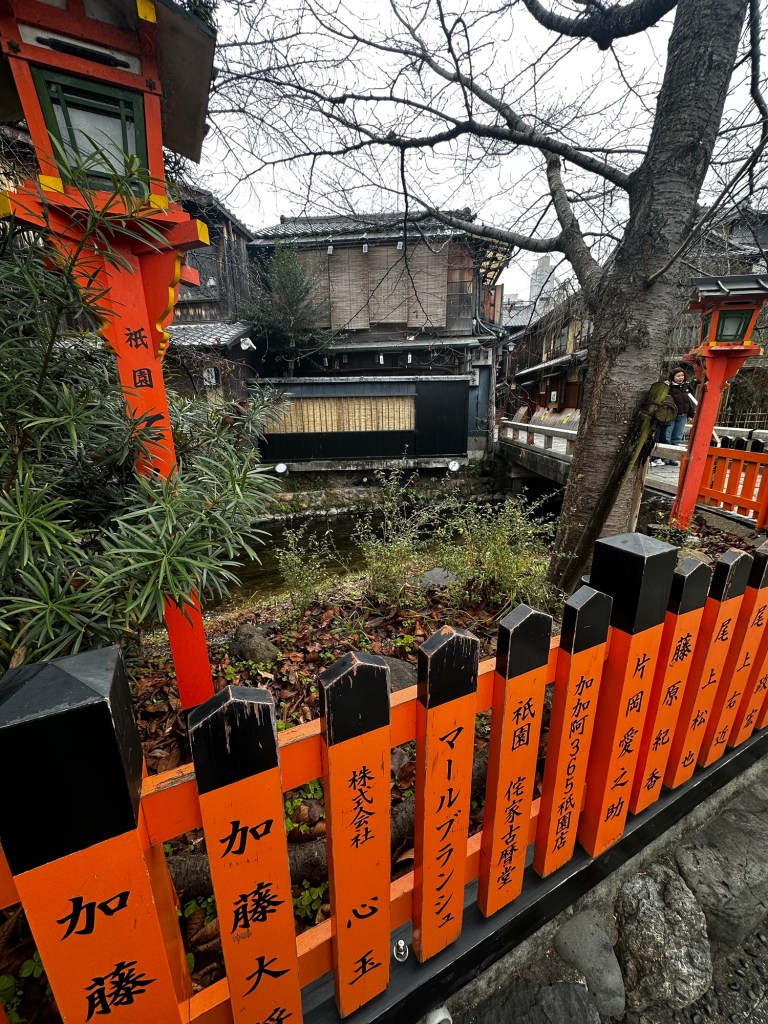
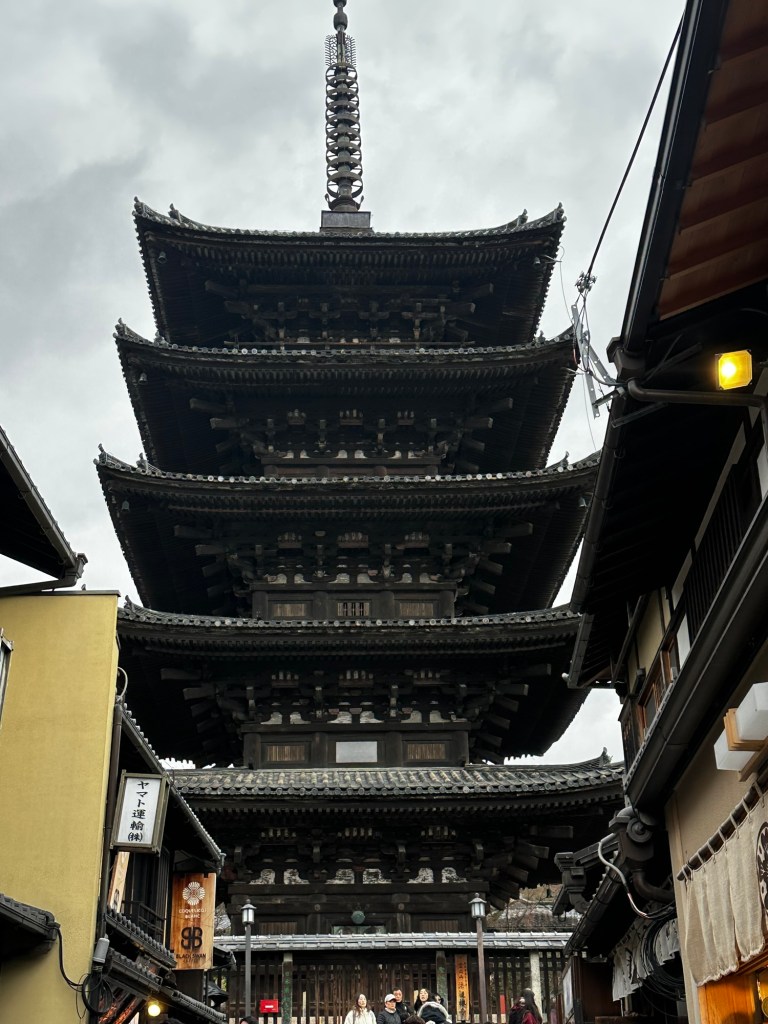
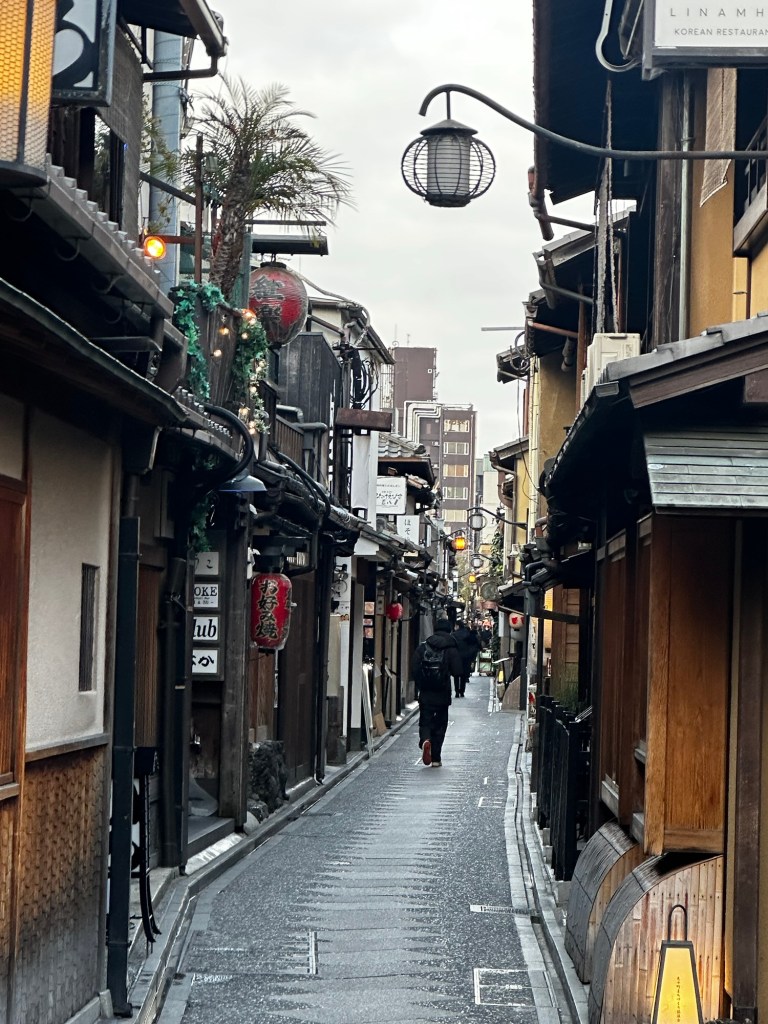
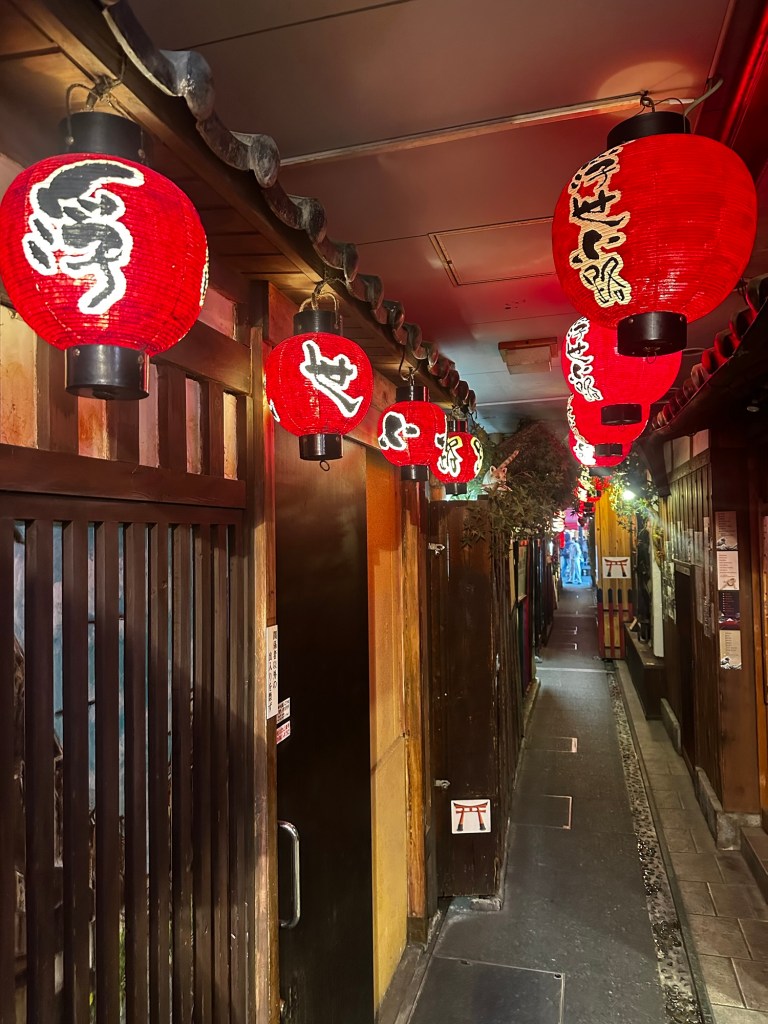
In the Gion district, our tour guide explained the significance of the Buddhist temples and Shinto shrines—sacred sites of Shinto, Japan’s indigenous religion. Our favorite area was historic Kyoto’s Ninenzaka and Sannenzaka streets. These scenic, hilly, narrow streets are lined with preserved wooden buildings, tea houses, and shops, and were filled with kimono-clad visitors. We then walked through the Nabeyacho area, a charming historic neighborhood in central Kyoto known for its traditional narrow alleys.
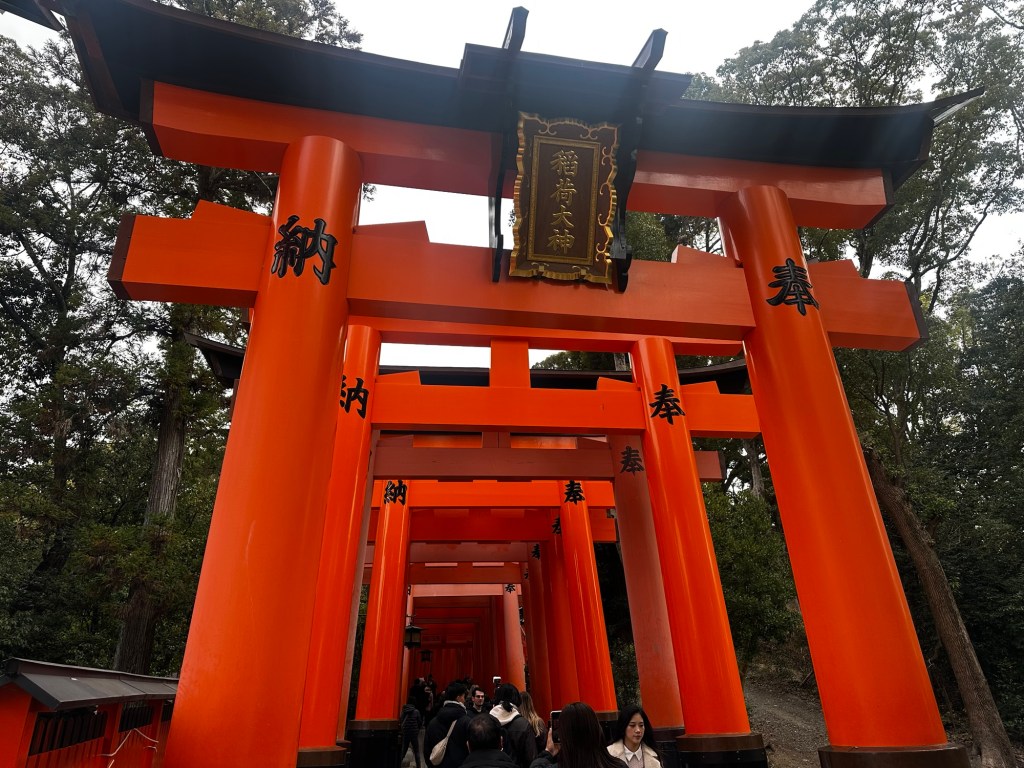
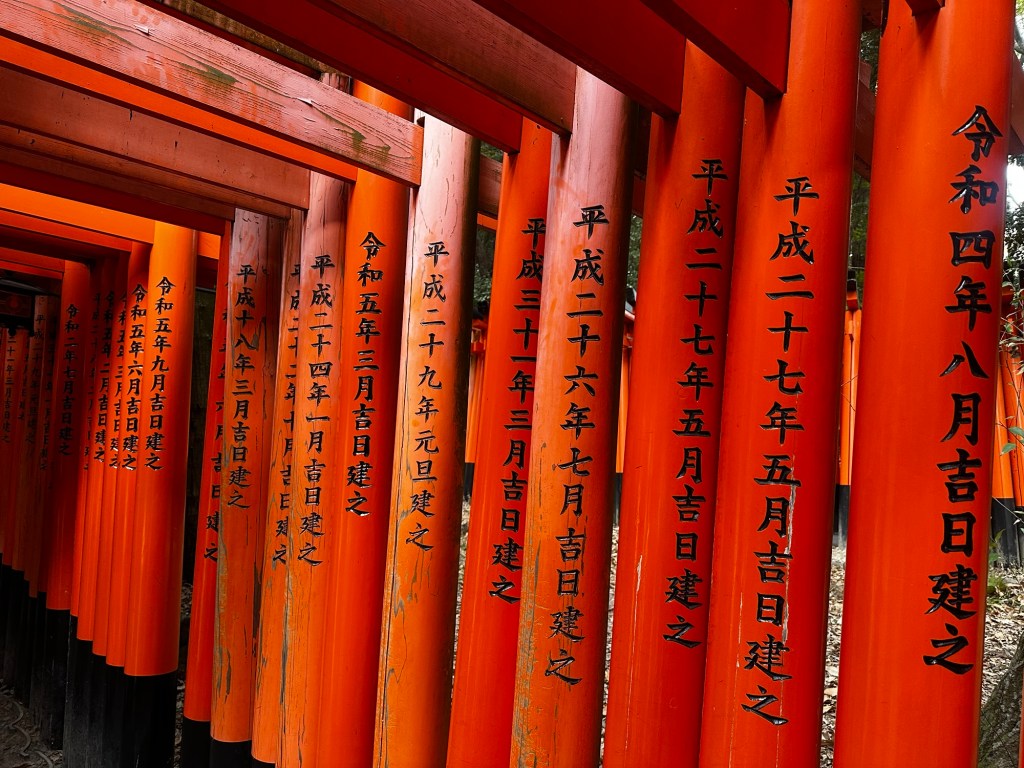
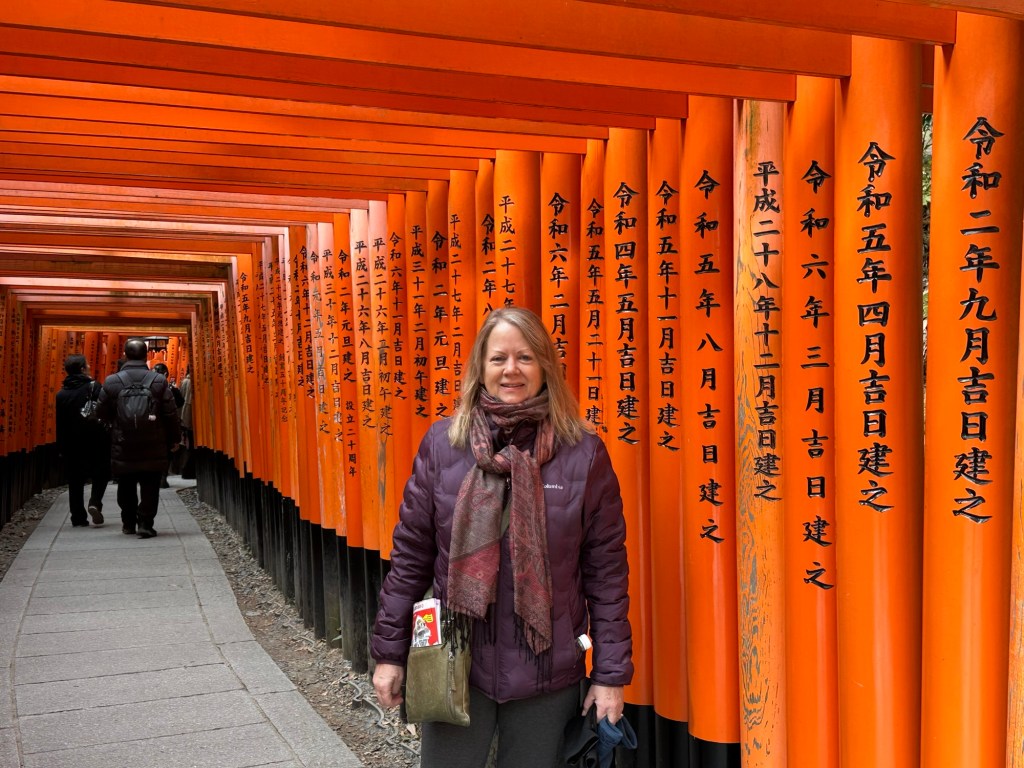
The next day we headed to the Fushimi Inari Shrine, famous for its mesmerizing tunnels of thousands of vibrant vermillion torii gates that wind up Mount Inari, creating one of Japan’s most iconic pathways. Our next stop was Kiyomizu-dera Temple, perched on a hilltop and surrounded in other seasons by cherry blossoms, lush greenery, and autumn colors. While not as striking in January, it was still delightful.
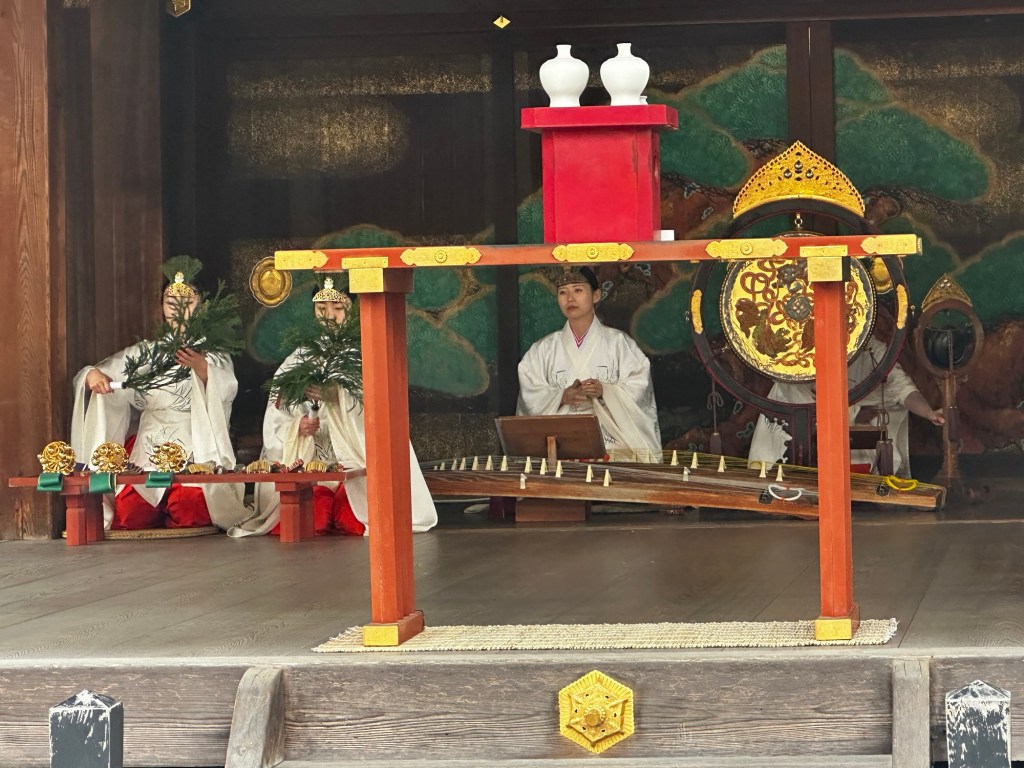
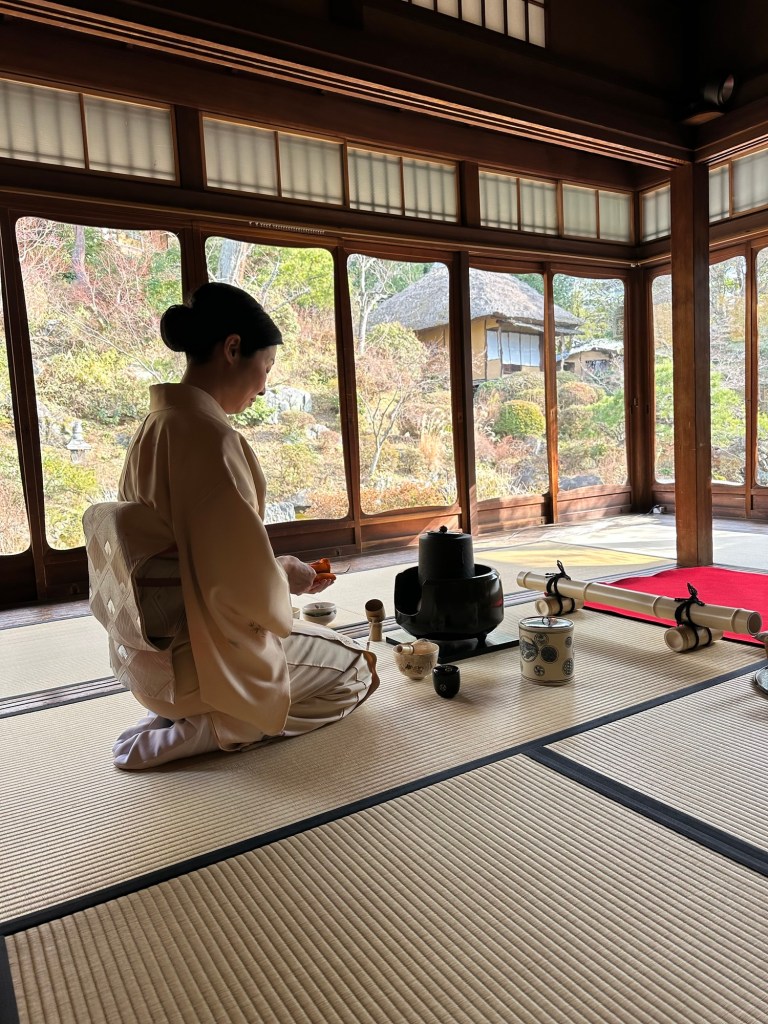
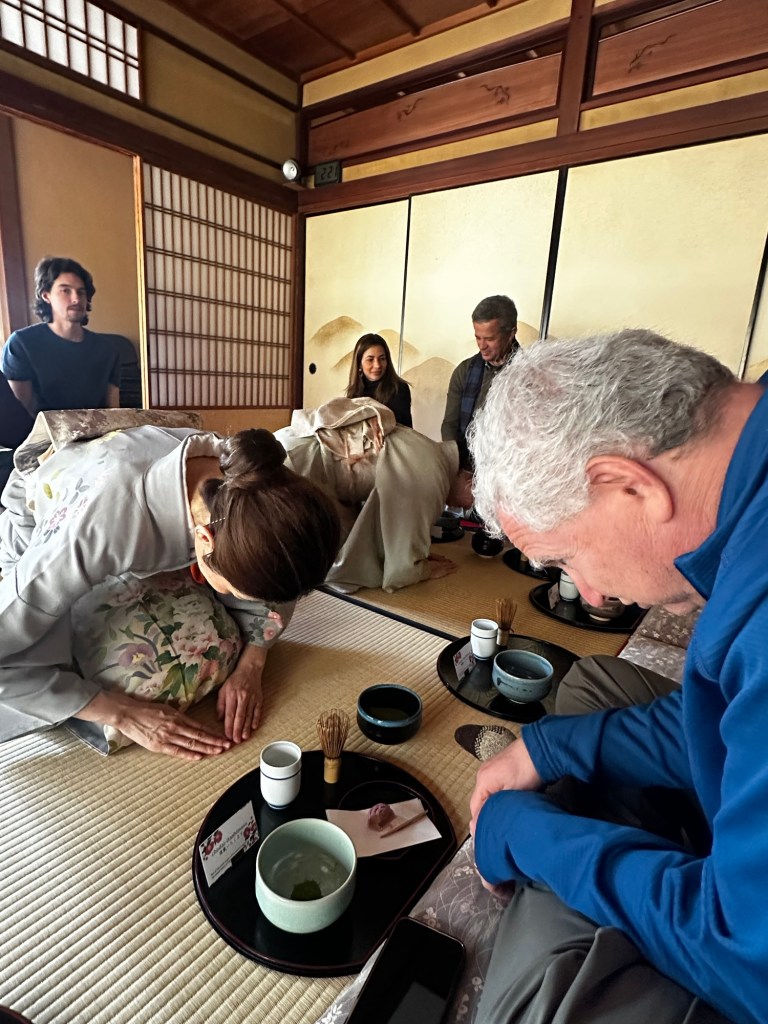
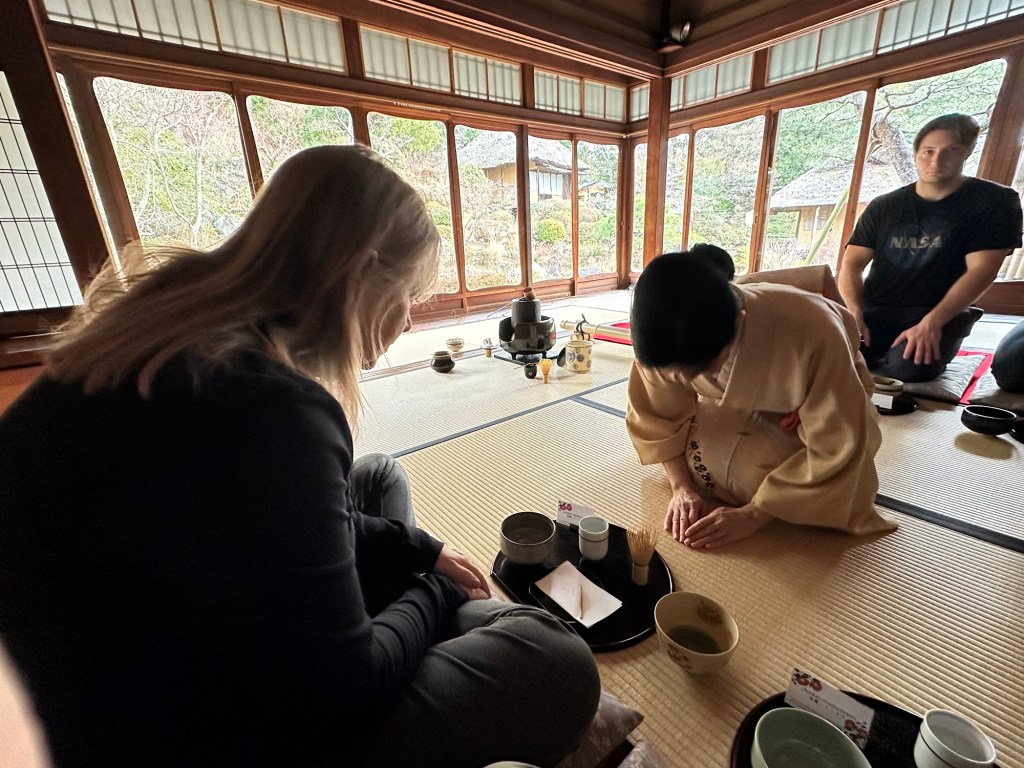
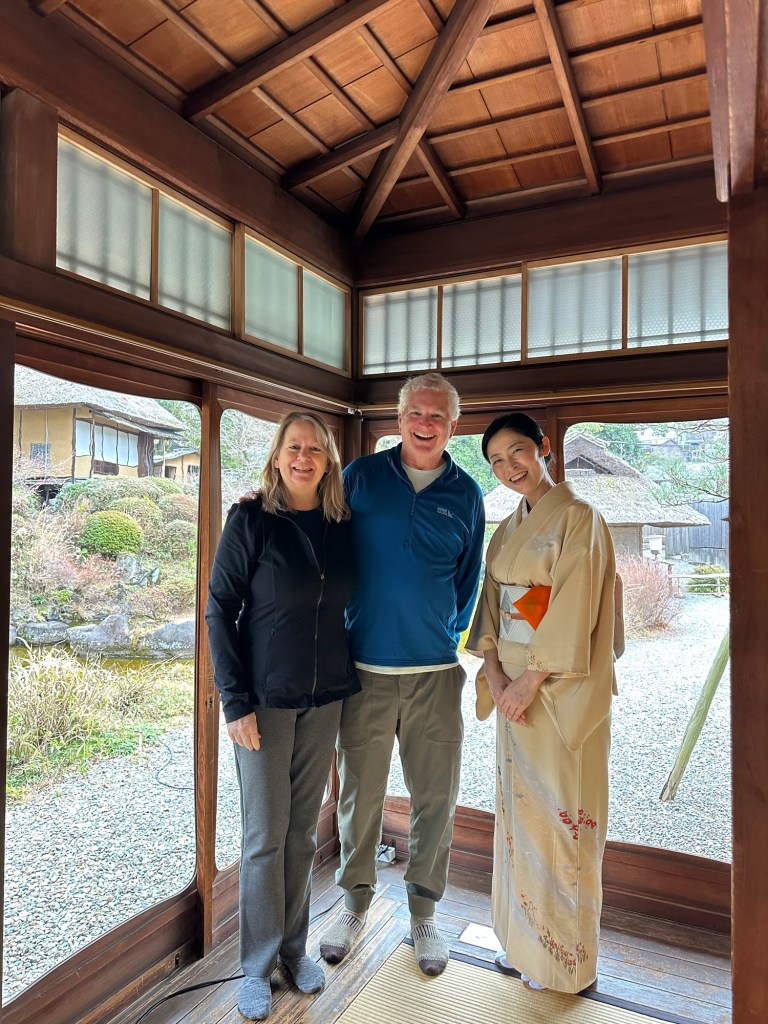
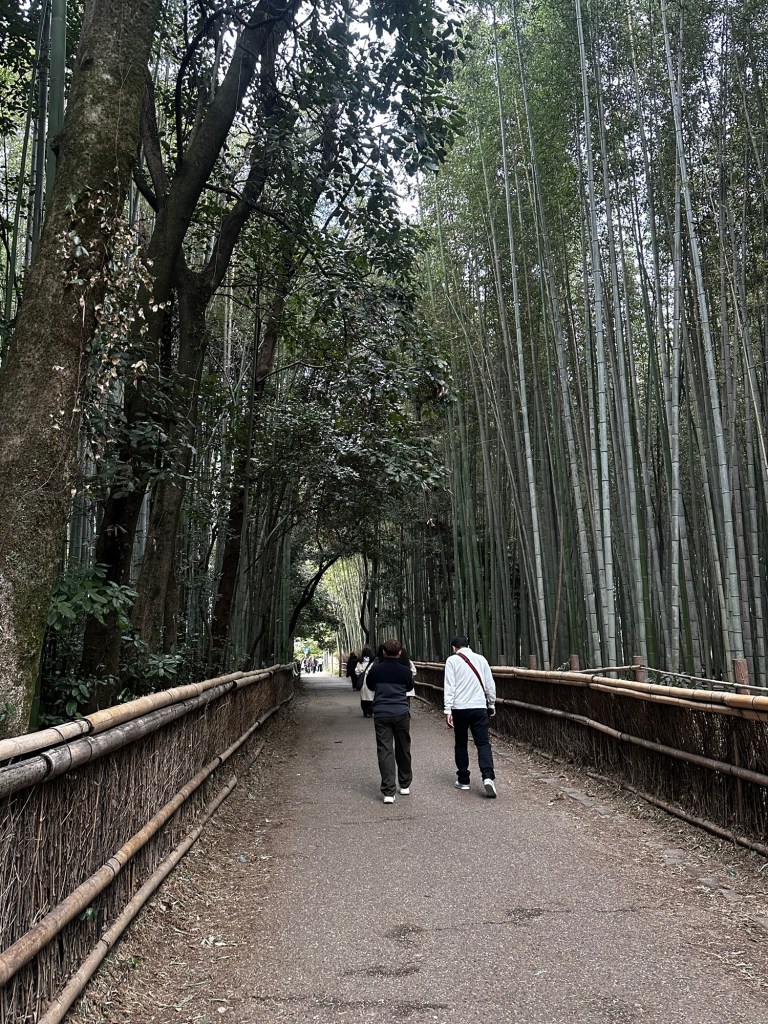
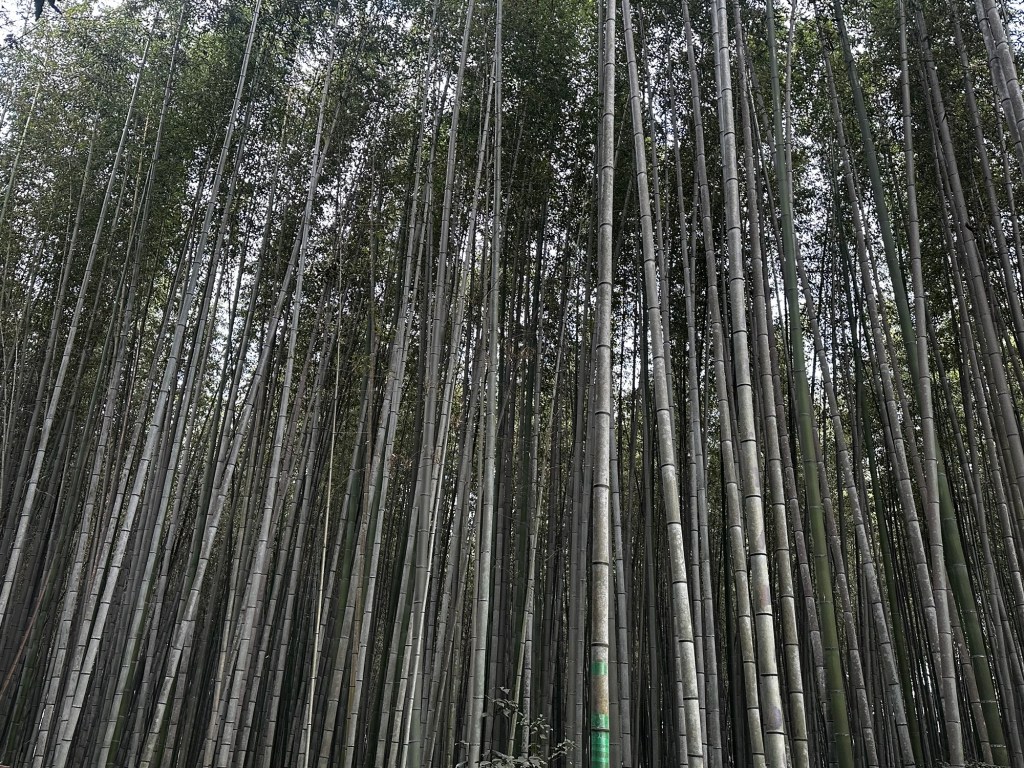
Based on a recommendation from our friends Rosa and Dennis, who had visited a week before us, we experienced a spectacular tea ceremony at Sakaguchian. A tea master with over ten years of training served us while explaining the 500-year history of this sacred ritual. It was truly special. We ended the day at the famous Arashiyama Bamboo Grove.
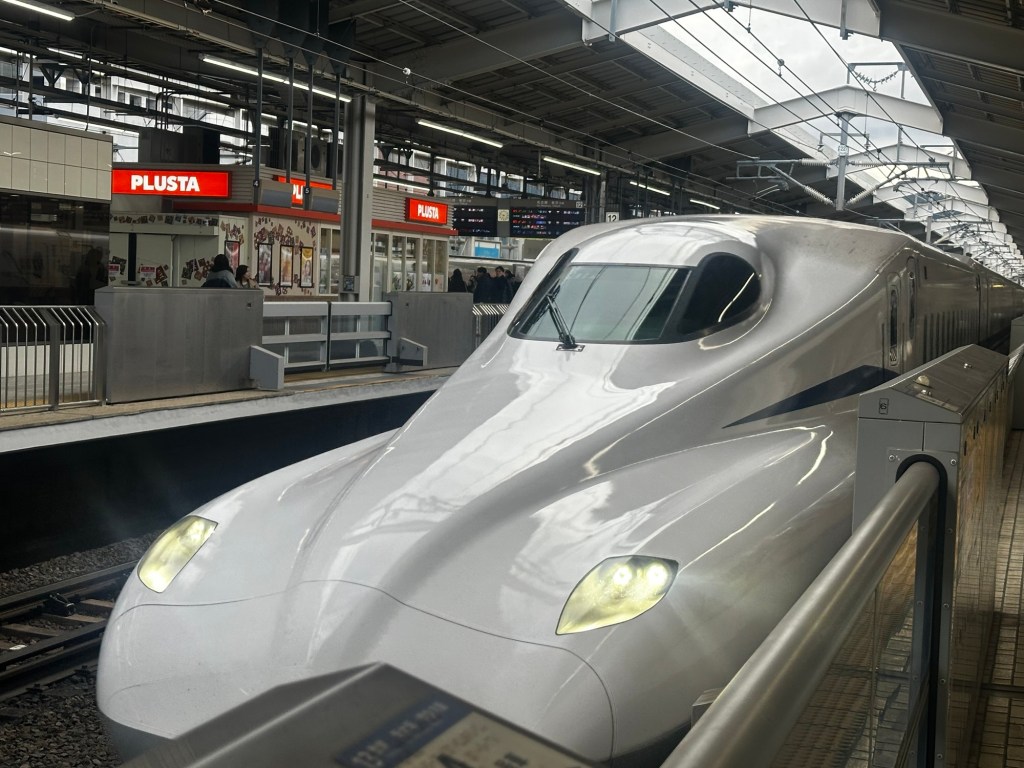
On Wednesday, we boarded the super express train to Hiroshima. We joined a walking tour that covered the city’s rich history over the past few hundred years, as well as the devastating impact of the 1945 bombing. We visited Hiroshima Castle and saw countless colorful carp—the city’s mascot, also known as koi. Much of the tour focused on Chuo Park and Peace Memorial Park, home to more than a dozen buildings and monuments commemorating those who died and those who survived.
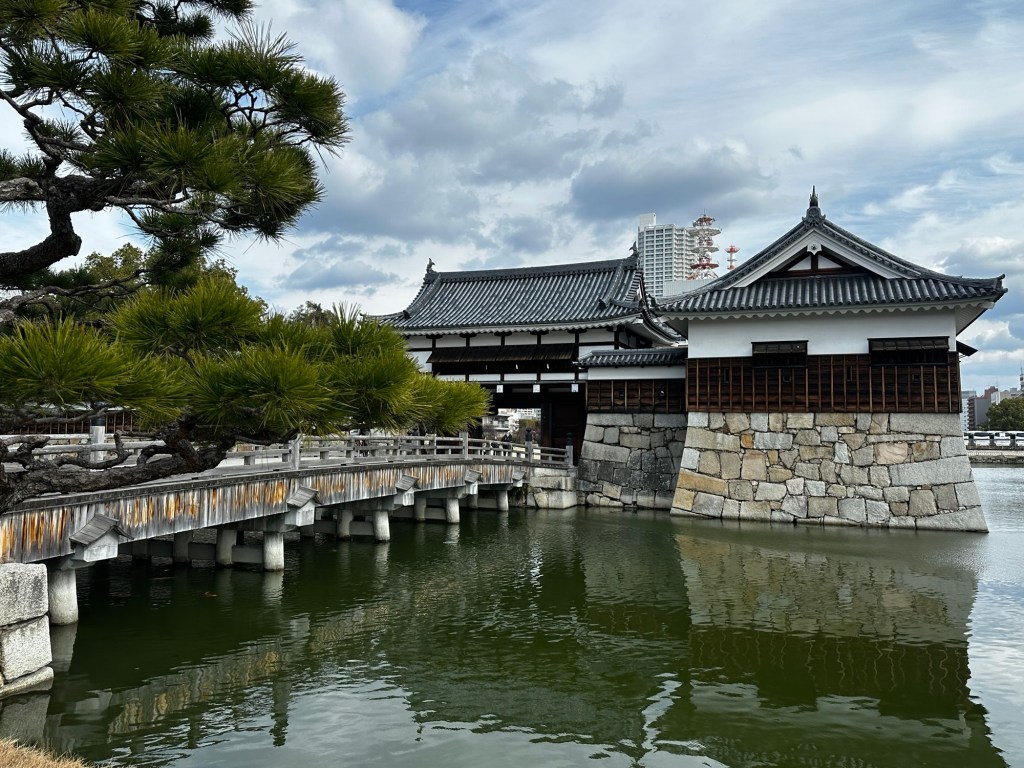
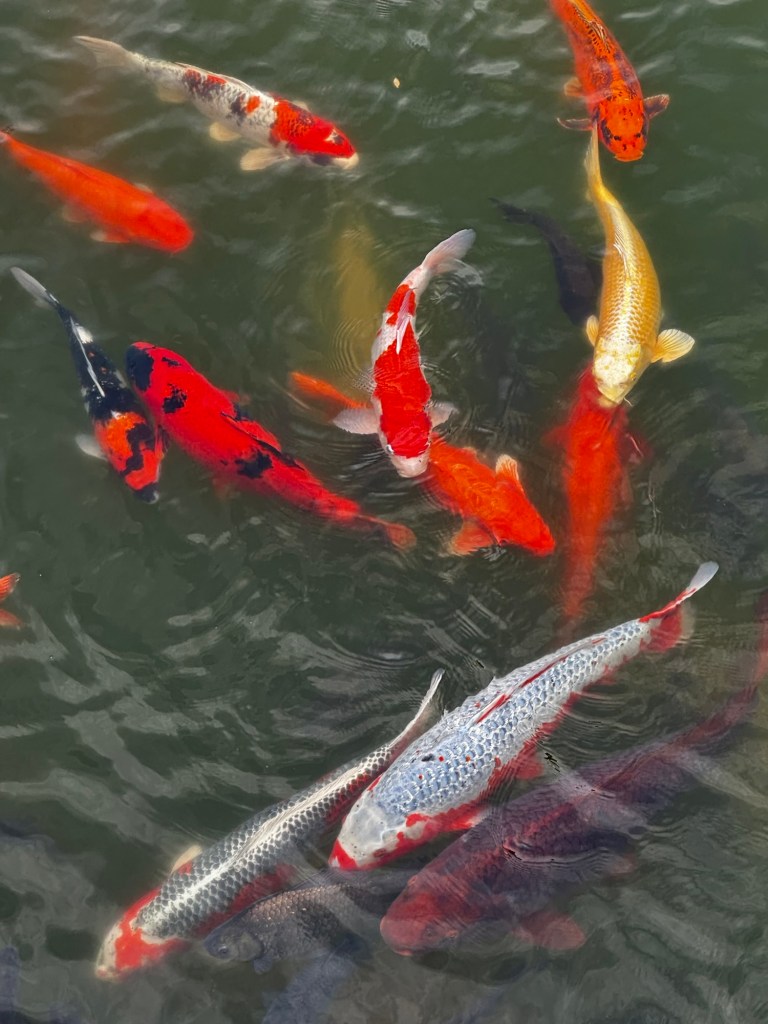
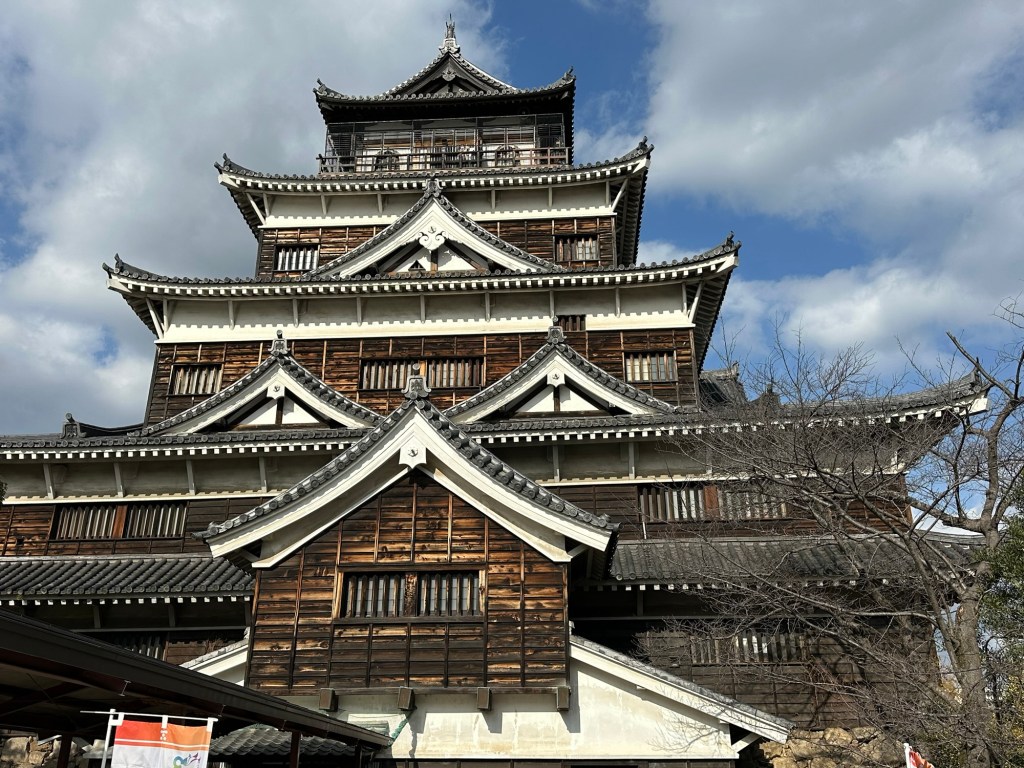
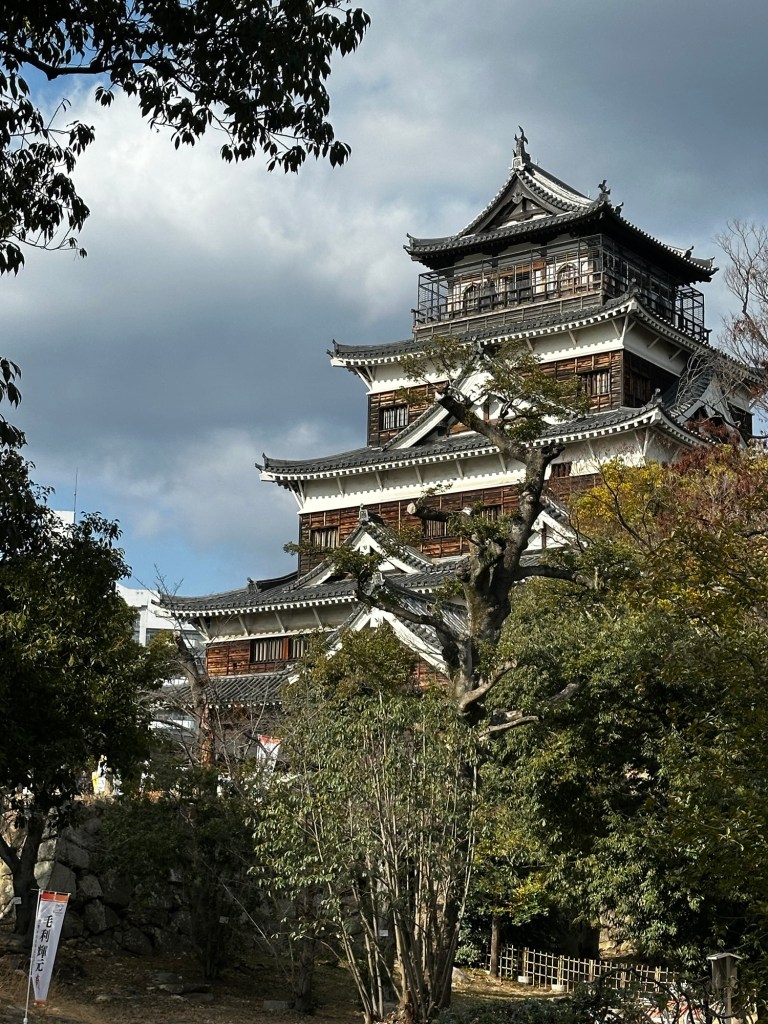
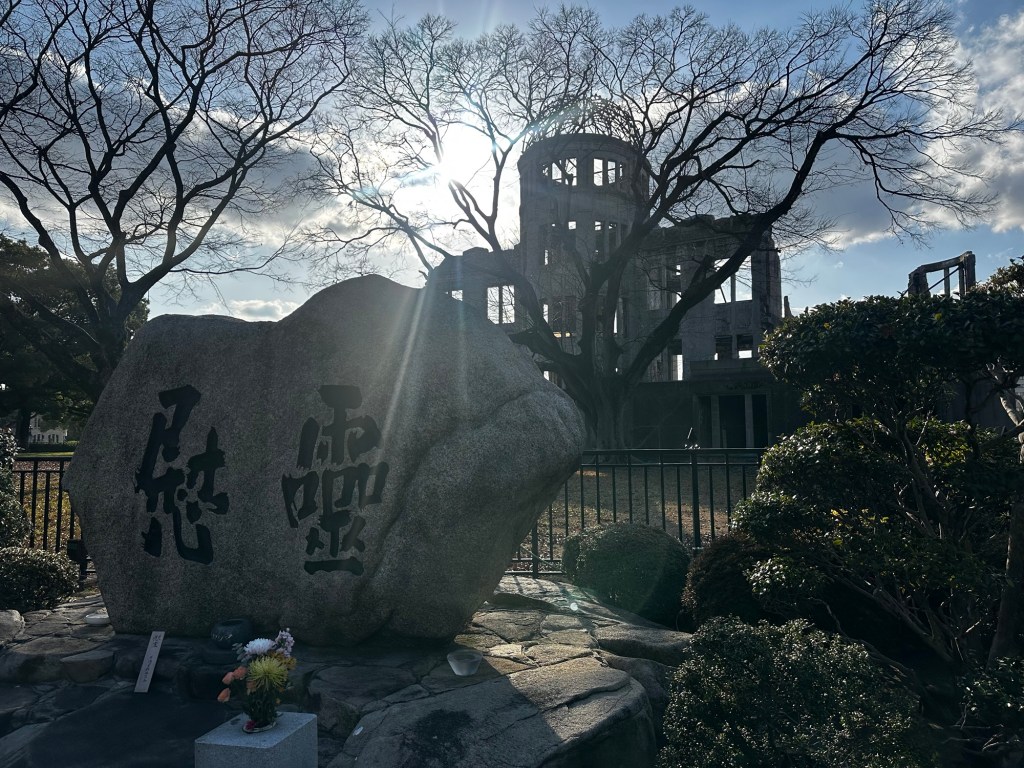
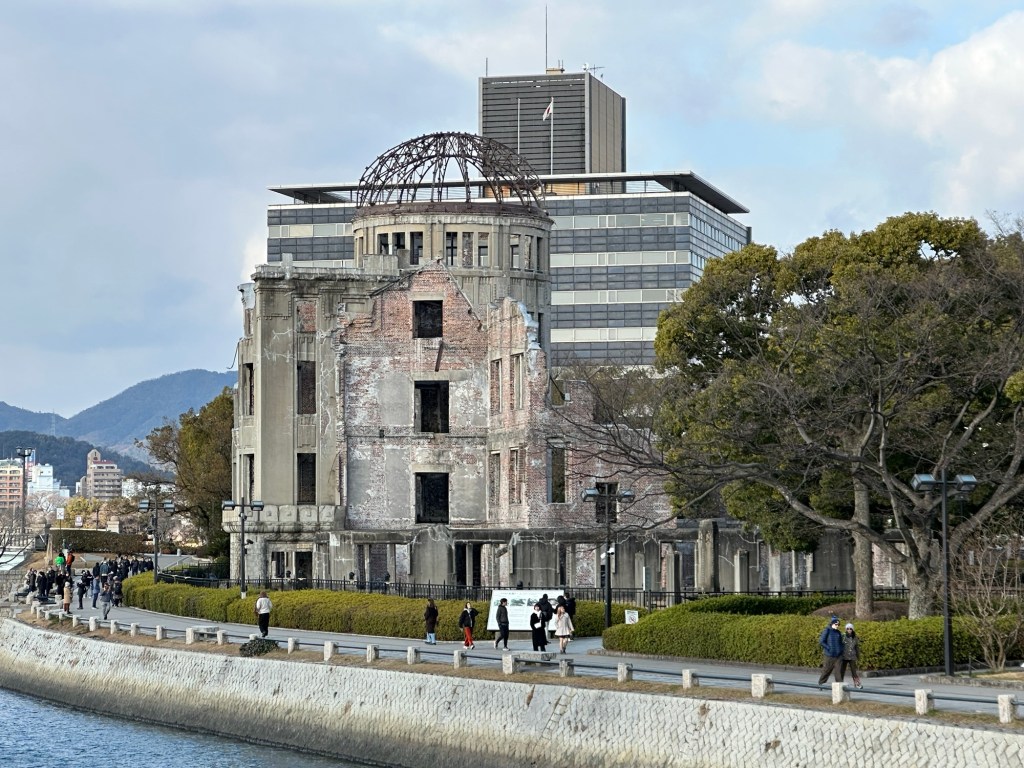
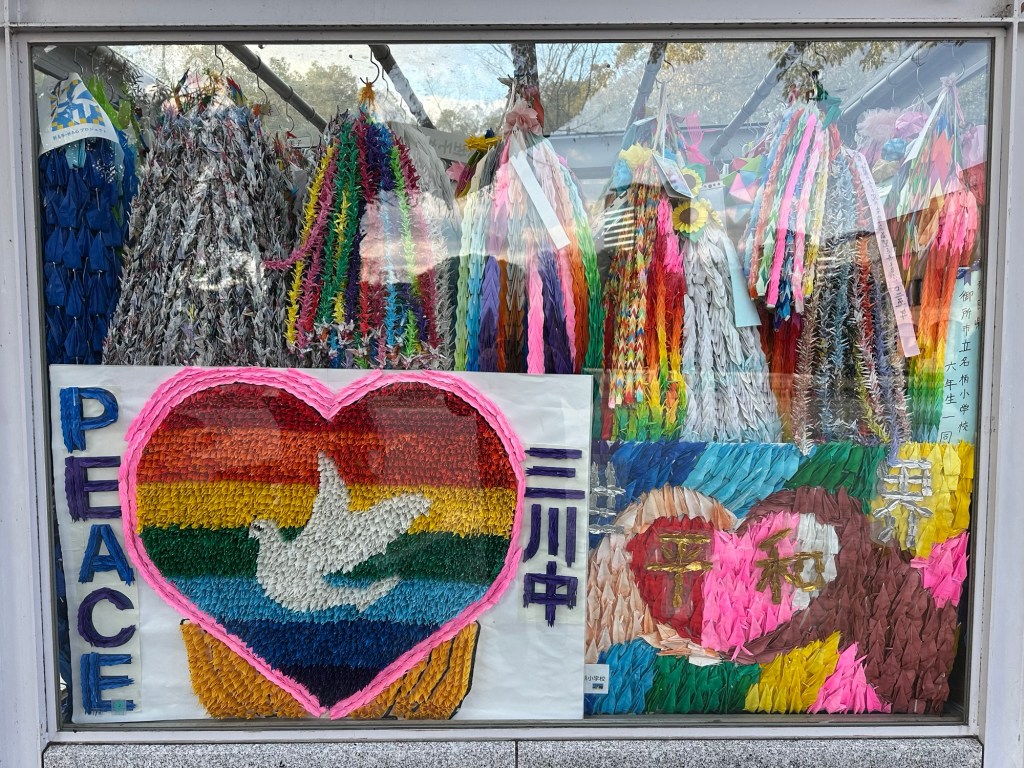
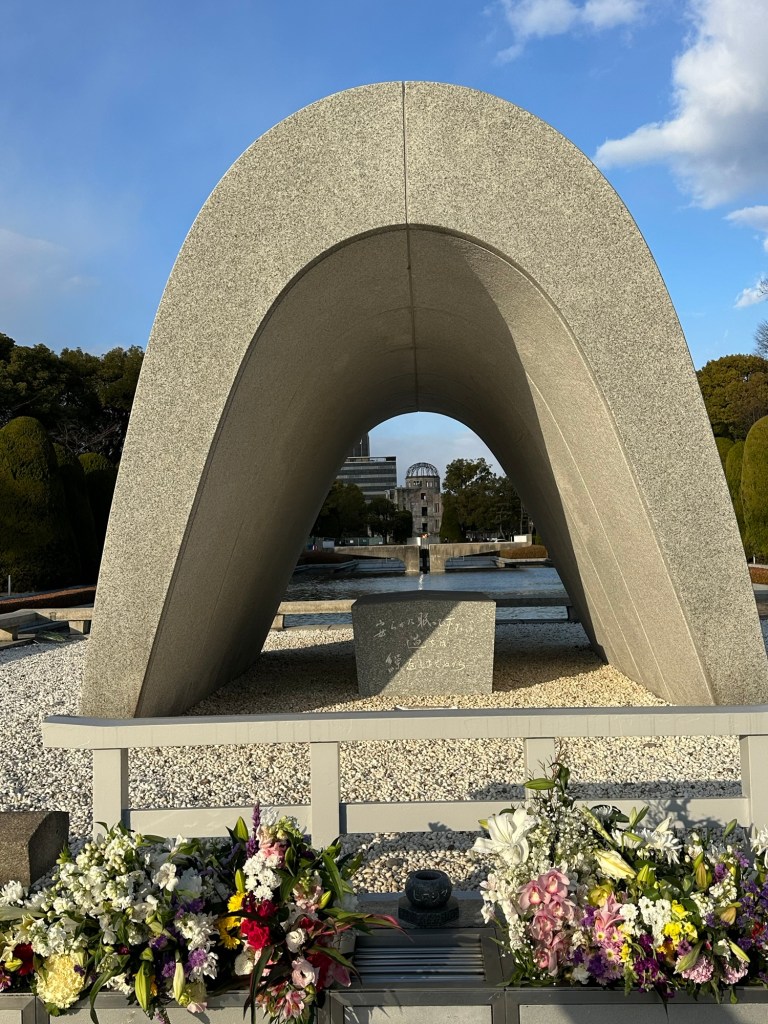
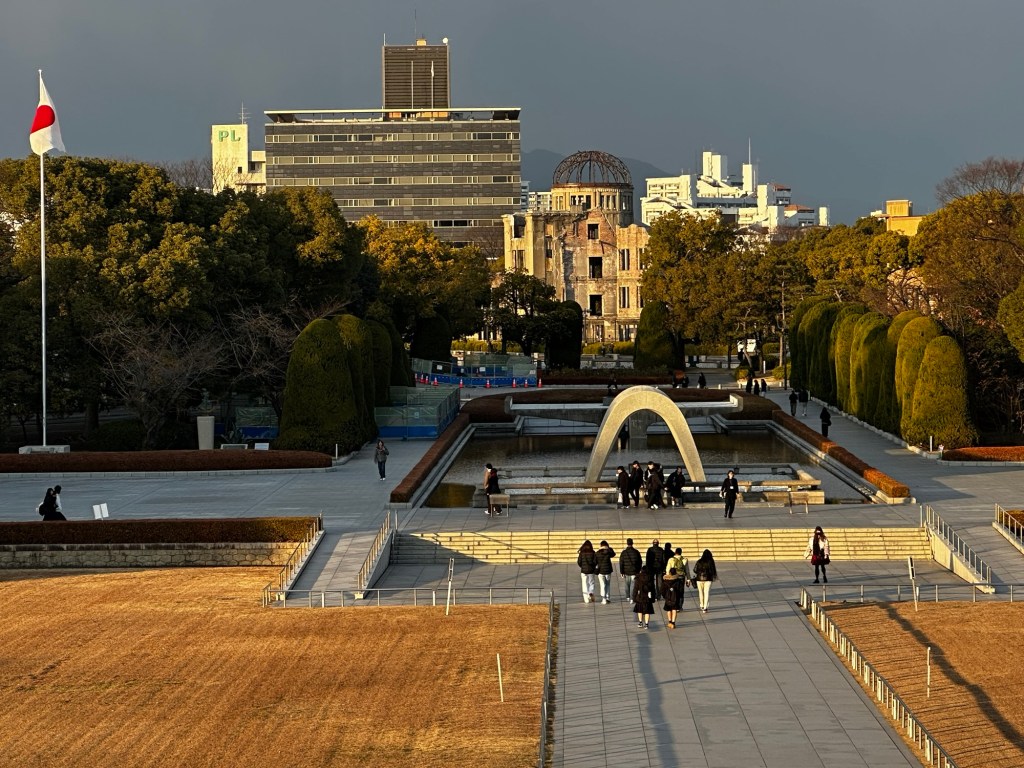
After the tour, we visited the Hiroshima Peace Memorial Museum. While extremely disturbing and heartbreaking, it is a powerful and moving tribute to the city, its people, and the lasting effects of the bombing. Afterwards, we enjoyed a traditional Hiroshima meal: okonomiyaki—a savory pancake made with wheat flour batter, shredded cabbage, pork, pan-fried noodles, and topped with special sauces and seaweed. Its name translates to “grilled as you like it.” Darryl declared it his favorite food…so far.
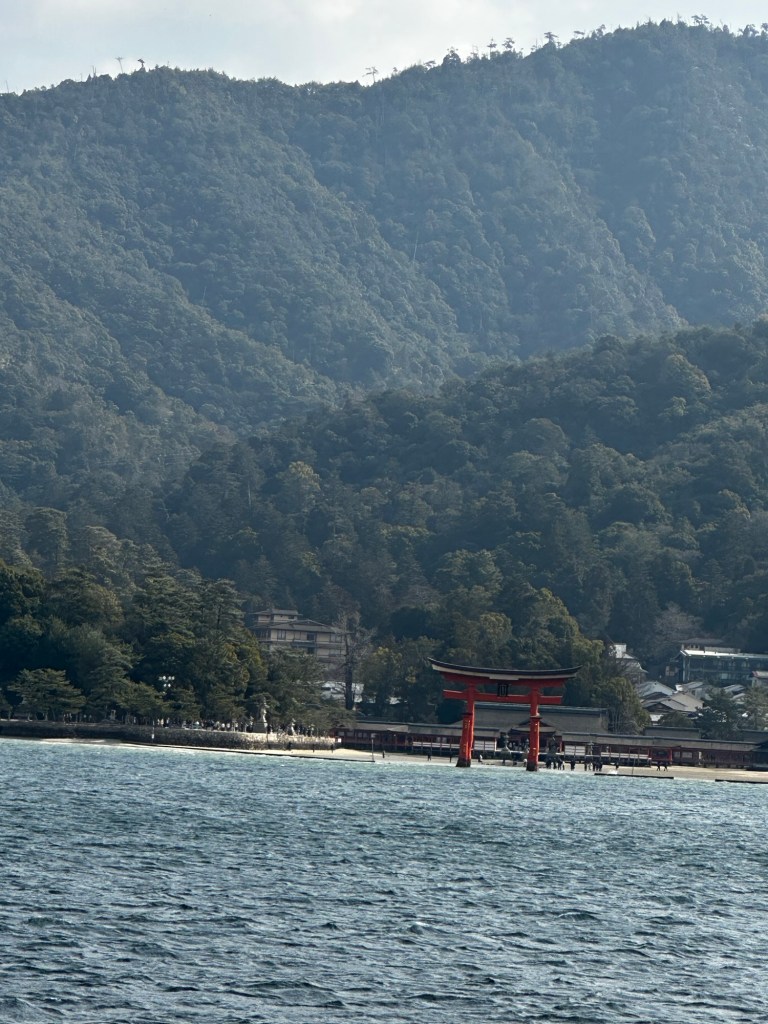
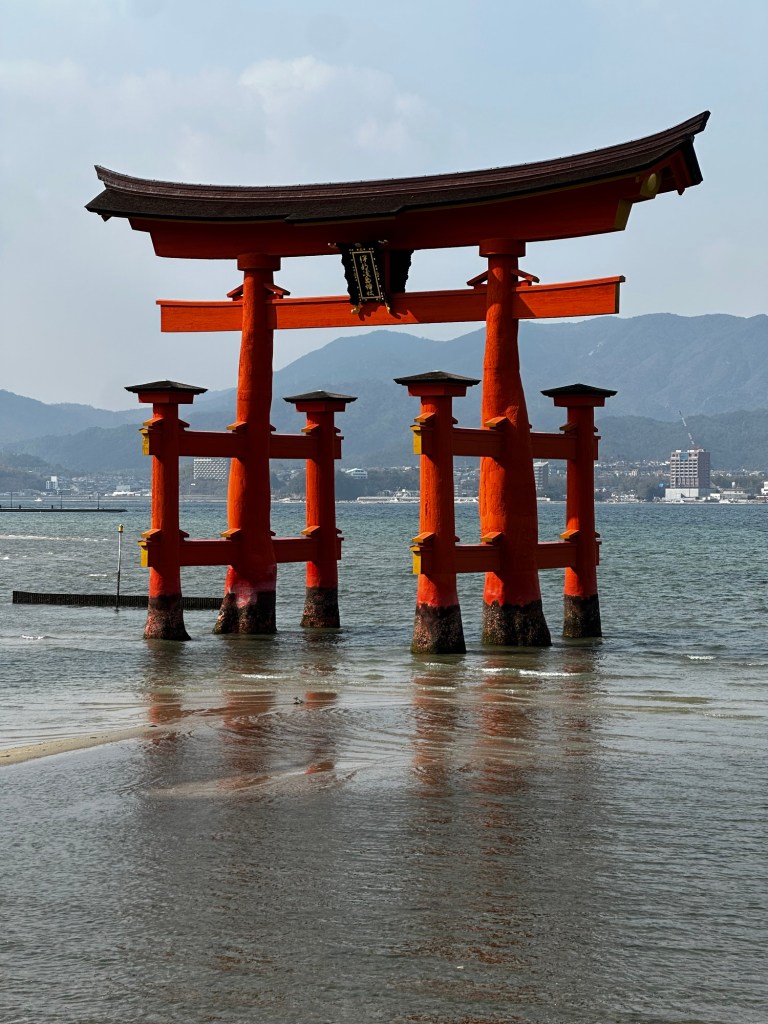
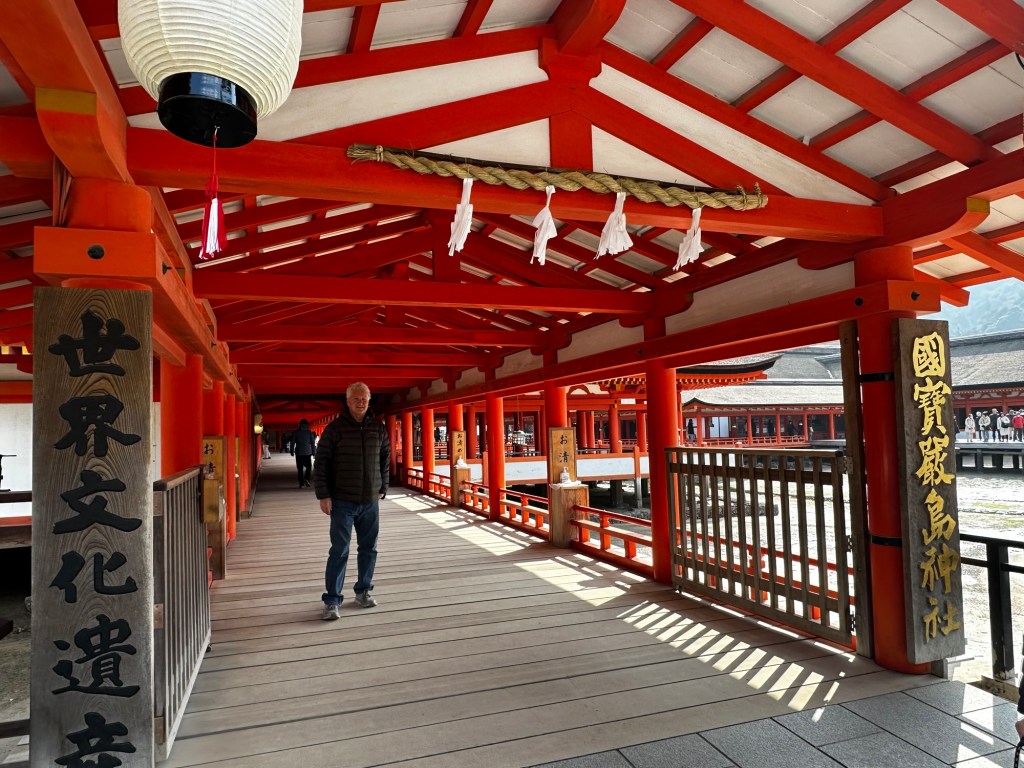
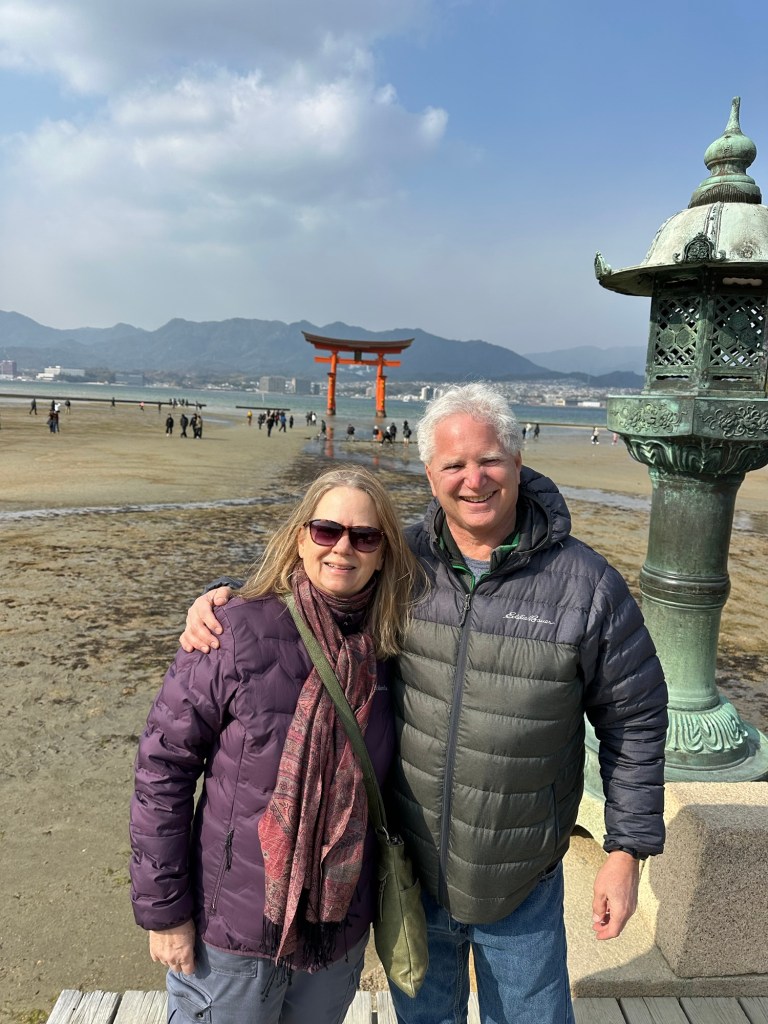
On Thursday, we took the ferry to Miyajima Island. The train ride through the suburbs and along Hiroshima Bay was lovely as we headed to this sacred island, famous for its iconic “floating” torii gate. Although it was too cold to hike the mountain, we enjoyed walking through the scenic streets of the small town and visiting the beautiful Itsukushima Shrine before returning to the city. That evening, we enjoyed a comforting bowl of soba soup for dinner before heading back to the hotel.
On Friday—our 33rd wedding anniversary—we boarded the super express train back to Osaka. After leaving our luggage at the airport hotel, we ventured back into the city to enjoy one of our favorite areas, Dotonbori, for a delightful anniversary dinner. The meal included approximately 20 courses: three appetizers (fish soup, mushrooms, and taro), three sashimi selections (sea bream, tiger fish), and ten exquisitely light tempura items—including Japanese tiger prawn, tuna, scallop, crab, pond smelt (my least favorite), and several vegetables – lotus root, turnip, rapeseed blossom, and sweet potato with honey butter. The final tempura was a delightful strawberry.
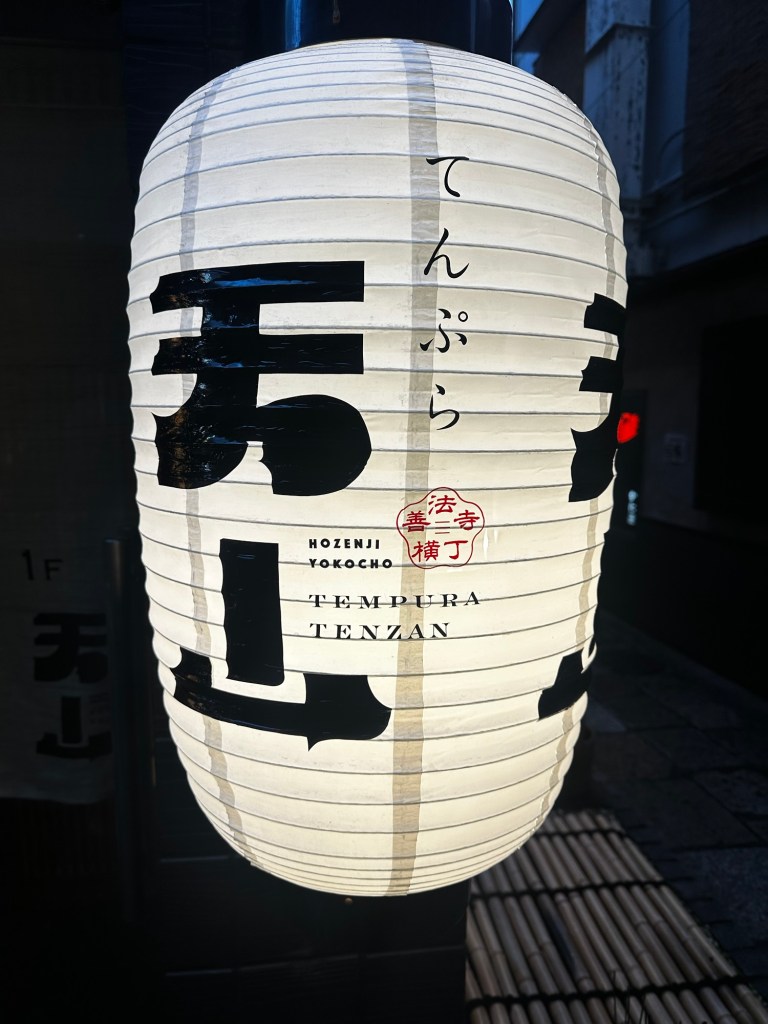
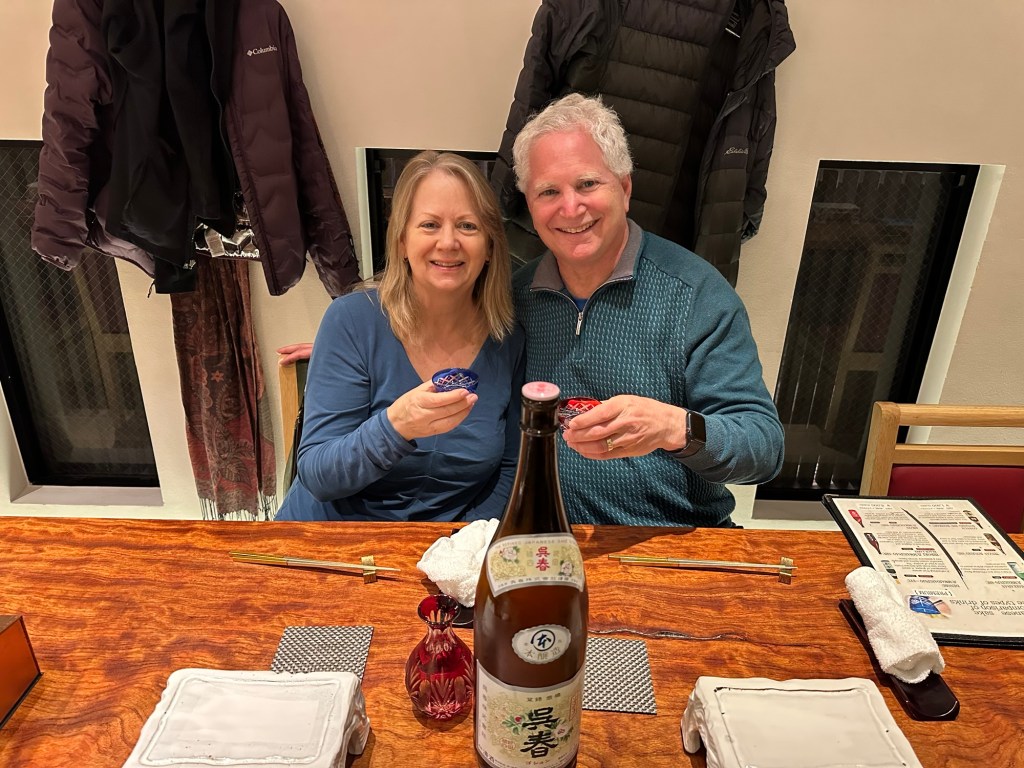
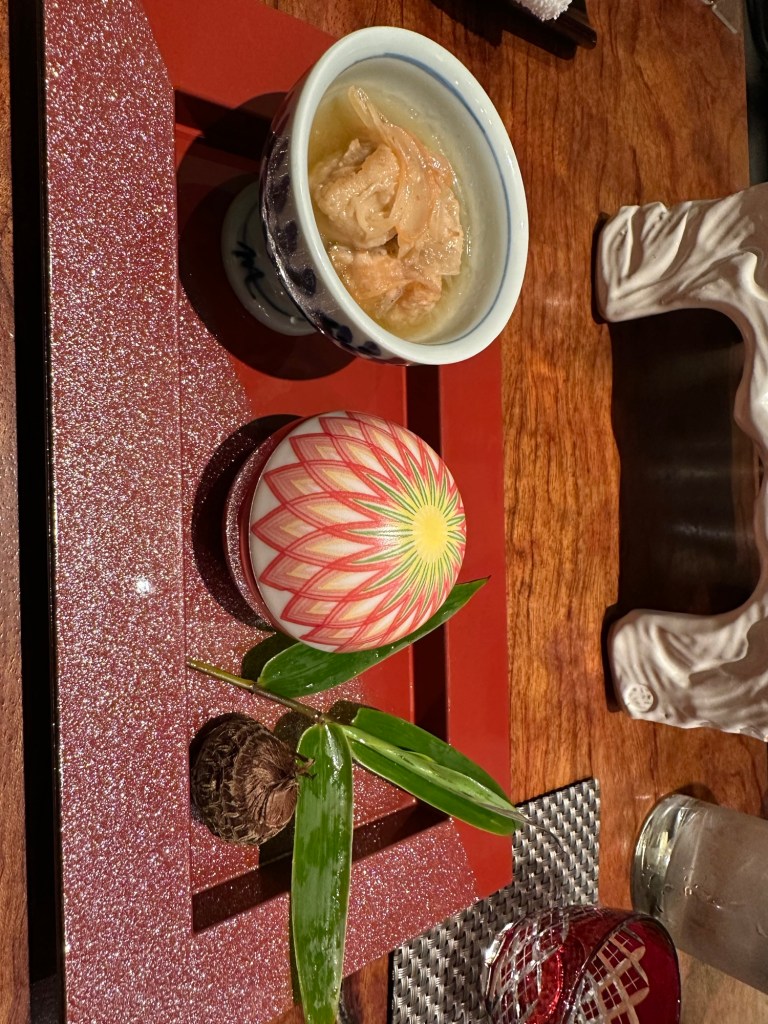
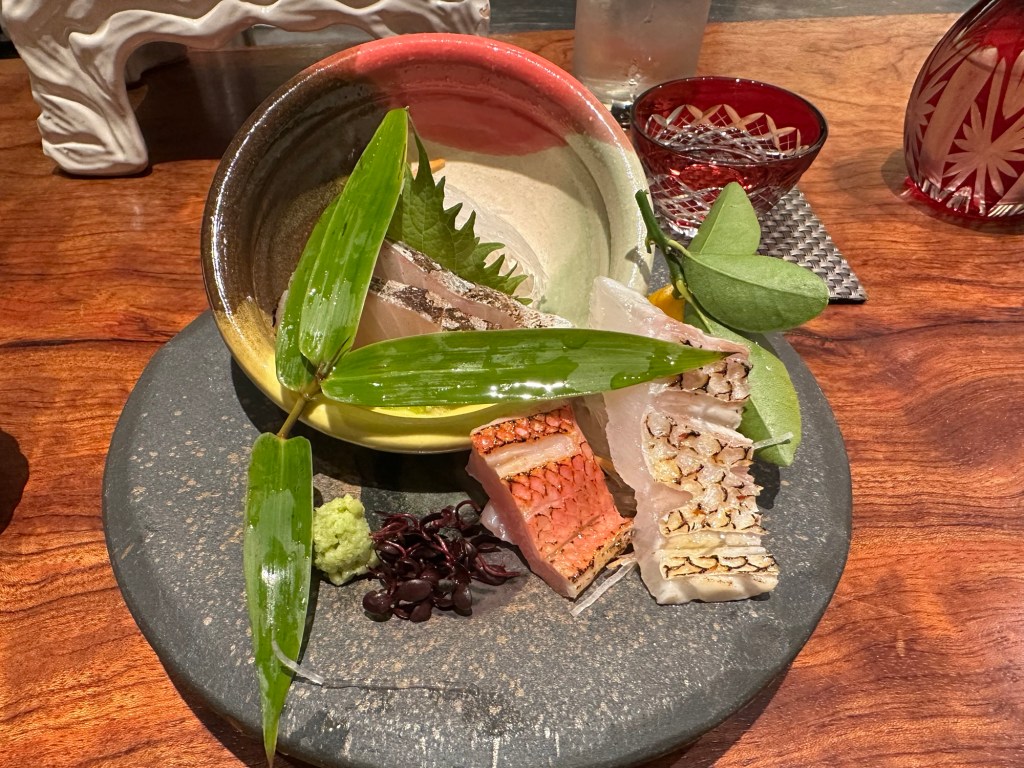
Between courses, we enjoyed a small salad to cleanse the palate, followed by a rice dish with tempura egg and snap peas. Dessert included matcha pudding and apple crisp, accompanied by a lovely small bottle of sake. I highly recommend Tempura Tenzen for a truly memorable dining experience. Tomorrow, we head to Shanghai!
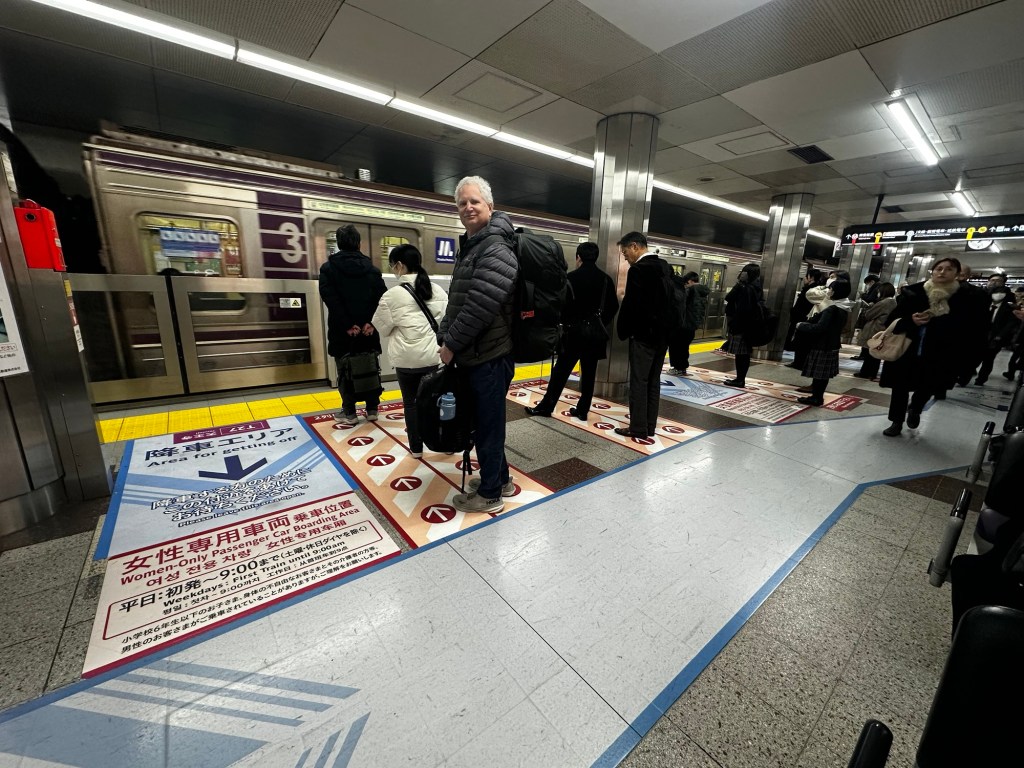
Japan is spectacular. Everything is beautiful and welcoming—especially the people. Public transportation is orderly, with clear signage everywhere. The country is exceptionally clean, and everyone is polite, stylish, and quiet. It’s evident how much pride people take in their work and in themselves.
Anime culture is everywhere—keychains on purses and backpacks, even on businessmen dressed in stunning suits. Animated characters and animals appear on store logos, walls, shopfronts, restaurants, and sidewalks. Vending machines—clean, fully stocked, and offering drinks and snacks—are on nearly every block. Many locals ride bicycles loaded with goods and small children, and there are far fewer motorcycles than in other countries we’ve visited, such as Vietnam. And the toilets are amazing: digital “vacant” signs outside, video displays at many stalls, control panels with nearly 25 buttons, and heated seats everywhere.
During our two days in Kyoto, we walked over 48,000 steps (21.5 miles). In Hiroshima, we took it a bit easier—only 34,000 steps (13.3 miles) over two days. (Yes this was Darryl’s contribution.)
The one thing we would change is the order of cities. We should have gone to Hiroshima first and then Kyoto, since there is a quick, direct train from Kyoto to KIX (Osaka Airport). The only changes we would make to this itinerary are one more day in Kyoto—and another week or two to explore even more cities. I’d love to come back…just not in January.

 Traveling Walters