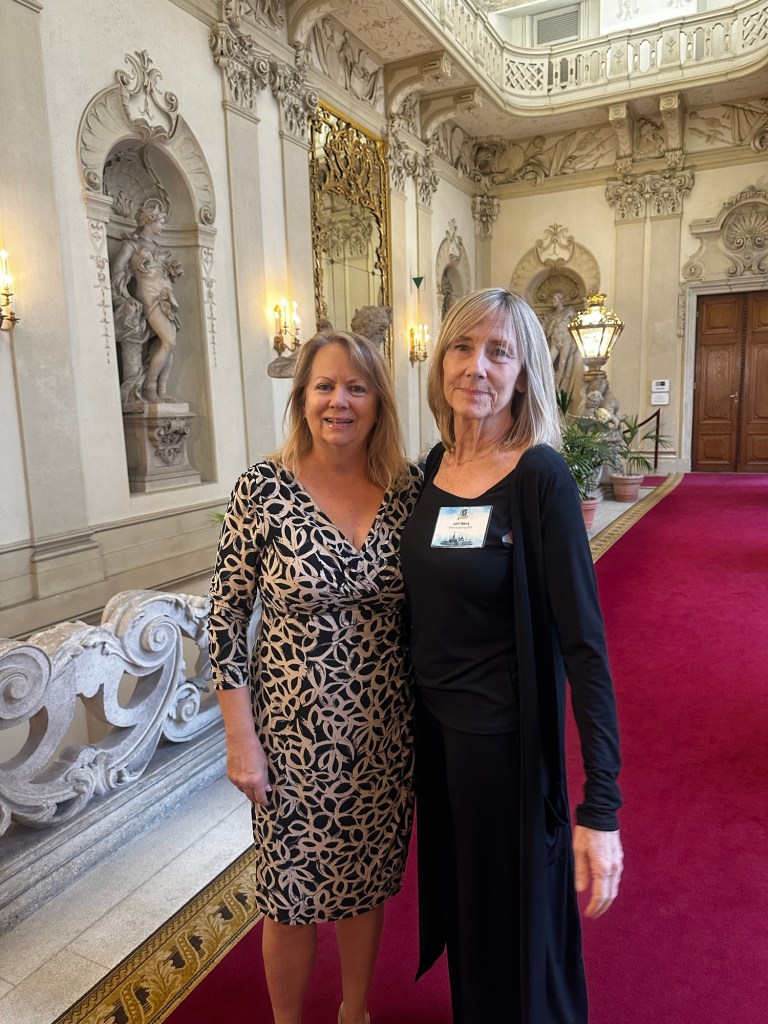
Forty-four years. That’s how long it has been since I last set foot in Vienna, the city that transformed me during my study abroad semester in spring 1981. This weekend, IES (Institute of European Studies) Vienna is celebrating its 75th anniversary, and three of my college girlfriends and I had planned to reunite here. Due to life’s inevitable complications, I arrived with one of those cherished women and Darryl as my plus one.
While on the train from Prague toward Vienna, memories flooded back—those exhilarating weekend trips to Rome, Santa Margherita, Florence, and Venice (we were rather obsessed with Italy). I also ventured to Greece, France, and Germany, and more countries collecting experiences like treasures. The travel was extraordinary, the semester transformative, but the enduring gift of Vienna has been the lifetime of friendship with these three women.
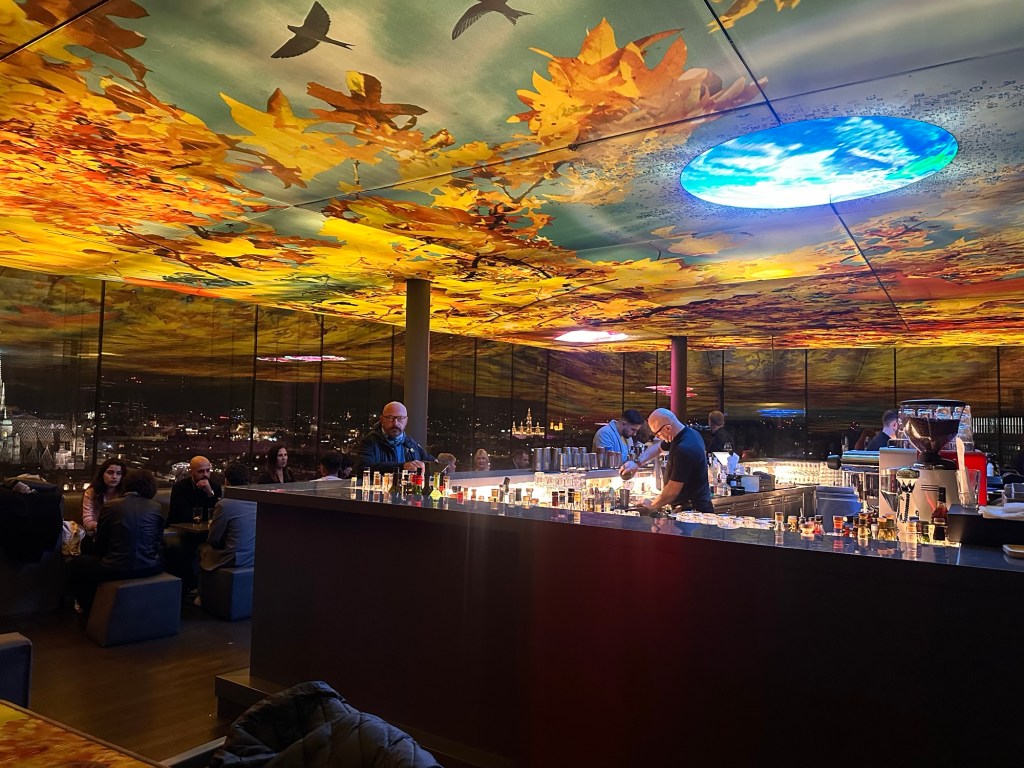
We arrived at 8 p.m., and Lora met us at the rooftop bar of SO/ Vienna. Over drinks with a view of the city lights, we traded stories from our recent travels and reminisced about our Vienna days. Our dear friends Cindy and Sarana couldn’t make the trip, but we promised to flood them with photos of every moment.
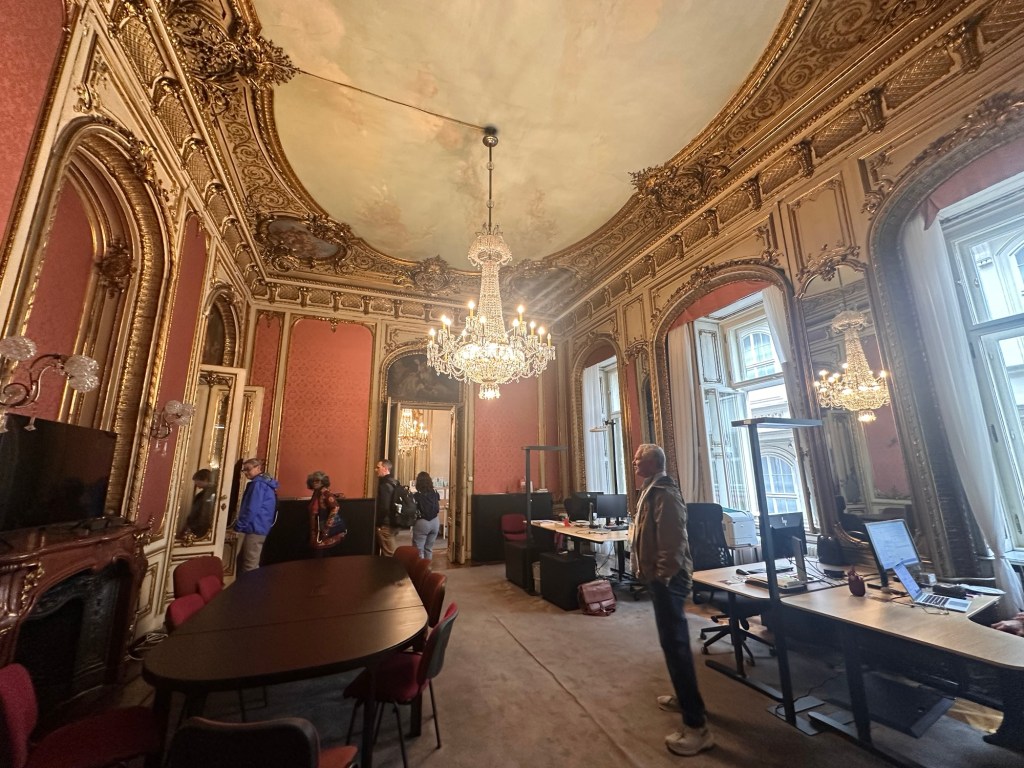
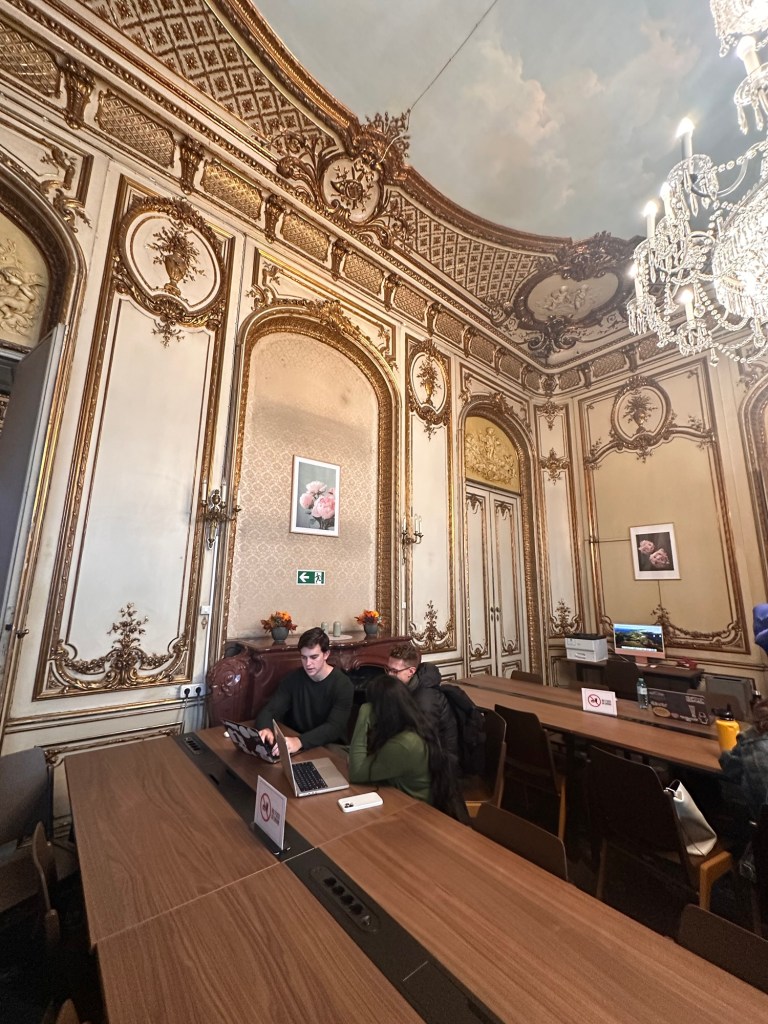
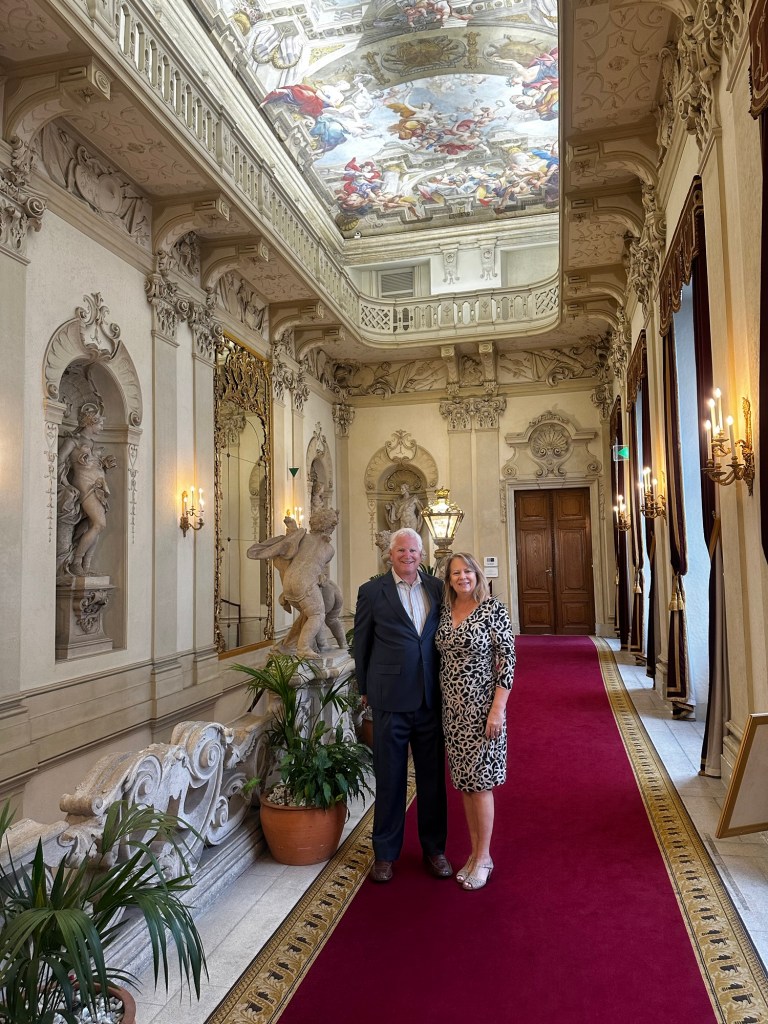
The following morning brought a tour of IES’s current home, the magnificent Palais Corelli, built in 1690. The program moved here in 1982—just one year after we left the previous location at Palais Kinsky. Walking through the baroque halls felt surreal. Display tables overflowed with posters, photographs, and yearbooks documenting the program’s history since 1950, and I found myself lost in the archives, searching for familiar names and faces. Hundreds of alumni and current students filled the space, creating an infectious energy of nostalgia and connection.
Following the tour, we visited the nearby Jewish Museum, where we learned about Vienna’s Jewish community — its medieval roots, its brilliant contributions to the city’s cultural life, the tragic expulsions, and the devastating rupture of the Nazi era. The weight of this history seemed to echo through every street we walked afterward.
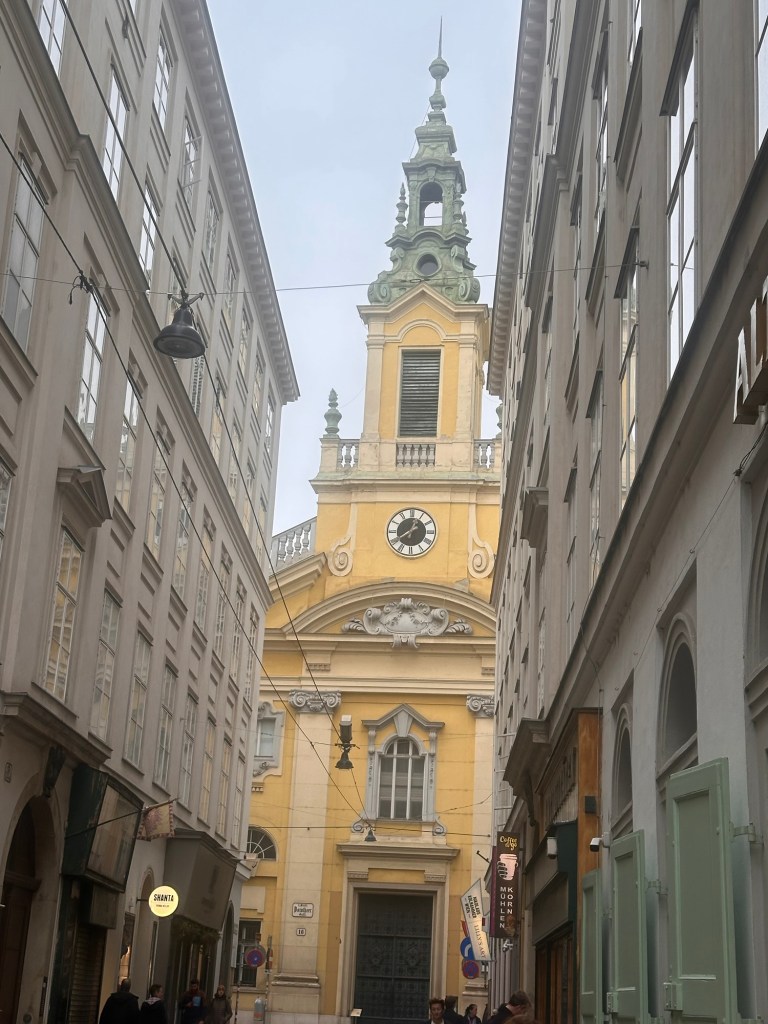

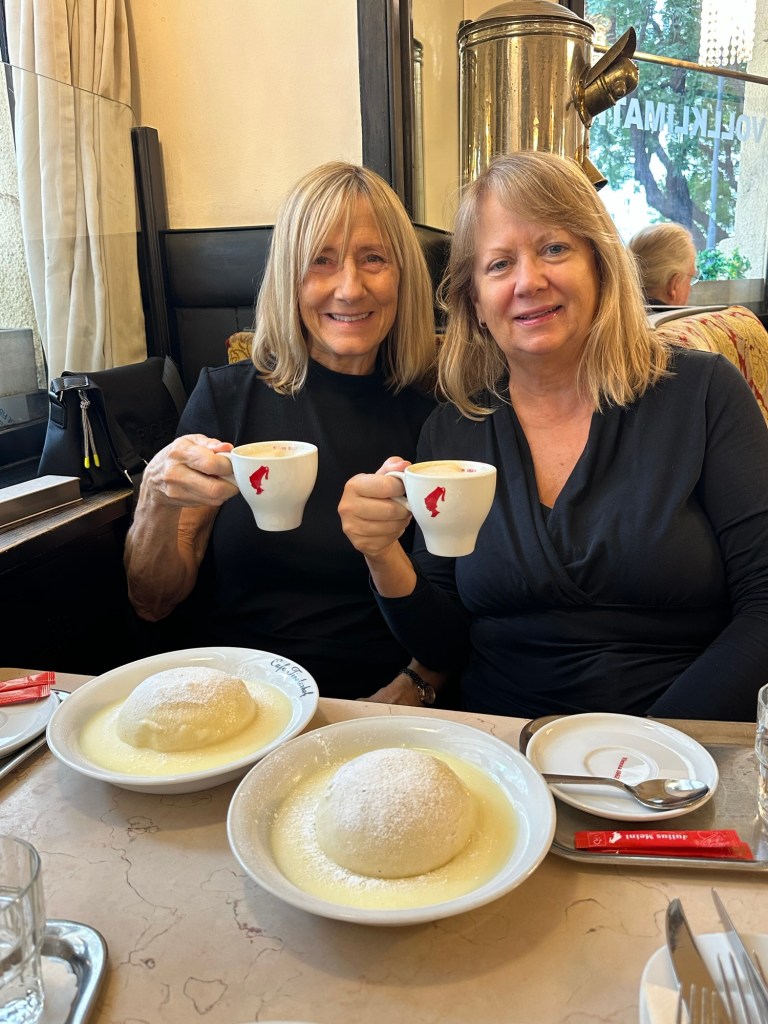
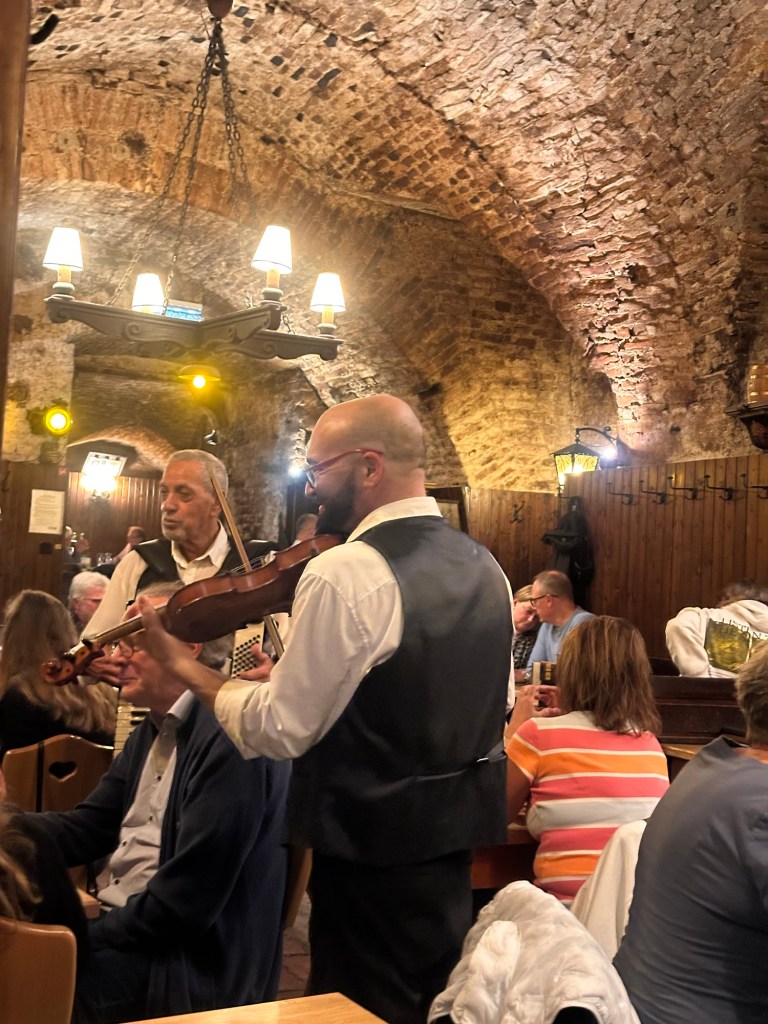
As we wandered the Inner City, I was struck anew by Vienna’s architectural splendor. Opulent facades and ornate details grace nearly every building, a visual feast that never grows tiresome. The shop windows displayed that distinctive Viennese elegance I remembered. We ducked into Cafe Tirolenhof, a traditional coffeehouse for cake and coffee, a ritual as Viennese as the waltz, in the afternoon and later headed to dinner at Zwölf Apostelkeller, a wine cellar dating to the 14th century. Our meal was quintessentially Austrian: sausages with sharp mustard, tangy sauerkraut, creamy potato salad, and an array of cheeses including Liptauer, that wonderfully spicy spread I’d nearly forgotten.
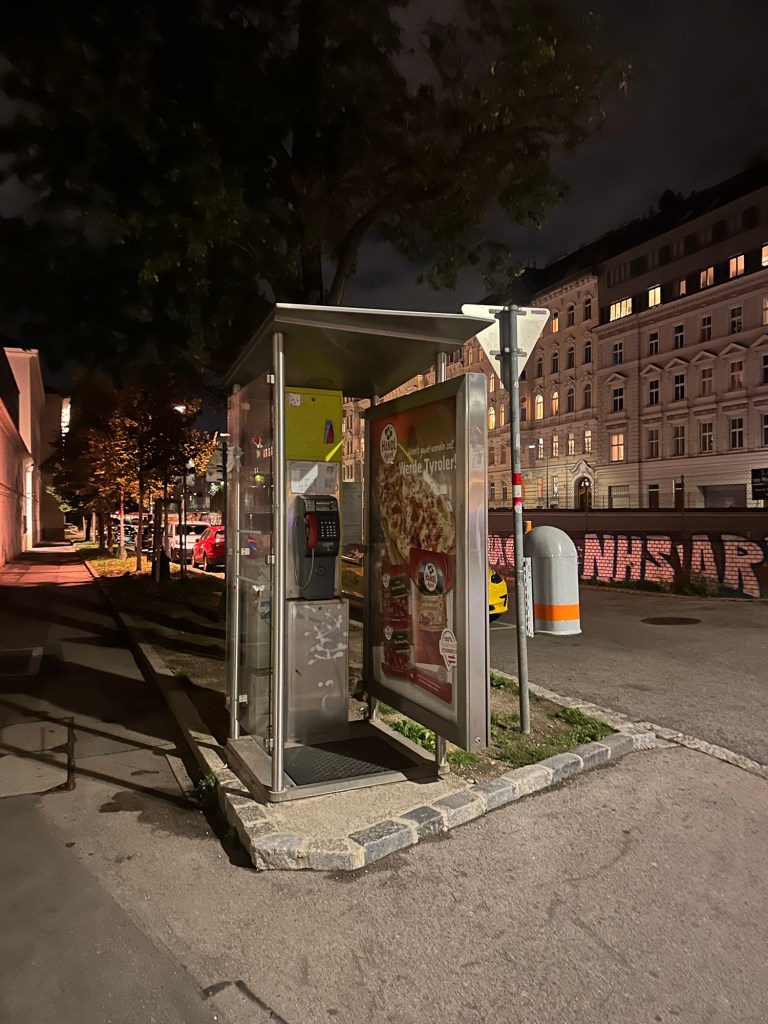
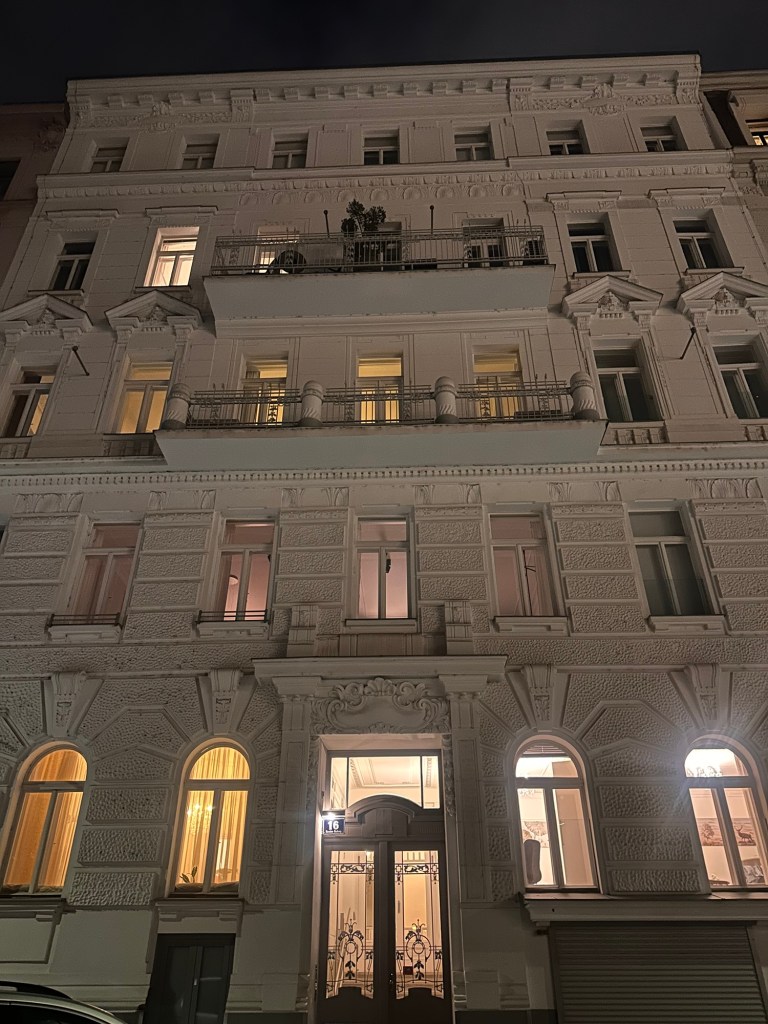
The evening’s real pilgrimage led us to my old neighborhood. There it stood, unchanged, the apartment building where Cindy and I lived until our hausfrau evicted us for hosting a dinner party she deemed too raucous. Even the phone booth across the street remained, a relic of 1981 when we’d hack free international calls by zapping the coin slot with our gas stove igniter for 90 precious free seconds to reach family and friends back home.
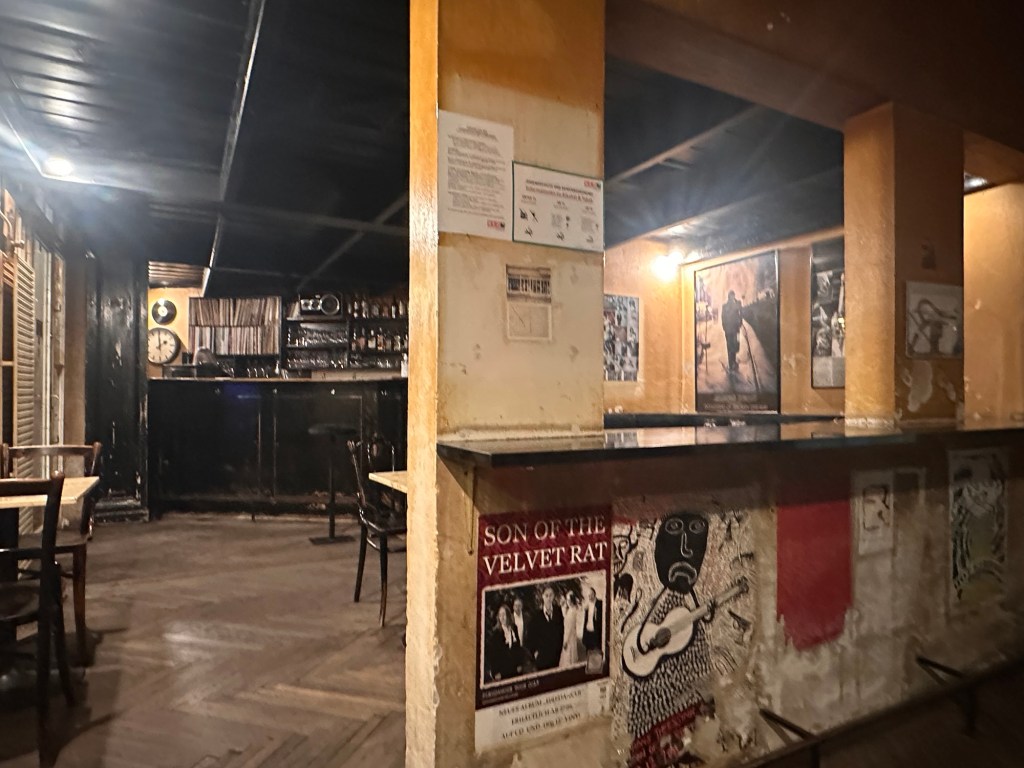
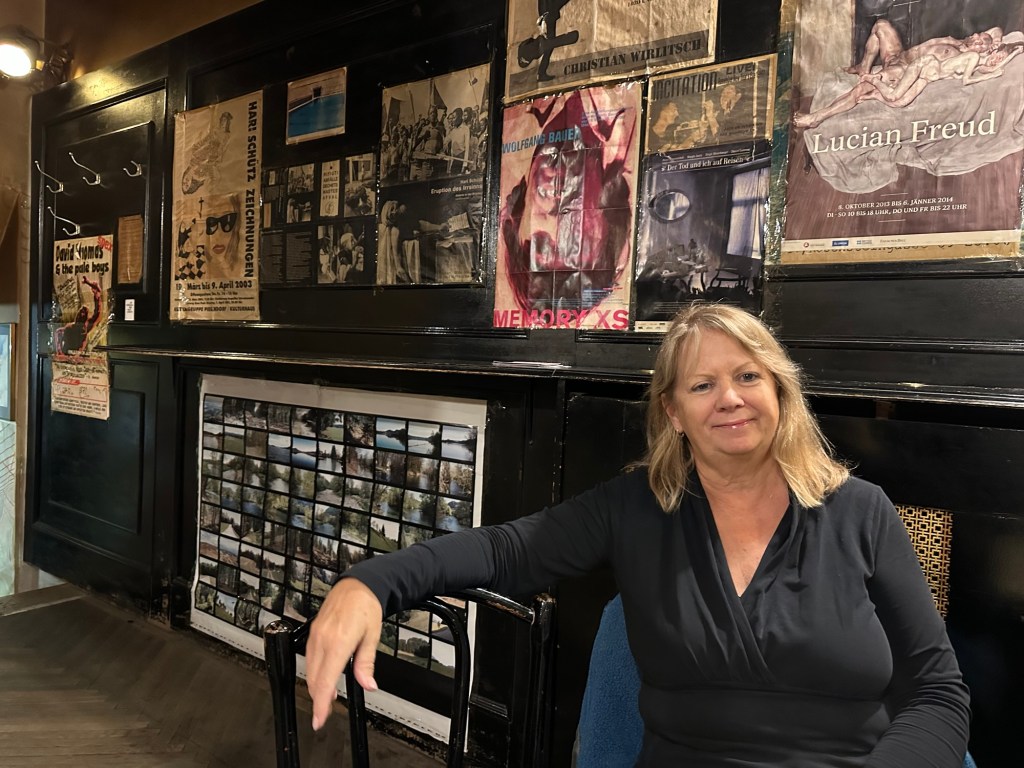
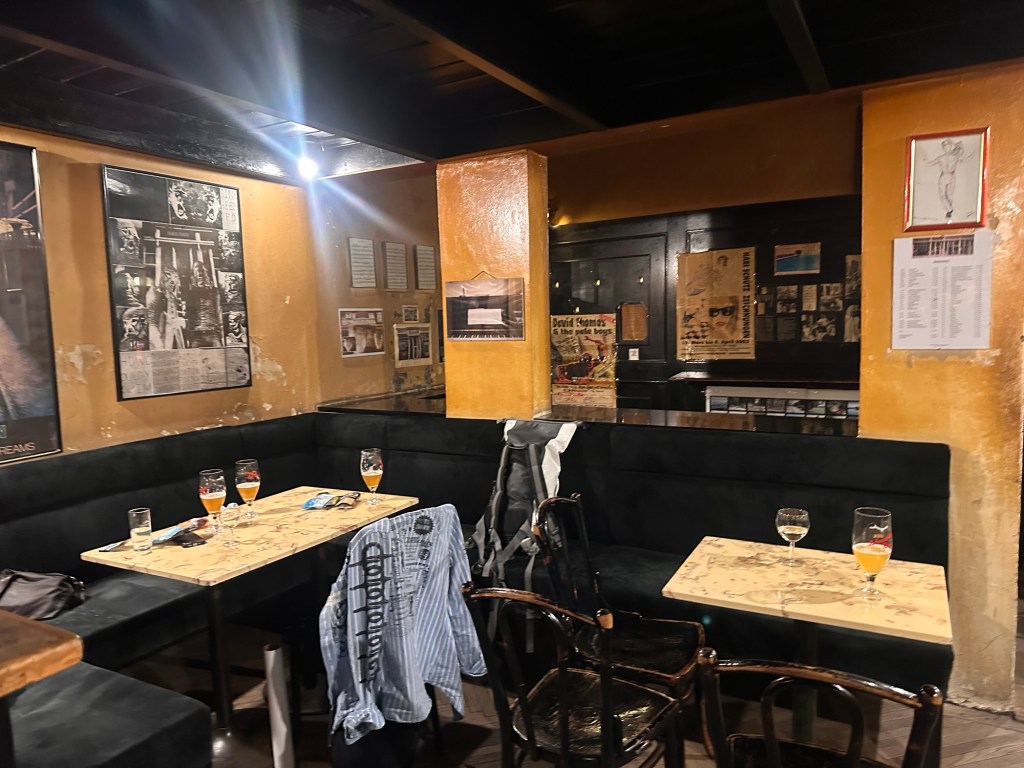
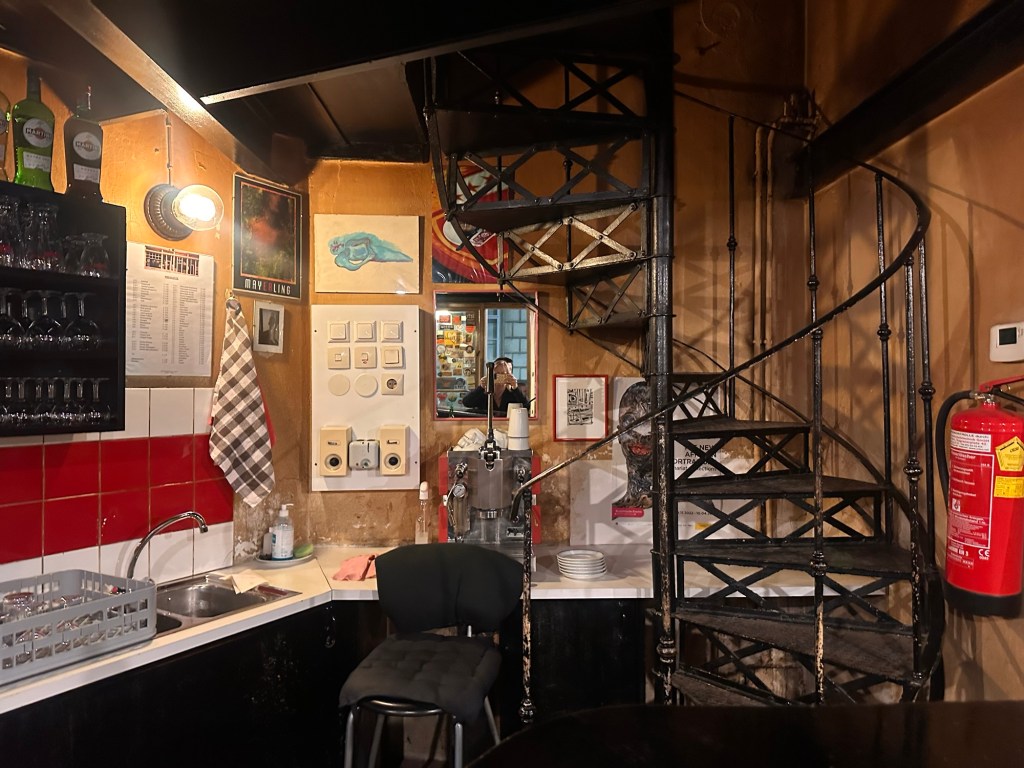
Three minutes away stood Cafe Malipop, open since March 1, 1979, and looking precisely as it did when Cindy and I made it our regular stop on late-night walks home. The bartender had always played something from The Rolling Stones’ Some Girls album when we walked in. I had to see if it survived.
It had. Spectacularly so.
Local reviewers capture its essence perfectly: “Cafe Malipop is one of the finest, weirdest and most unique cafes in a city of fine, weird and unique cafes.” Another writes, “Viennese cafes, like London pubs, occasionally get ‘renovated’ and, sometimes, ruined. You can feel safe at the Malipop. No renovation has taken place there since time began.”
The music still plays on vinyl, complete albums, with pauses when someone flips the record. And there, behind the bar, was Margit, the owner who opened the place 46 years ago. She’s kept it frozen, a perfect time capsule, and I loved it.
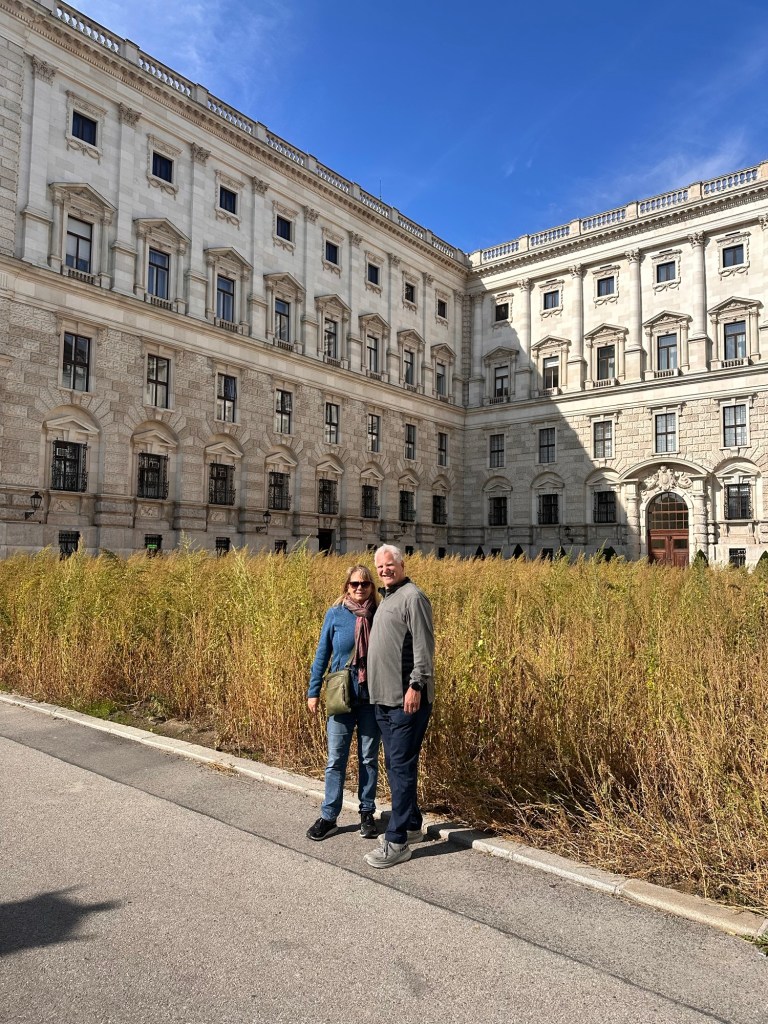
Friday morning’s walking tour swept us past beloved landmarks: the Opera House where we’d scored $1 standing-room tickets to world-class performances; the imperial Hofburg Palace; the Spanish Riding School with its legendary Lipizzaner stallions; Mozart’s old haunts; and finally, the soaring Gothic majesty of St. Stephen’s Cathedral. Vienna’s architectural tapestry — Baroque grandeur alongside Art Nouveau whimsy, Neoclassical restraint meeting Historicist drama — still takes my breath away. Every corner reveals another masterpiece.
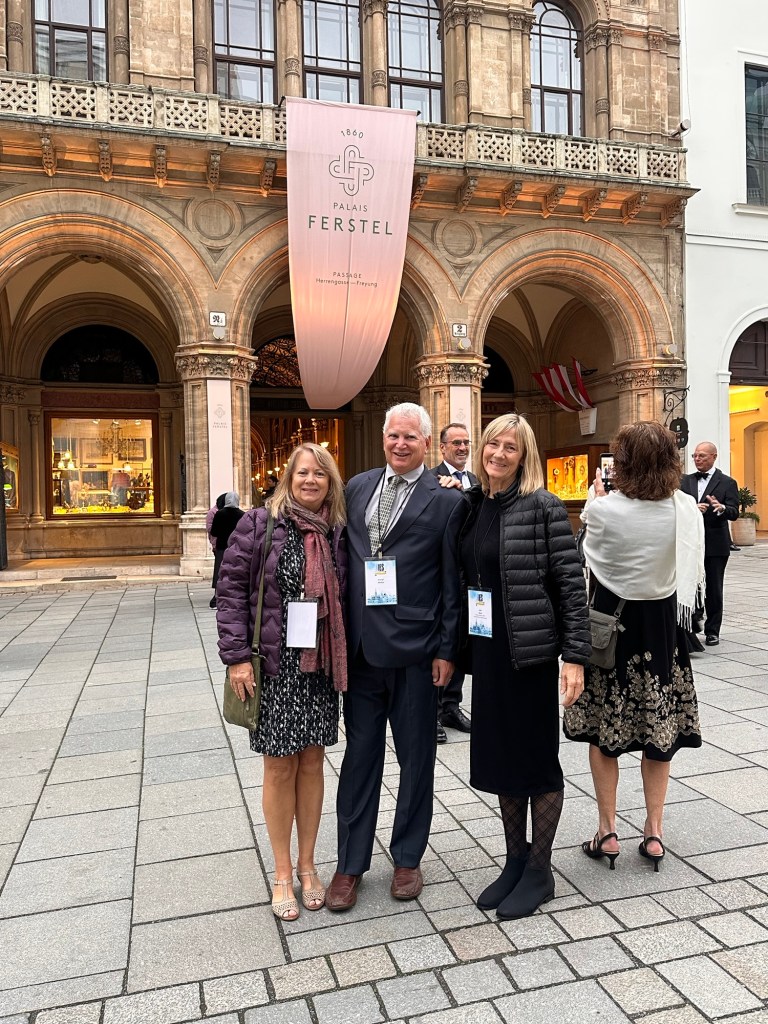
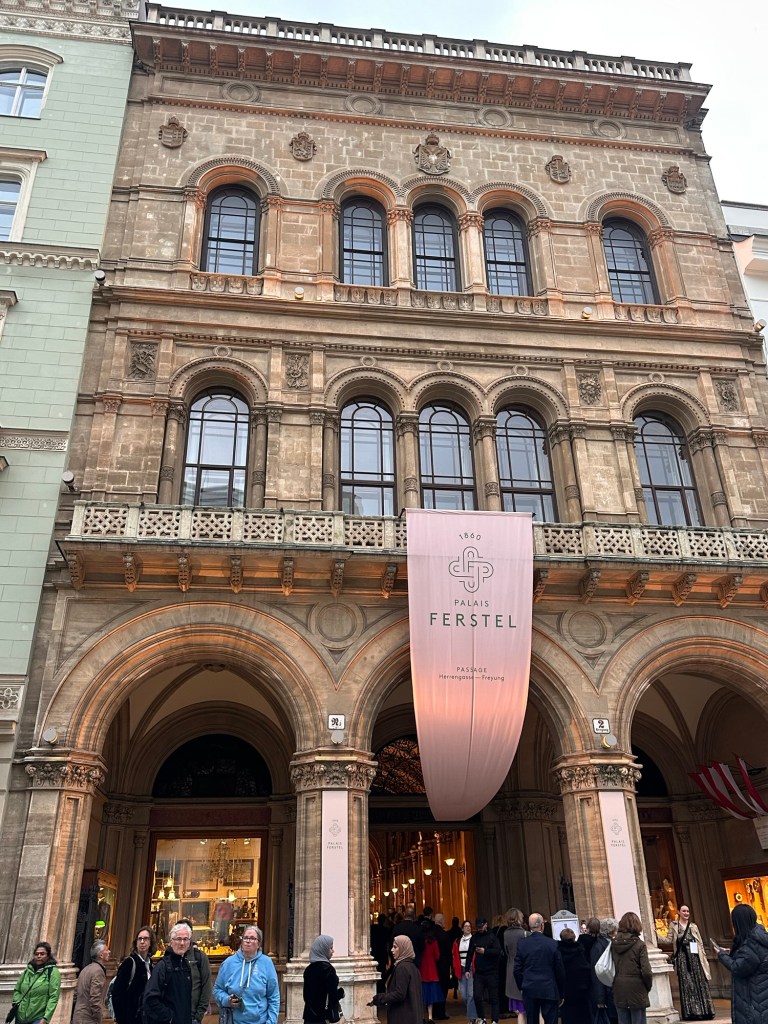
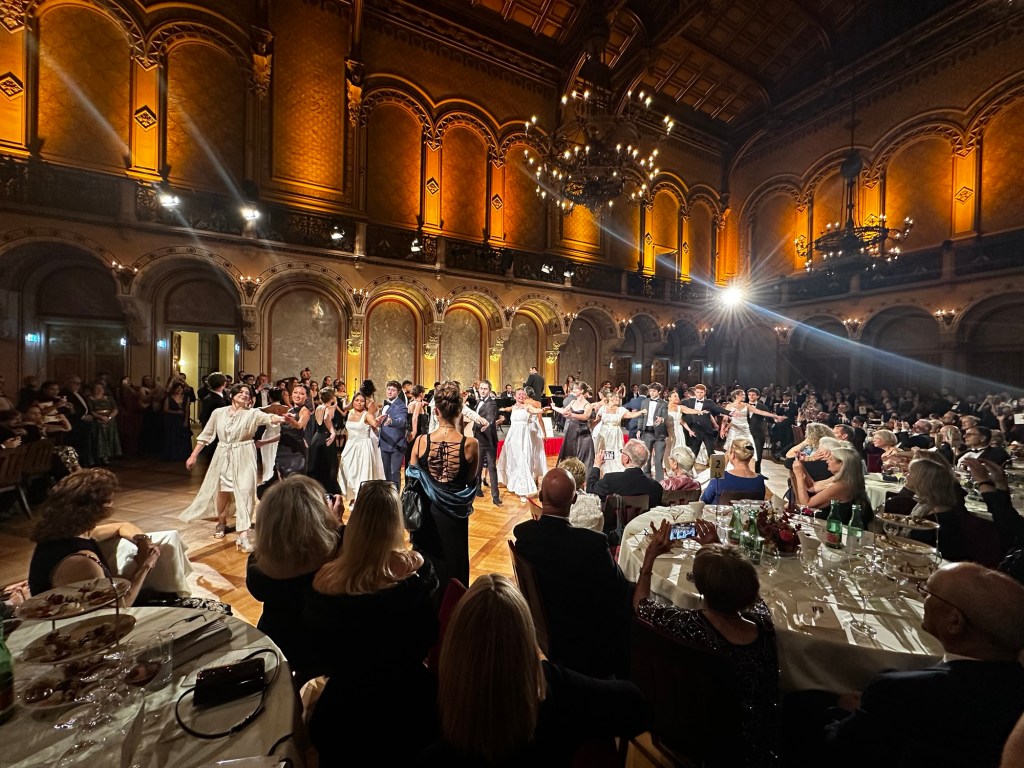
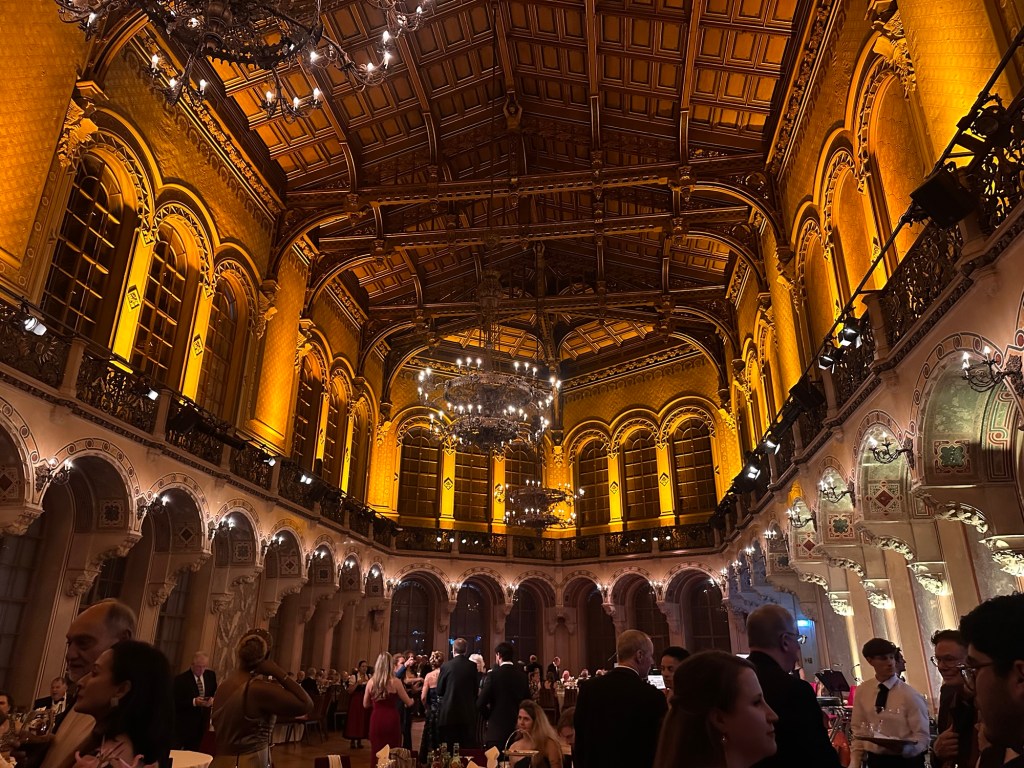
That evening’s ball at Palais Ferstel felt like stepping into a fairy tale with shared excitement. Current IES students performed a formal waltz demonstration, then opened the floor. Darryl and I joined in, spinning across the marble floor. The program honored longtime faculty, and I couldn’t believe Frau Bensch, my Baroque art history professor, now 95 years old was even there. Later, the party moved downstairs where a disco and late-night buffet kept the celebration going. Dancing in that historic palace, surrounded by people whose lives had been shaped by the same program, felt magical.

Saturday’s walking tour delved into Vienna’s complex Jewish heritage and the dark Hitler years. Our guide wove together centuries of history, periods of flourishing cultural achievement interrupted by expulsion and persecution, culminating in the Holocaust’s devastating destruction. Vienna has gradually confronted this painful past, and the city’s memorials and museums now ensure these stories aren’t forgotten.
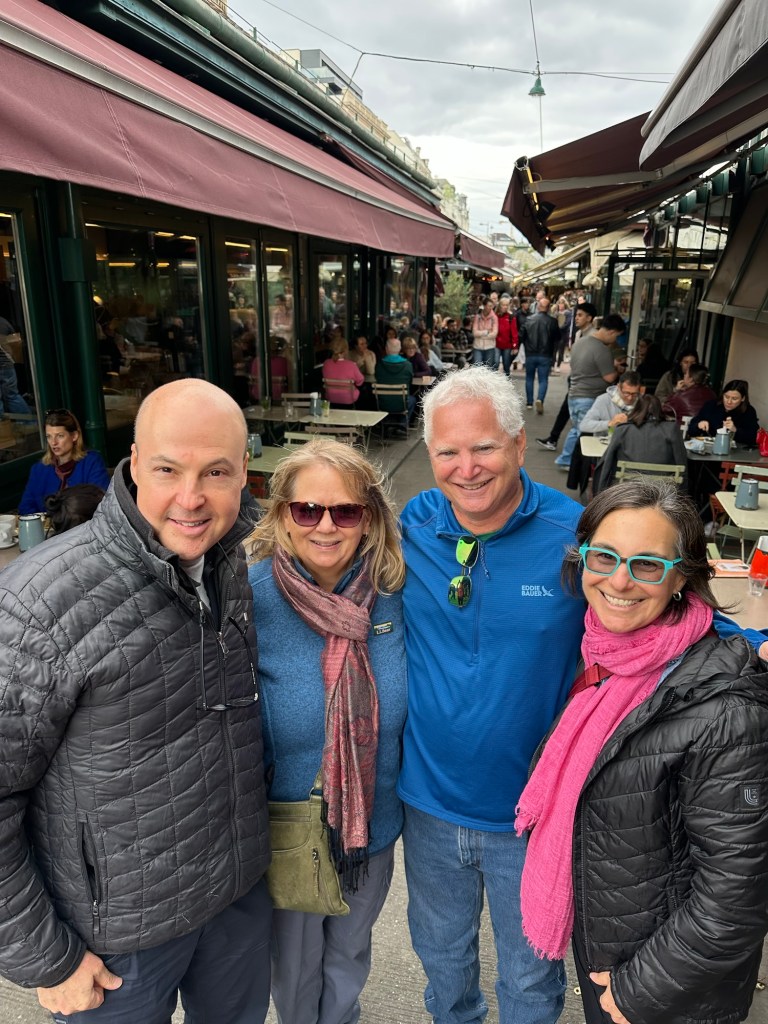
Serendipity struck at lunch when friends who’d read our Prague blog post revealed they were also in Vienna. We met them at Neni in the bustling Naschmarkt for a delicious Middle Eastern-inspired meal, proving that even carefully planned trips leave room for wonderful accidents.
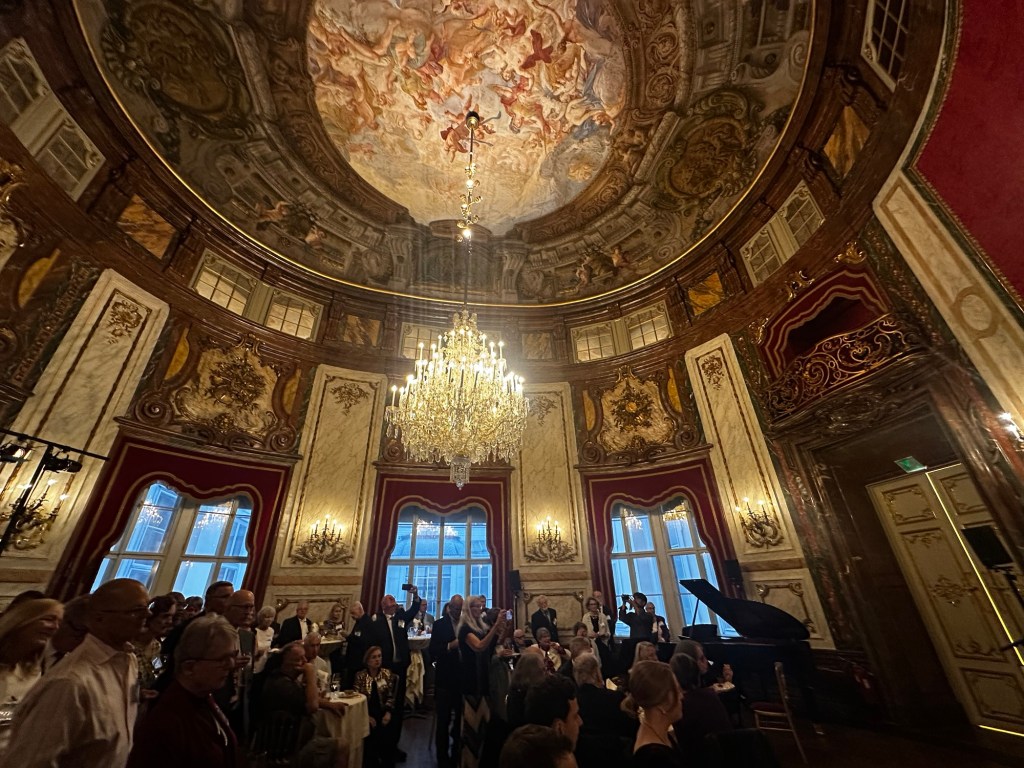
Saturday evening brought us full circle, literally, to Palais Kinsky, where IES held classes until 1982. Lora and I explored the building, trying to imagine which rooms we might have studied in had we attended just one year later. We chatted with fellow alumni, though remarkably, not a single person from our 1981 cohort appeared. The Dean of Students confirmed what we’d observed: Vienna is dramatically cleaner and brighter than the somewhat gritty city we’d known in the early 1980s. Comprehensive urban renewal efforts have transformed it while preserving its essential character.
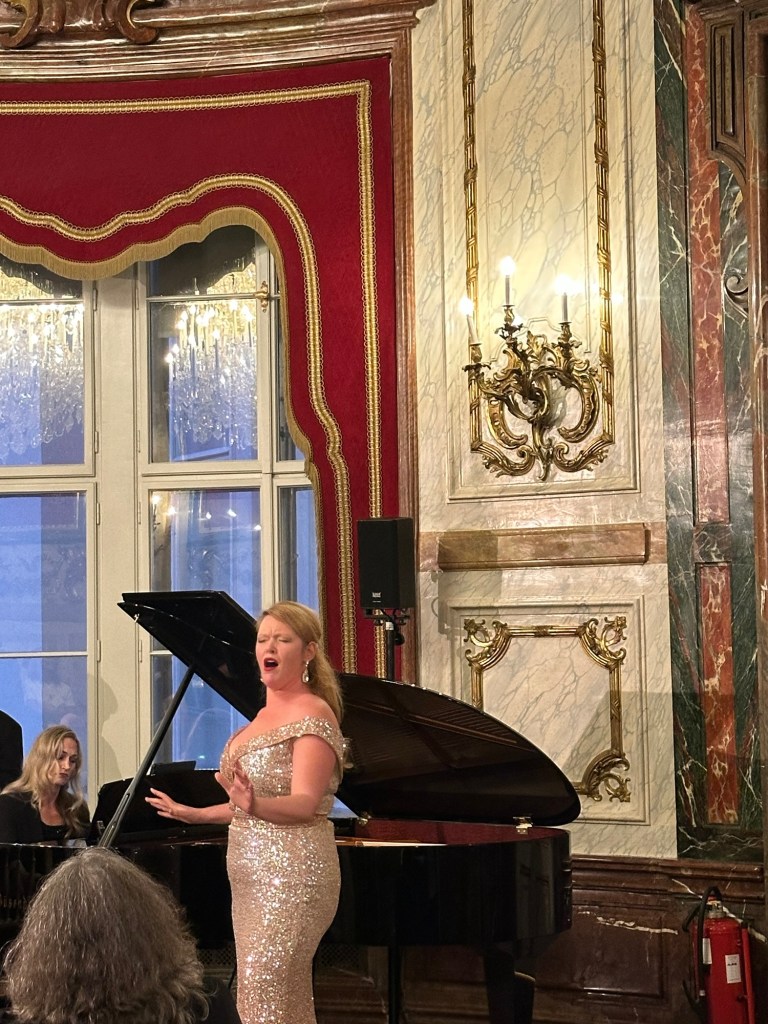
The evening concluded with performances by current and former IES students; a pianist, a violinist, a bassoonist, and a soprano whose voice filled the baroque hall with breathtaking beauty. Afterward, we walked to nearby Melker StiftKeller for one last drink before bidding farewell to Lora, who was off to Trieste for her next adventure.
Darryl and I head to Salzburg next, where The Sound of Music tour awaits, along with a day trip to the picturesque village of Hallstatt. We’ll also reconnect with our friends who are making the same journey from Vienna. But as I board that train, I know a piece of my heart remains here.
Vienna waited for me. And it was worth every one of those forty-four years.

 Traveling Walters