As we prepare to leave India tomorrow, it feels fitting to say Radha Radha. In Sanskrit, the word Radha signifies prosperity, success, perfection, and wealth. It is also commonly used as a greeting for both hello and goodbye. During our morning bike ride last week in Jaipur, locals greeted us multiple times with Radha Radha, and we joyfully responded in kind.
After two incredible weeks in India, our tour officially ended this afternoon after we flew from Varanasi to Delhi. At the Varanasi airport, we bid farewell to Sally, who continued onward to Goa for a tiger safari. Once we retrieved our bags in Delhi, Jane and I said goodbye to the rest of our group. Making new friends during this journey was a highlight, and I look forward to staying in touch, hearing about their future travels, and hopefully reuniting either for another trip or a visit. For those in our group, Rehoboth Beach, Delaware, is just a short drive from Philadelphia or Washington, D.C.
Given our early flight on Sunday, we decided to stay at the Aloft in Aerocity rather than make the hour-long trek back into central Delhi. The hotel’s clean, modern amenities and proximity to the airport (just a quick ten-minute drive) make it an ideal choice for a restful last night in India.
As I mentioned in an earlier post, this was the first group tour Jane and I have ever taken, as we typically plan all our own trips. While we’ve organized our upcoming adventures to the Seychelles and Cape Town, India felt like a completely different experience—one that would have been incredibly challenging to navigate on our own. Our group of 12 got along wonderfully, and our guide, Manu, was outstanding. He continuously adapted the itinerary to ensure we had the best possible experiences. I wholeheartedly recommend Manu and G Adventures for anyone planning a trip to India.
Mark Twain once said, “Varanasi is older than history, older than tradition, older even than legend, and looks twice as old as all of them put together.” After spending the last two days there, I now fully understand his sentiment.
On Friday, we began our day with a tour of Sarnath, one of the holiest Buddhist sites in the world and the birthplace of Buddhism. We visited the Maitra Buddha Temple before heading to lunch. Afterward, our group split up: some went shopping, others visited Madanpura (a Muslim neighborhood known for its weaving), and a few of us returned to the hotel for a break. Jane joined a small group in Madanpura, where 700 families form a network of 125,000 artisans who produce silk products by hand and machine. She purchased a beautiful taffeta silk throw.
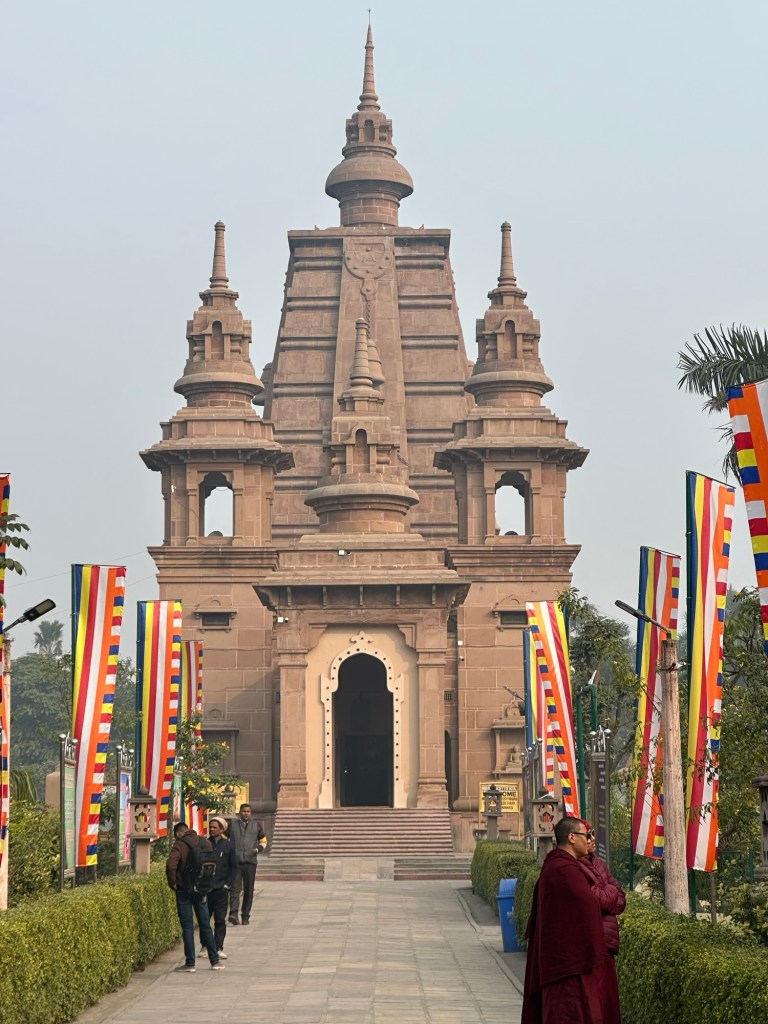

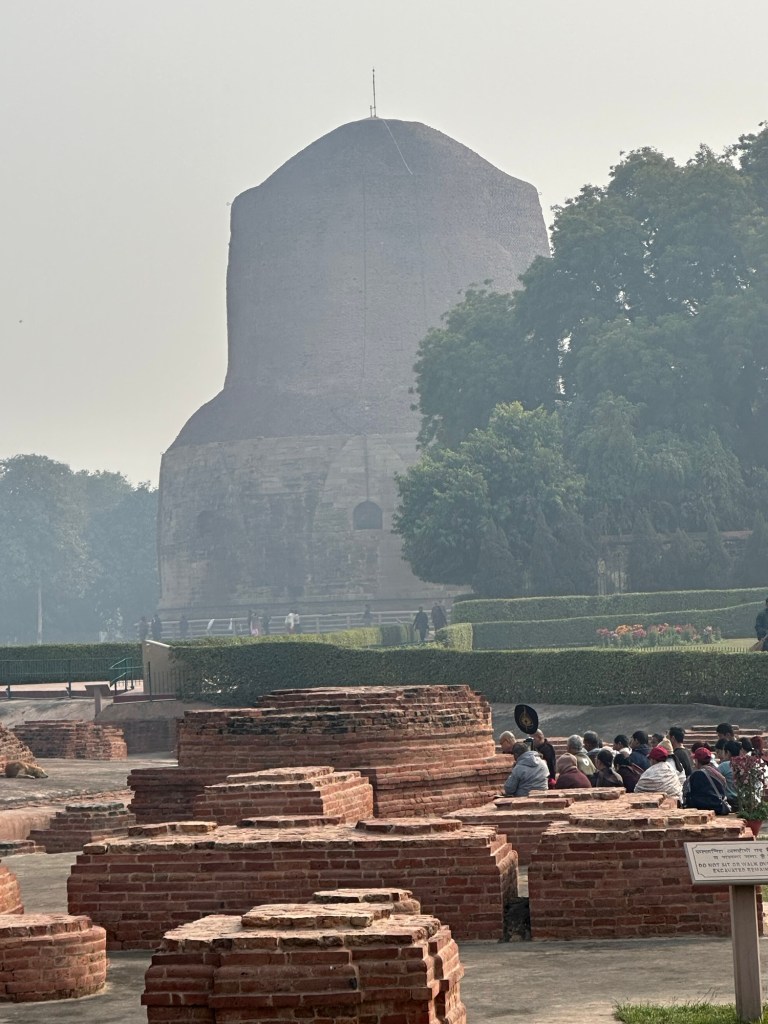
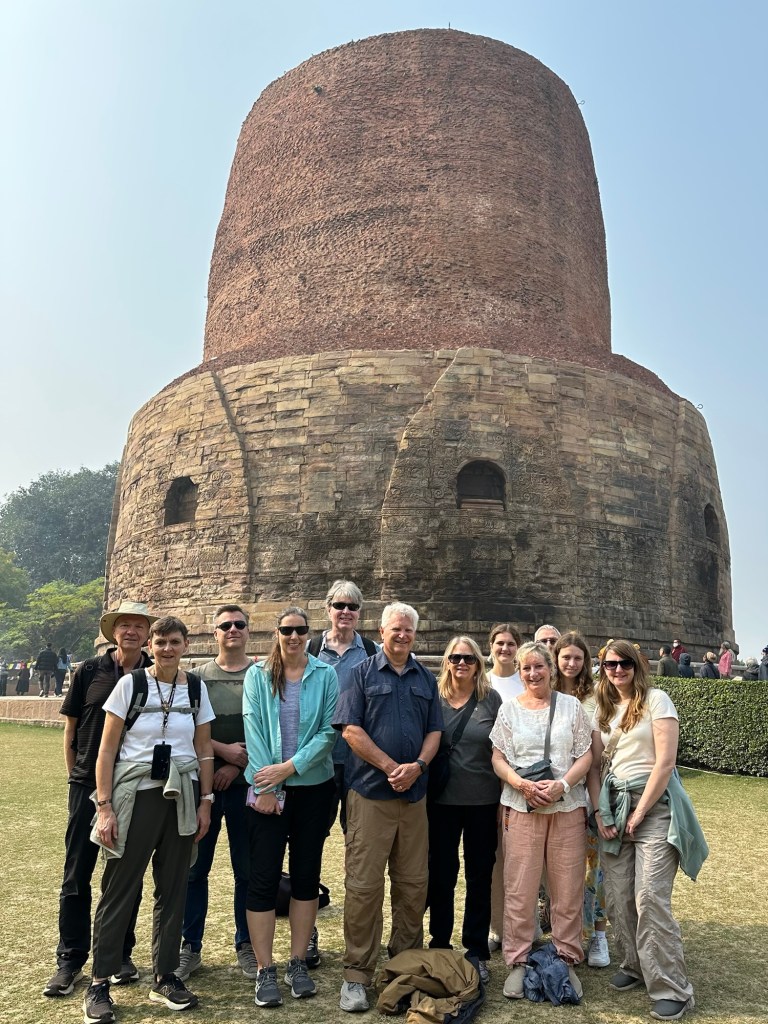
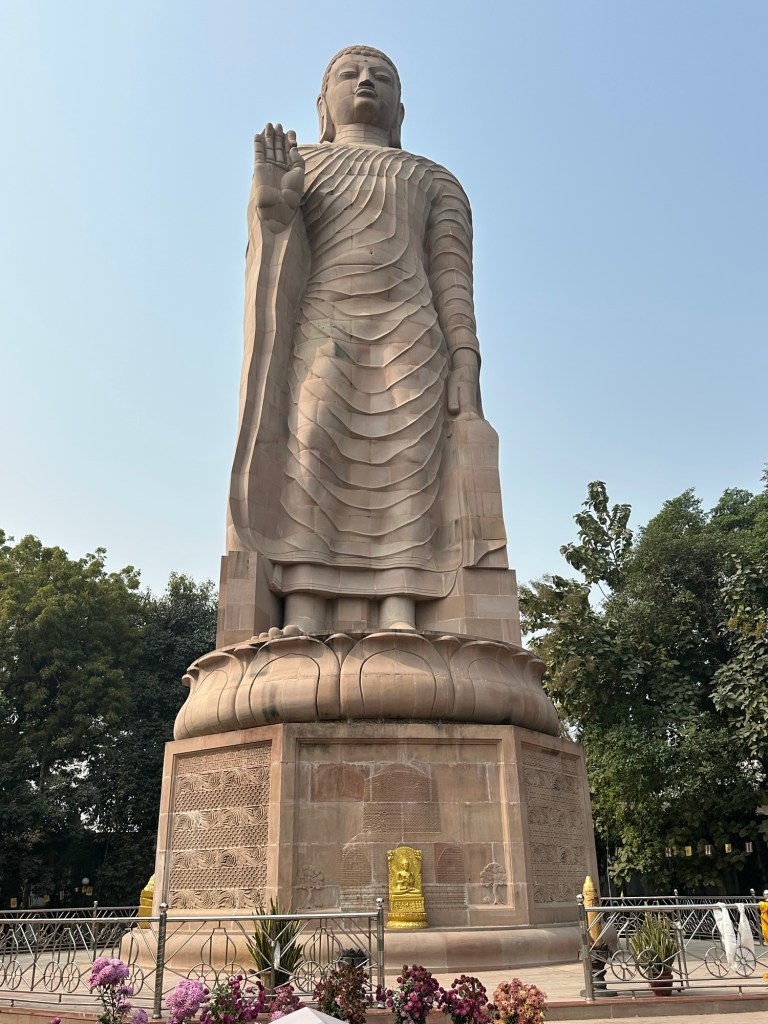
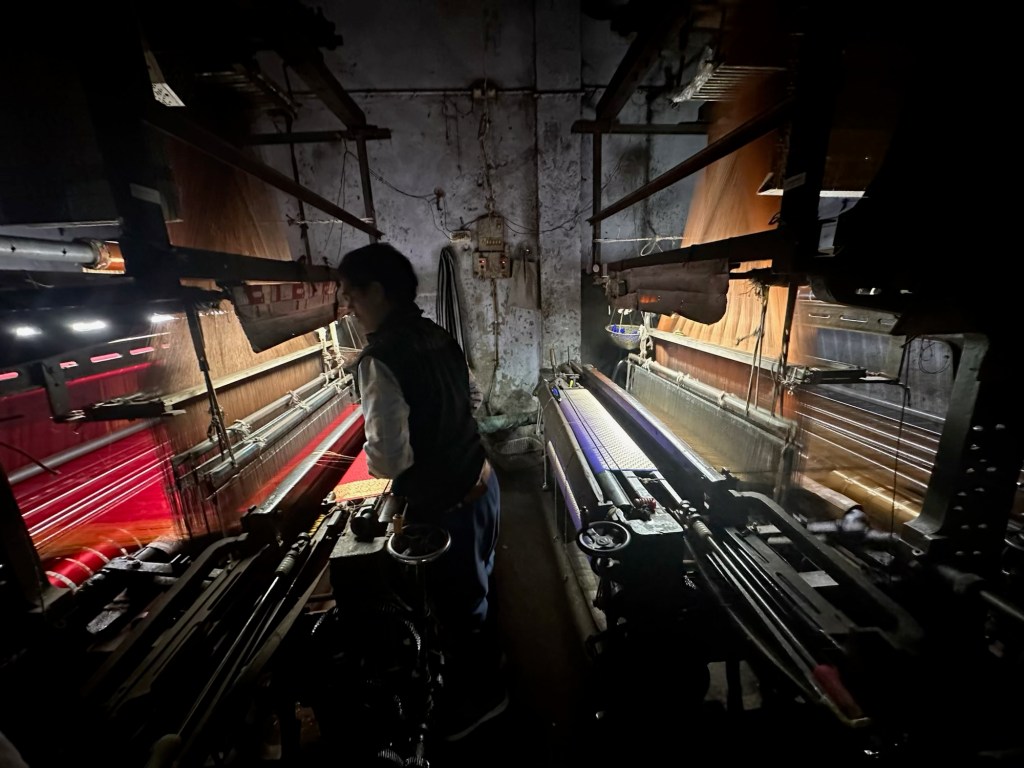
At 3:30, we all regrouped for a heritage and spiritual walk through the narrow streets and alleys of Varanasi. Along the way, we paused for Masala tea and climbed the steep steps of the Alamgir Mosque for a stunning view of the old city. We also visited Manikarnika Ghat, Varanasi’s principal cremation site, where the sacred fire has been burning continuously for over 3,000 years. This ghat is one of the holiest cremation sites along the Ganges River, with ashes ceremonially immersed in its sacred waters. Our final stop was the site Kashi Vishwanath corridor

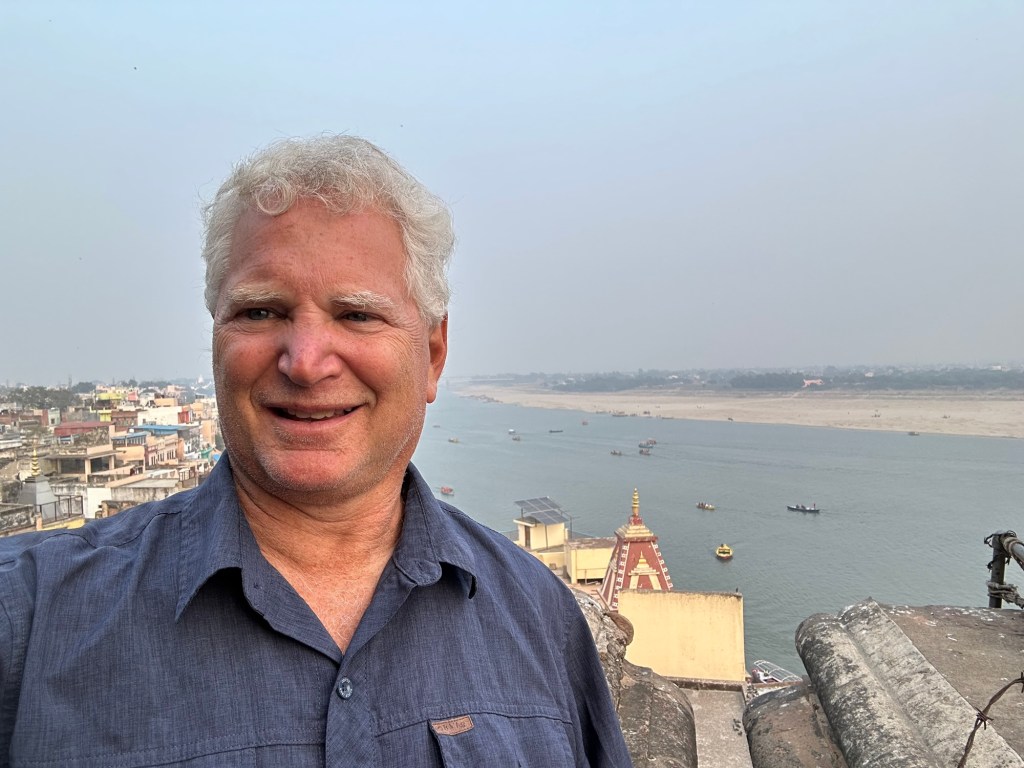
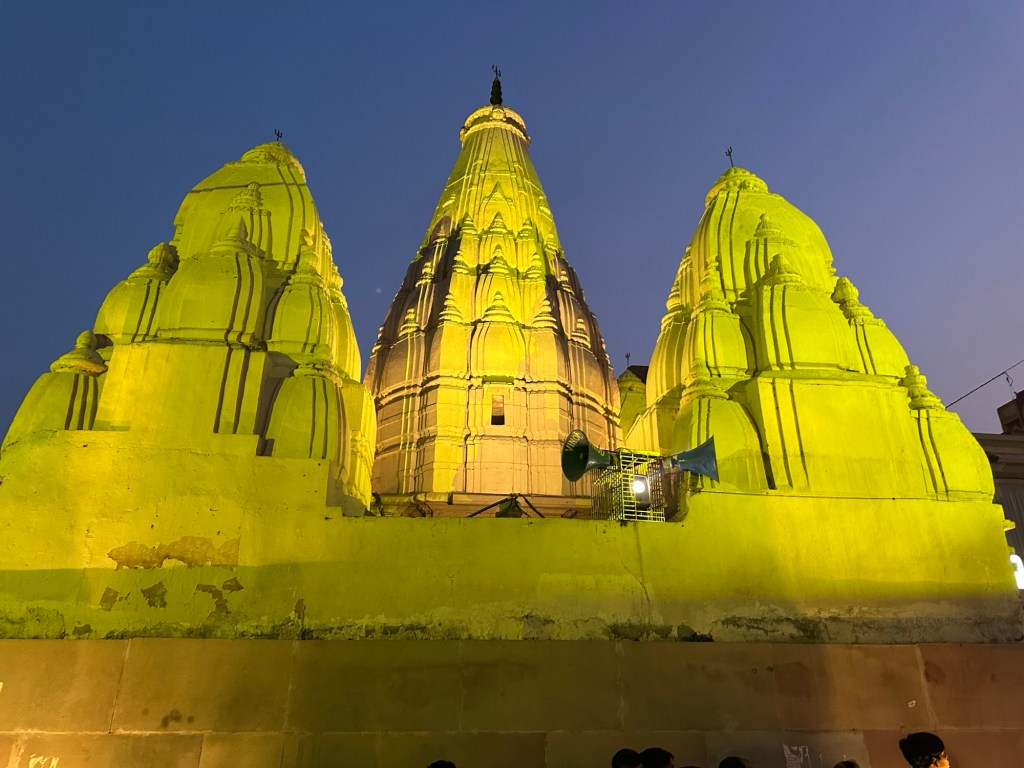
We ended the day with tuk-tuk rides to the Surya India Palace for our farewell dinner.

This morning, we woke early for a serene boat ride on the Ganges River to witness the sunrise. Before dawn, we participated in a flower and candle ceremony, silently honoring the loved ones we’ve lost.
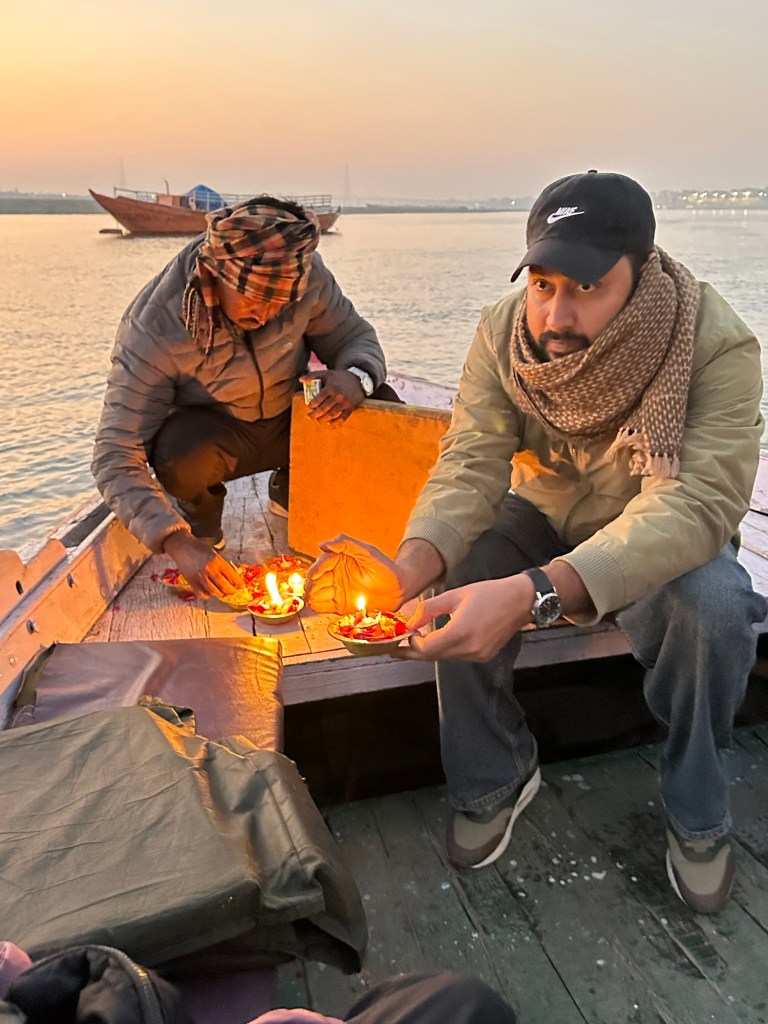
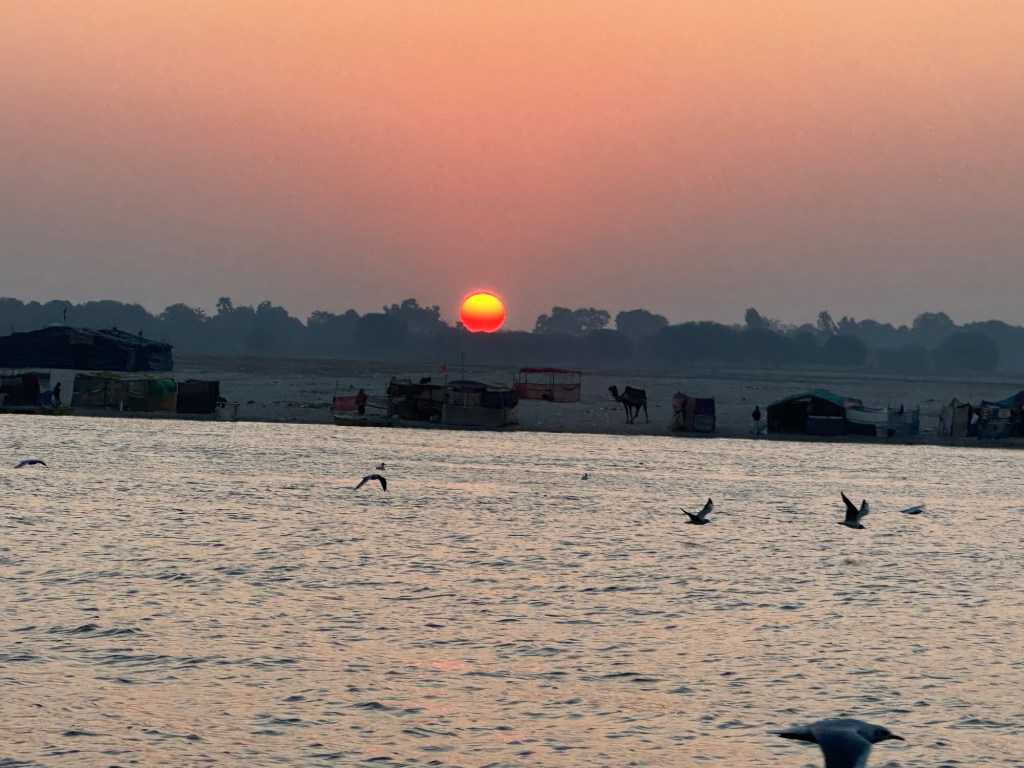

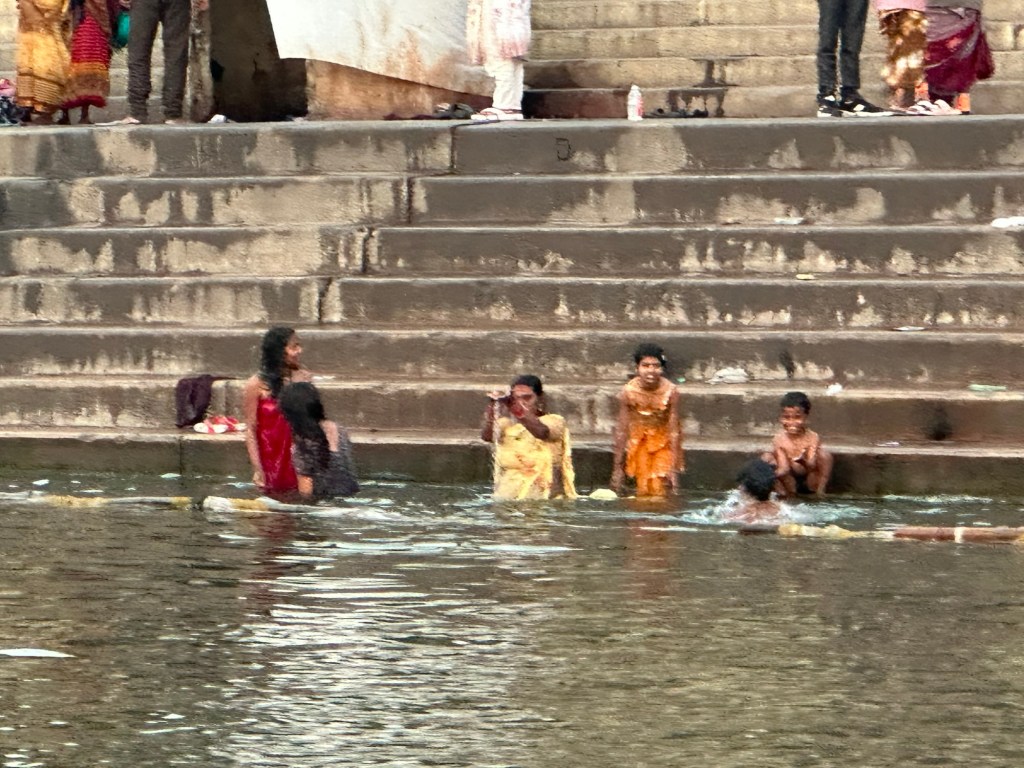
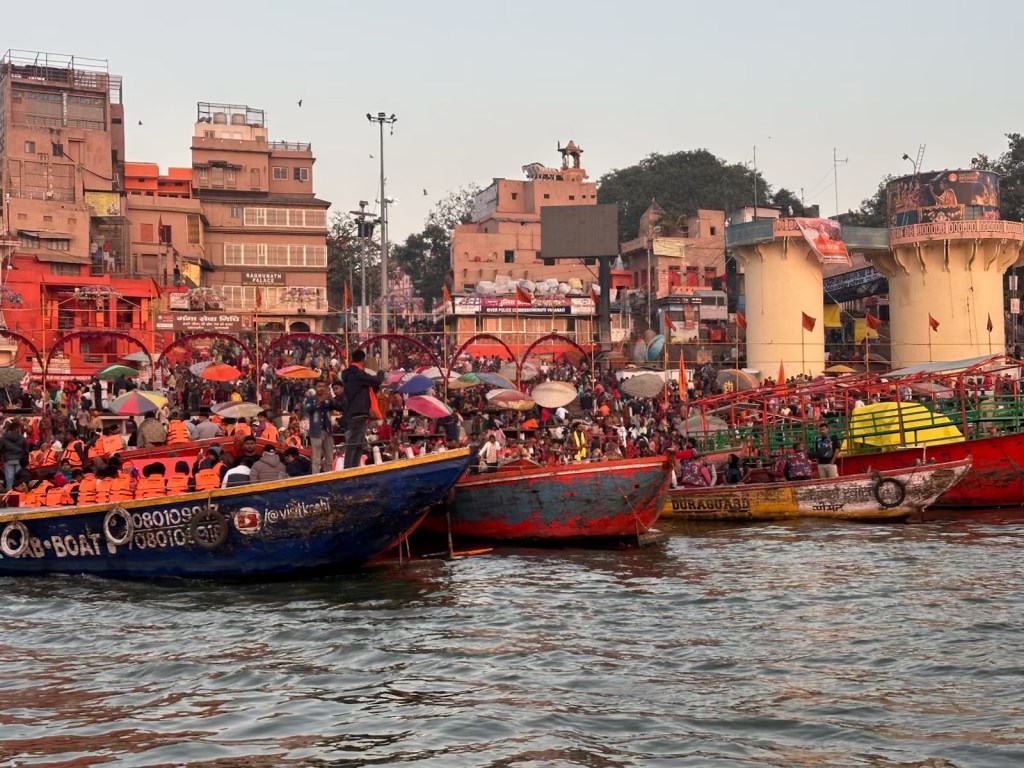
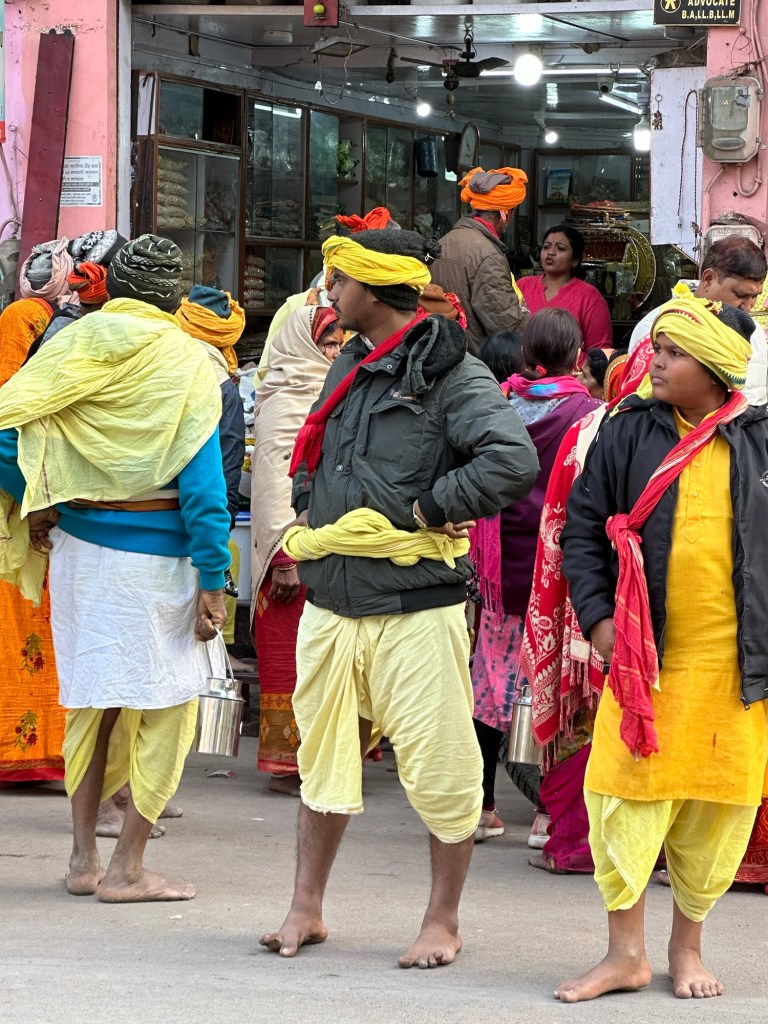
You could take a million photographs, but I don’t think they would ever truly capture the essence of India. The diversity of its people is astounding, each face telling a different story. The streets of India are some of the loudest and most vibrant thoroughfares in the world, bursting with life and constant activity.
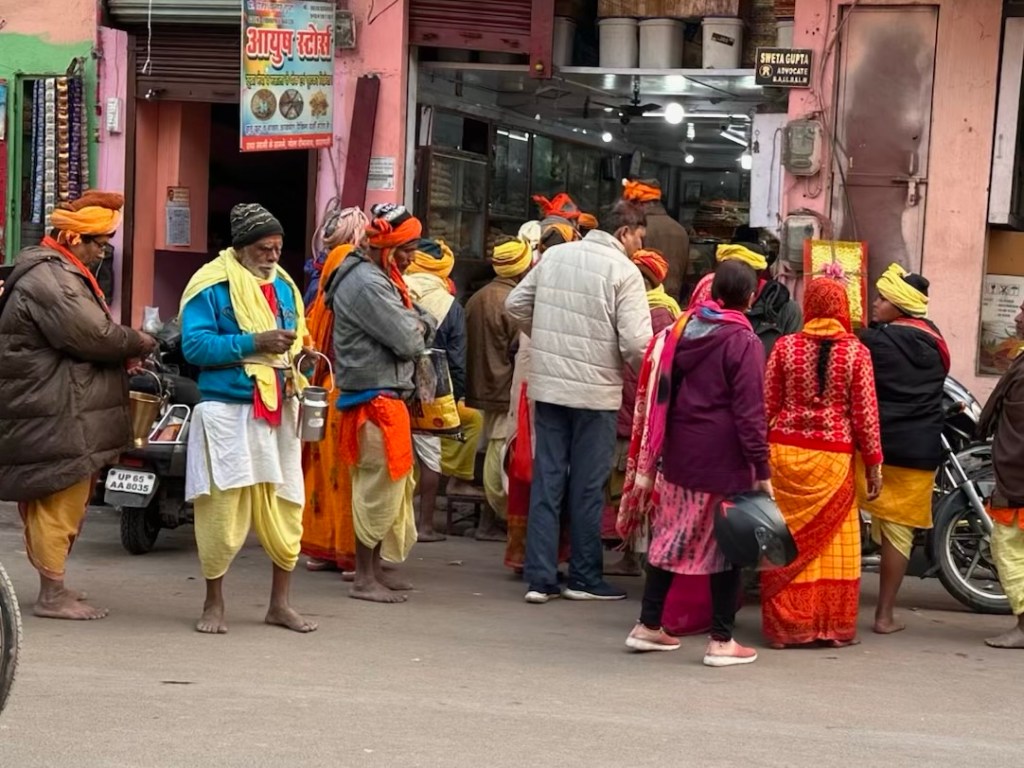
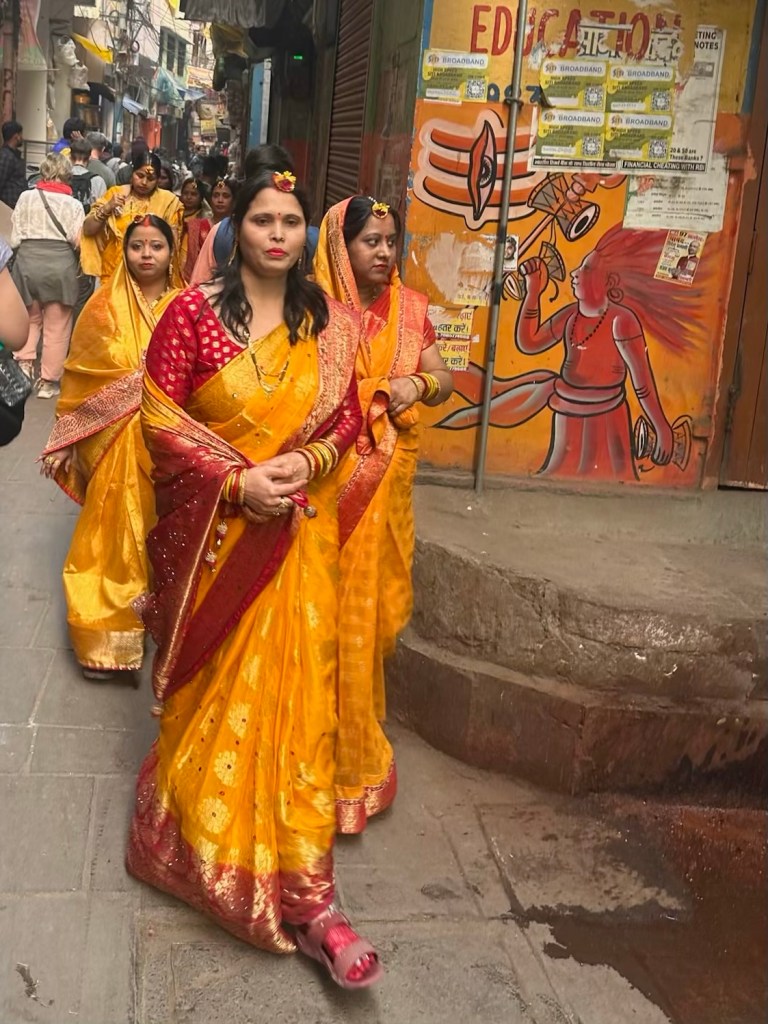

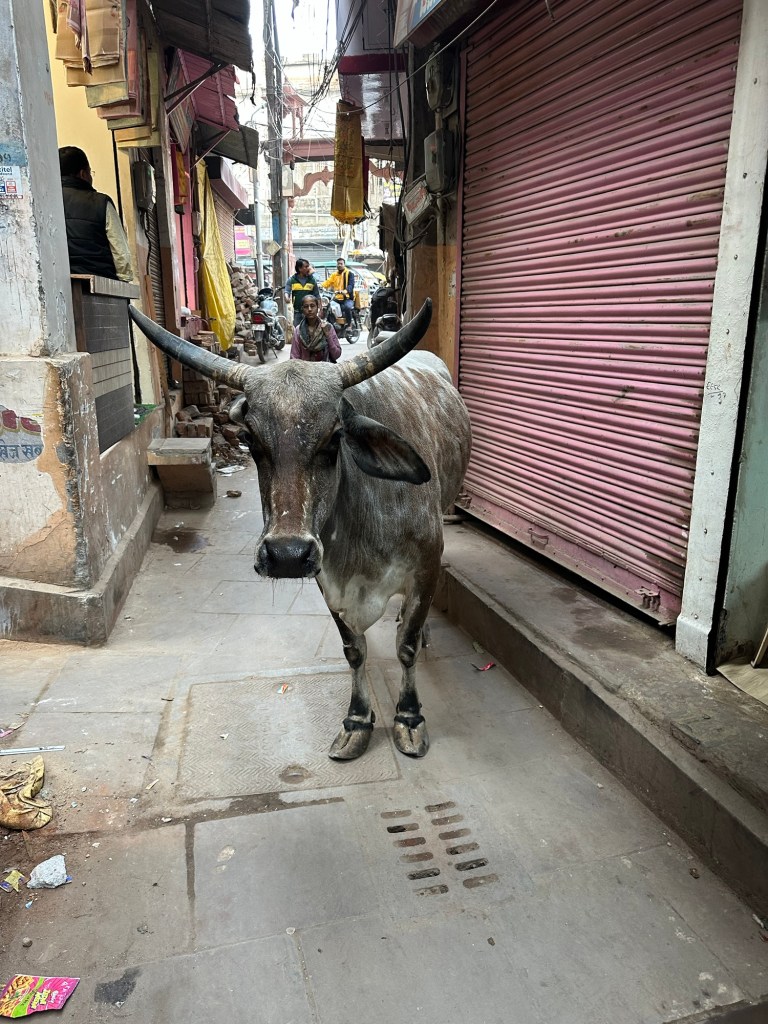
And yes, the cows in the streets of India are very real! Last night, Jane nearly got knocked over by one during our walk, as the narrow alley left her little room to step aside.
In preparation for our trip to India, I recently read the following books which I recommend:
• Caste: The Origins of Our Discontents by Isabel Wilkerson, which explores the caste system in India, as well as caste systems created by Nazi Germany and the systemic racism in the United States.
• The Newlyweds: Rearranging Marriage in Modern India by Mandi Choksi, which examines the relationships of a lesbian couple, a Hindu-Muslim interfaith couple, and a couple from two different castes. Interestingly, none of these couples have arranged marriages, offering a modern perspective on relationships in India.
• Midnight’s Borders: A People’s History of Modern India by Suchitra Vijayan, where the author recounts her seven-year journey along India’s borders. The book captures the struggles of people living in these contested regions, where shifting political boundaries often dictate their survival and identity.
Radha Radha.

 Traveling Walters