Soon after waking up this morning in Beijing, we turned on the tv and heard the news of the earthquake in Taiwan. Considering we were there just four days ago, this hit close to home. Our thoughts are with everyone in Taiwan.
Late Sunday afternoon, we arrived in Beijing. With a reference from a good friend, we contacted the owner of Access Asia Tours last week to set up a private tour guide and driver for our stay in Beijing. I recommend using a tour operator for Beijing and I highly recommend Access Asia Tours. Our guide Yang was wonderful. A lawyer by training, and a self-proclaimed history buff, she has been leading Beijing tours for a dozen years.
Yang met us at the airport and soon we were on our way to the Sheraton Grand Beijing Dongcheng Hotel. We took it easy Sunday night, had a couple of drinks and some food in the Executive Lounge and then walked around the area neighborhood near the hotel.
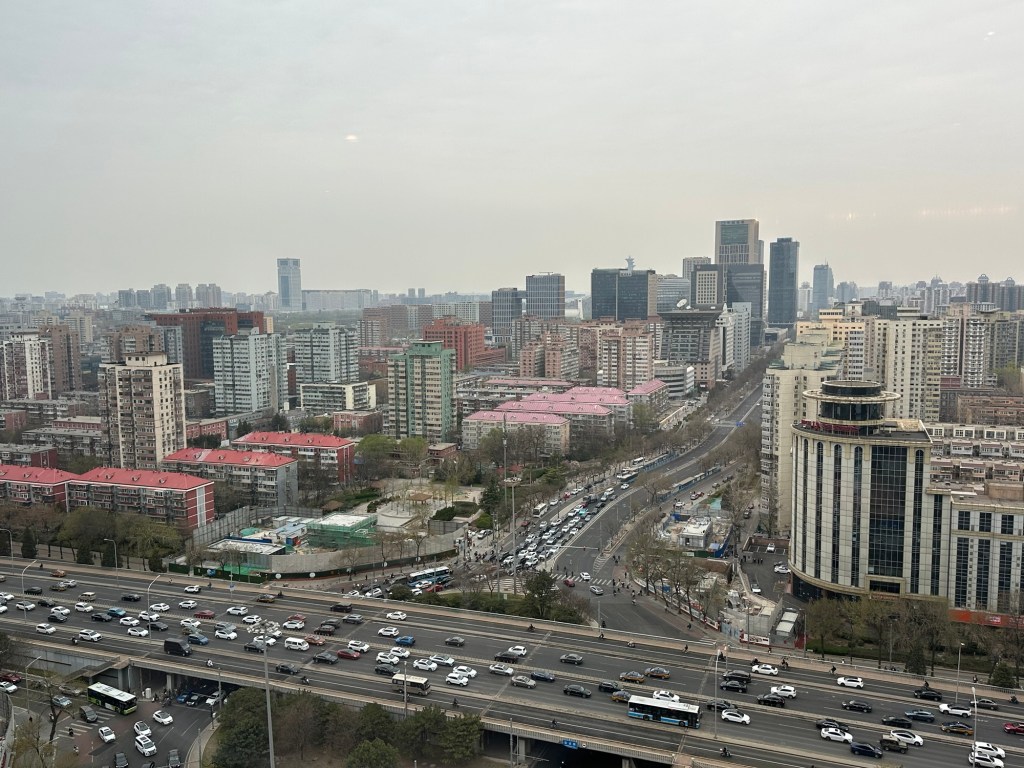
Monday we were picked up by Yang and our driver at 8:30 and drove to the Great Wall of China. On the ride, Yang told us the detailed and complex history of the wall. Upon arrival, this is where we first noticed the importance of having a tour guide; we bypassed a line that saved us at least a couple of hours of waiting as we already had tickets.
We took the cableway up to the wall. Getting to the top and actually walking on the wall to different watchtowers was exhilarating.

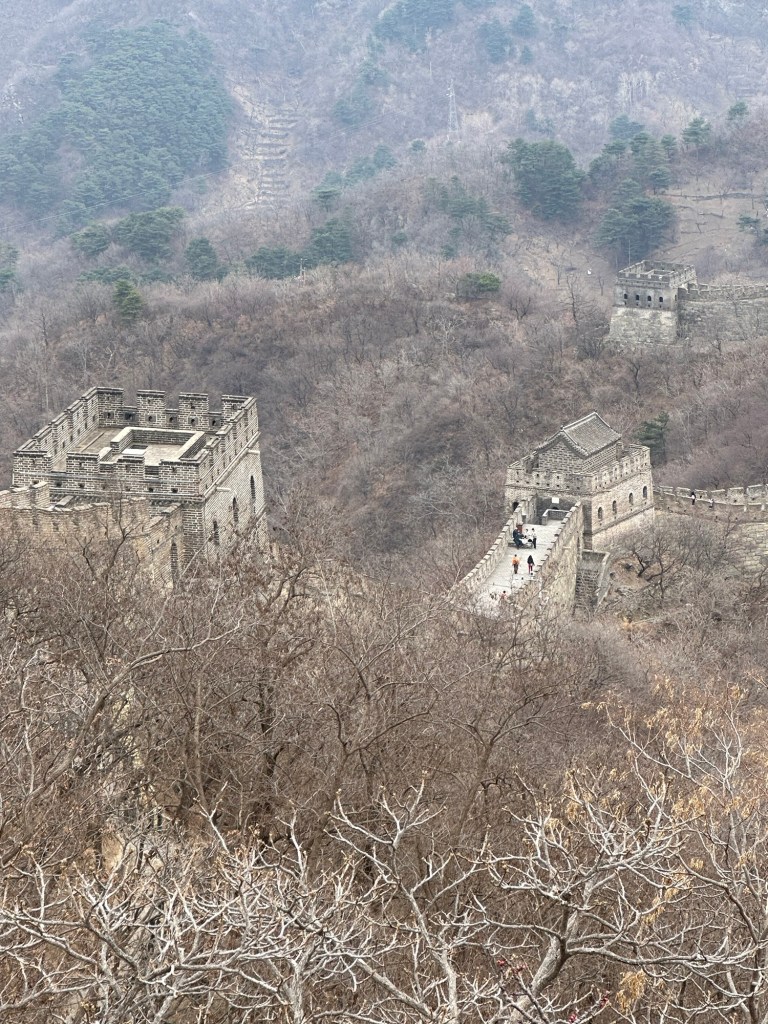
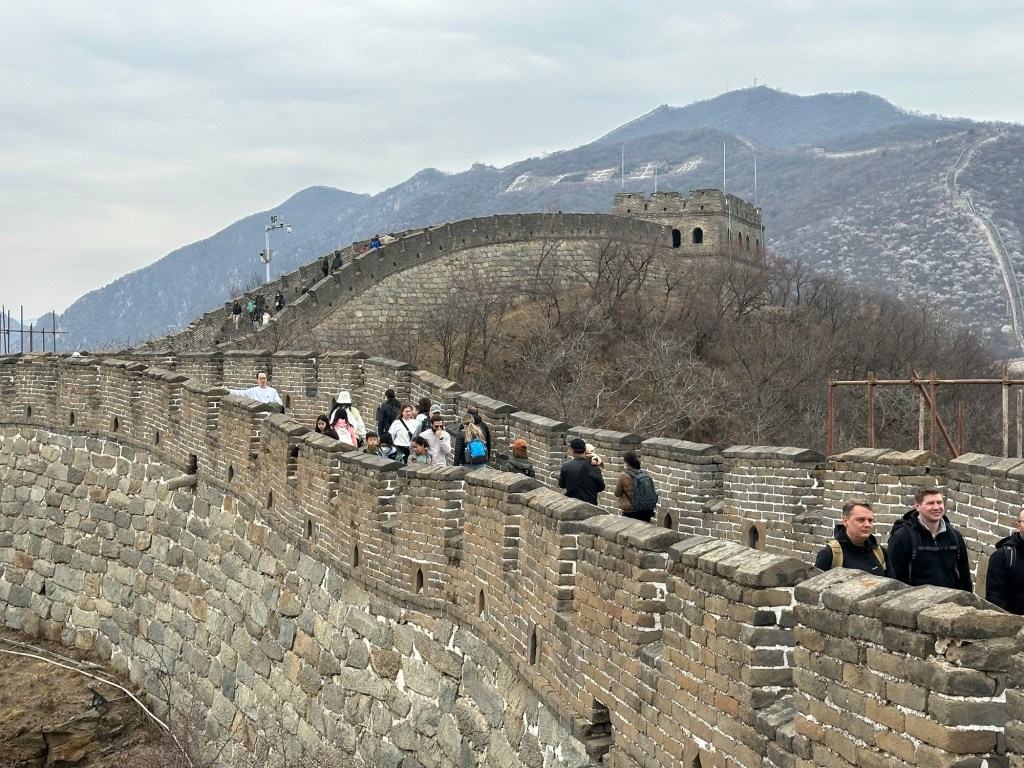

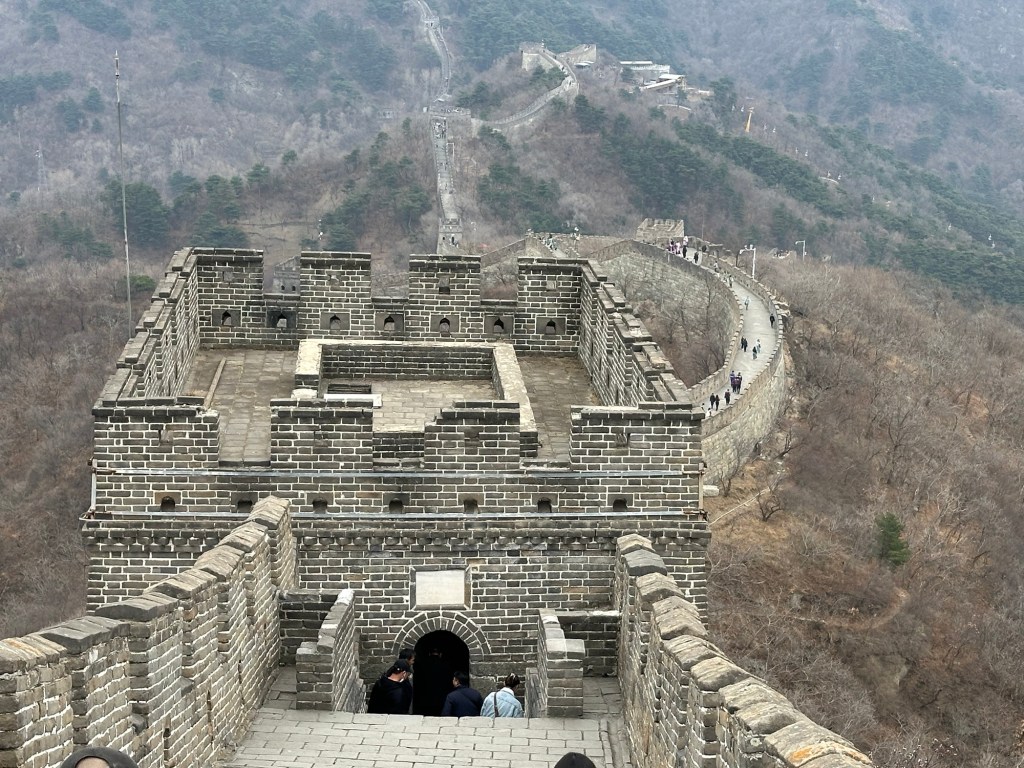
While we were on the wall, I started thinking of other great walls. Here are my four great walls:
1) Great Wall of China – at over 13,000 miles long, of course it is great.
2) Western Wall – it is holiest site for Judaism.
3) Wall Street – without it, we wouldn’t be in Asia for the last six weeks.
4) Wall of Sound – sure Phil Spector was a homicidal maniac, but you can’t deny that his Wall of Sound created some of the greatest music ever.
We had lunch at a local farm to table restaurant and then drove back to Beijing to our next stop — the Summer Palace. The Summer Palace dates back to the Qing Dynasty and consists of dozens of buildings including a single building that has a long corridor that is 2,300 feet long.
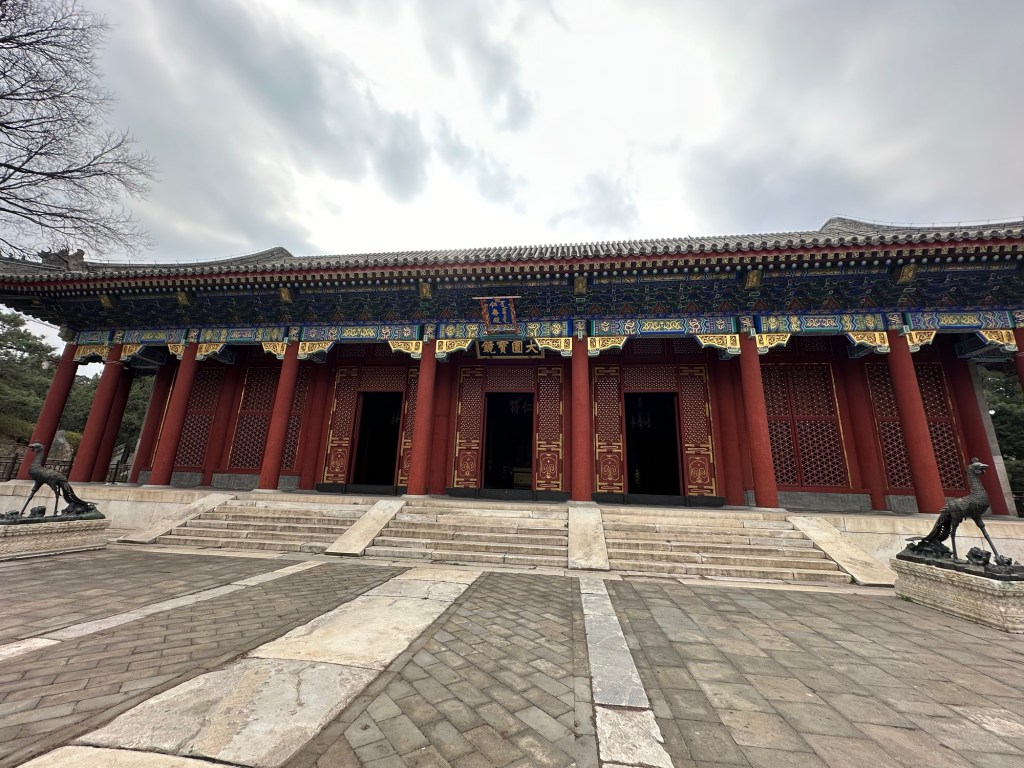
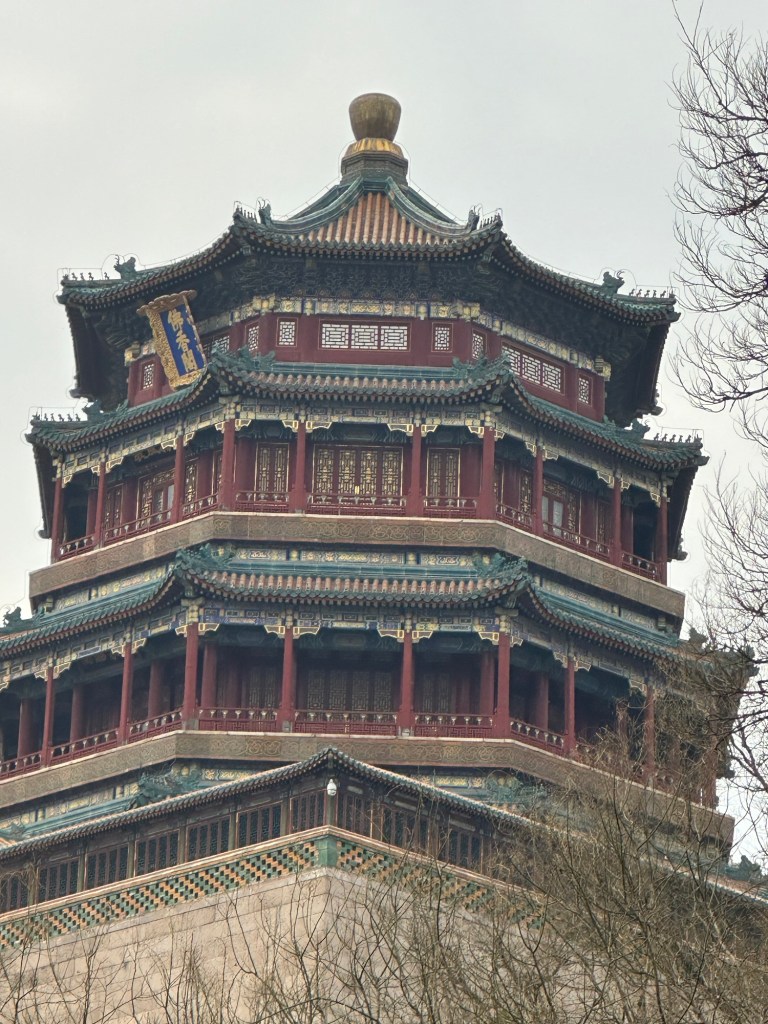
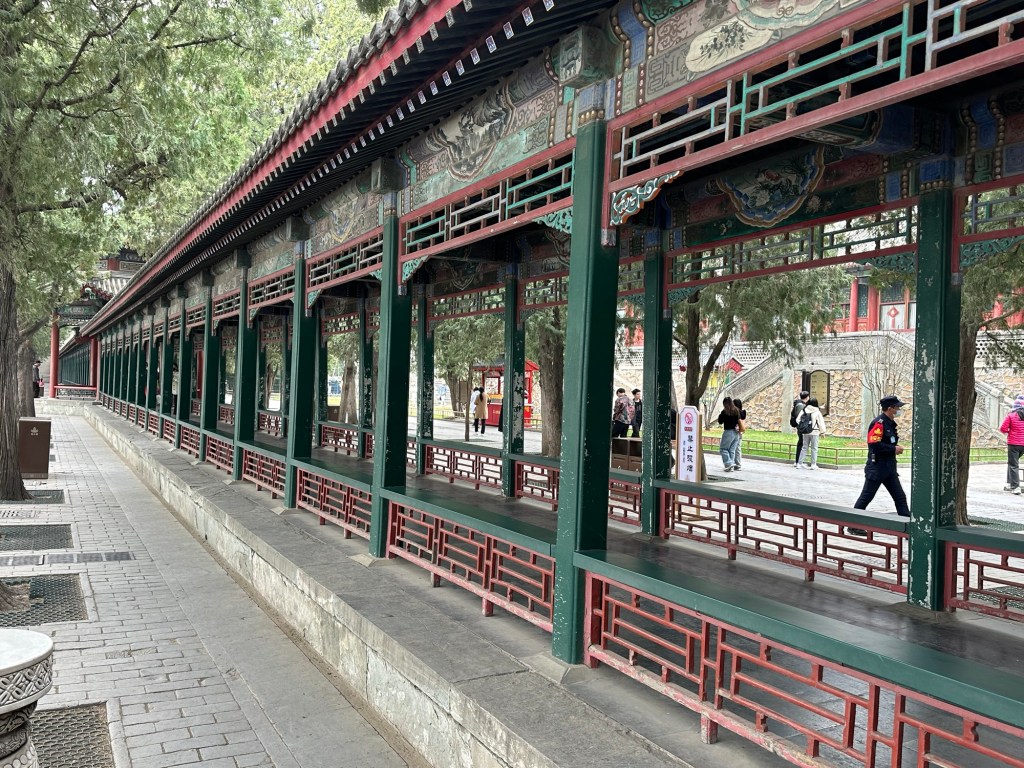
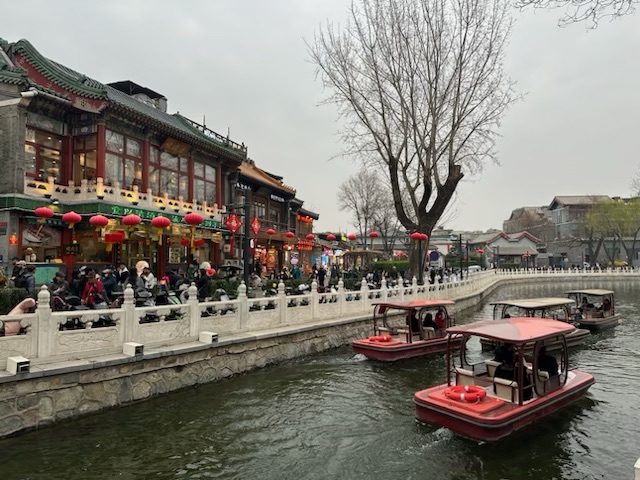
After The Summer Palace, our time with Yang was done for the day and we had the driver drop us off in Houhai Lakeside Area. The area consists of older one story gray buildings that line a lake. We stopped for a drink at Slowboat Brewery.
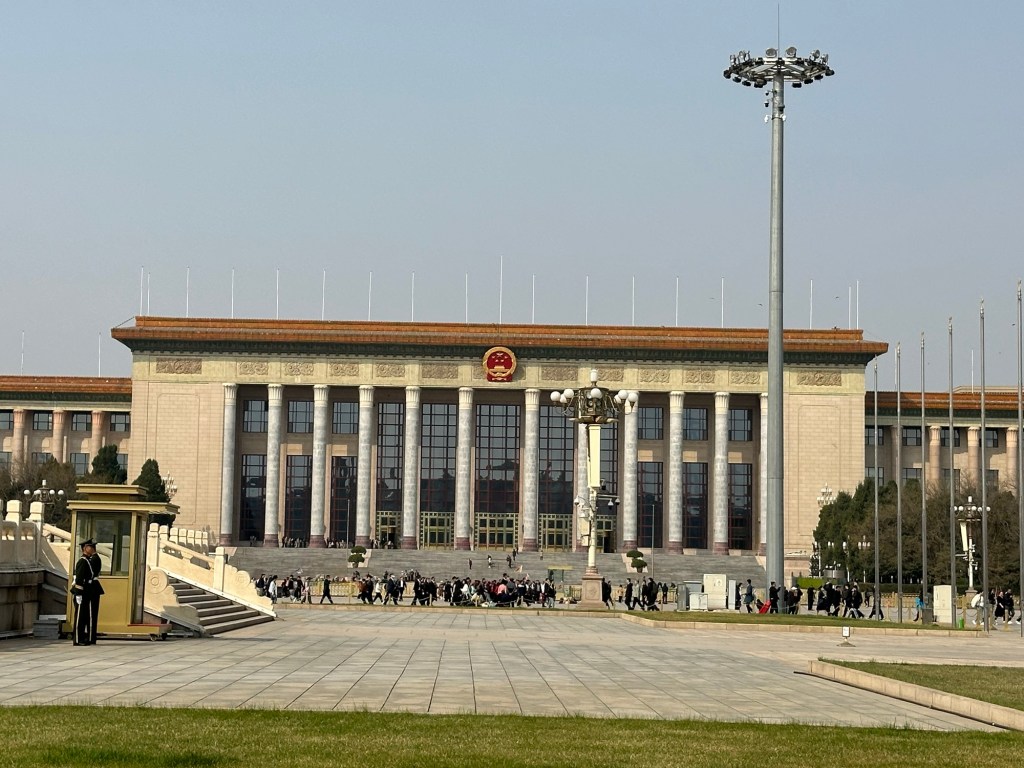
Tuesday, Yang and our driver met us at the Sheraton at 8:30 and we were off to Tiananmen Square and the Forbidden City. Again, having a tour guide and advanced tickets saved us at least an hour in line. Tiananmen Square, to be honest, was a bit underwhelming. Jane, who has been to Moscow, said it doesn’t compare to the beauty of Red Square. The most recognizable building for us was Tiananmen Gate with a large portrait of Mao and where we’ve seen news stories of the parades on the wide boulevard in front. Tiananmen Square is also where Mao proclaimed the founding of the People’s Republic of China on October 1, 1949.
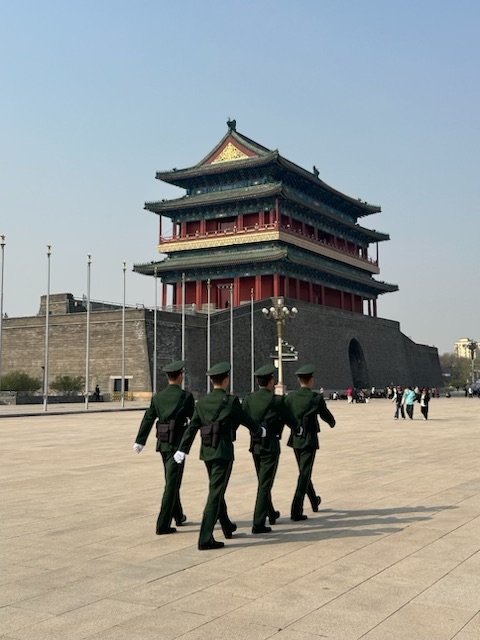

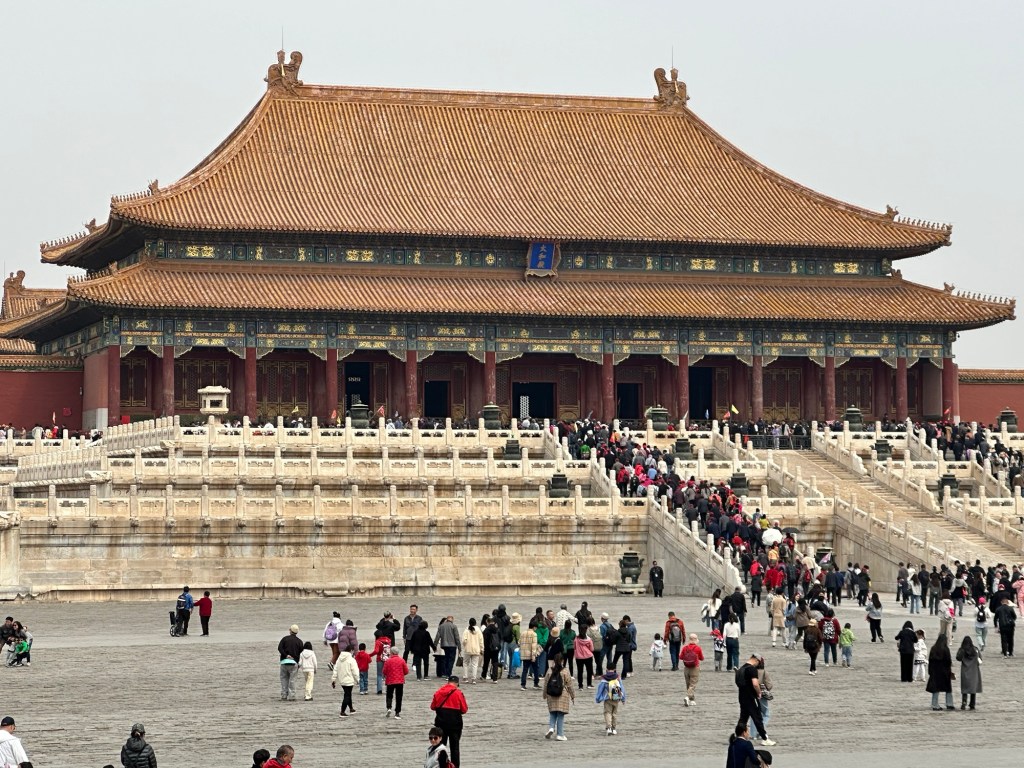
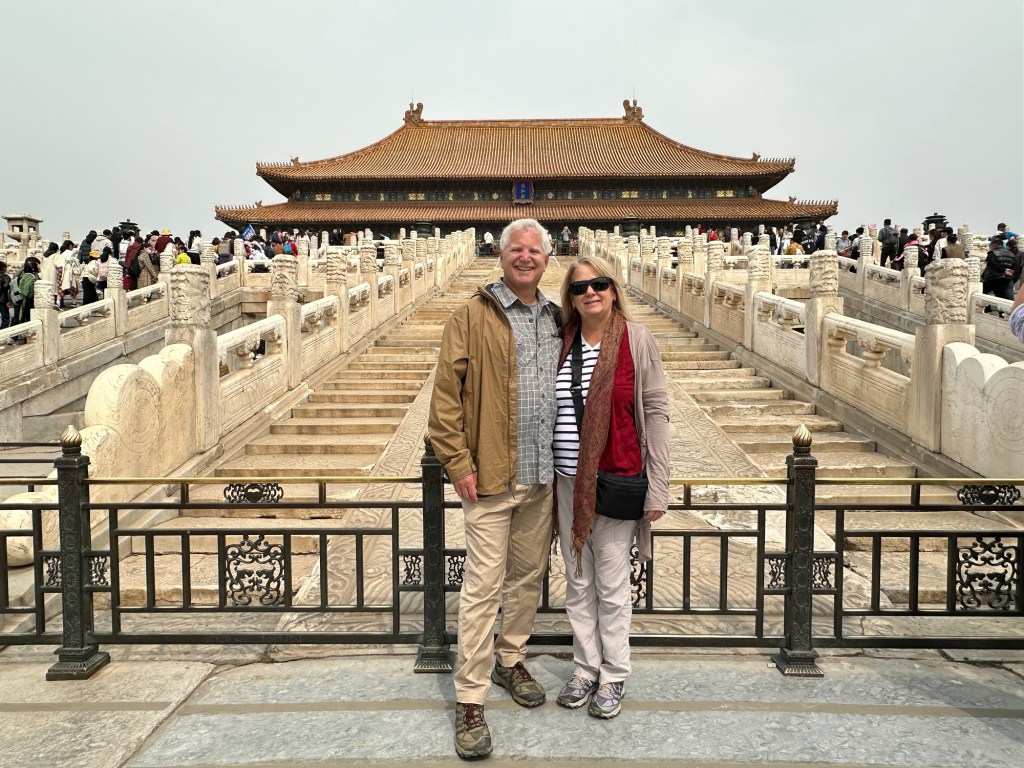
The Forbidden City was built in the first quarter of the 1400’s and served as the home of Chinese Emperors and their families (including their concubines). With over a dozen structures, the city was forbidden to the commoners. Similar to Versailles in France, the last thing royalty wanted to do is let the public see how they lived.
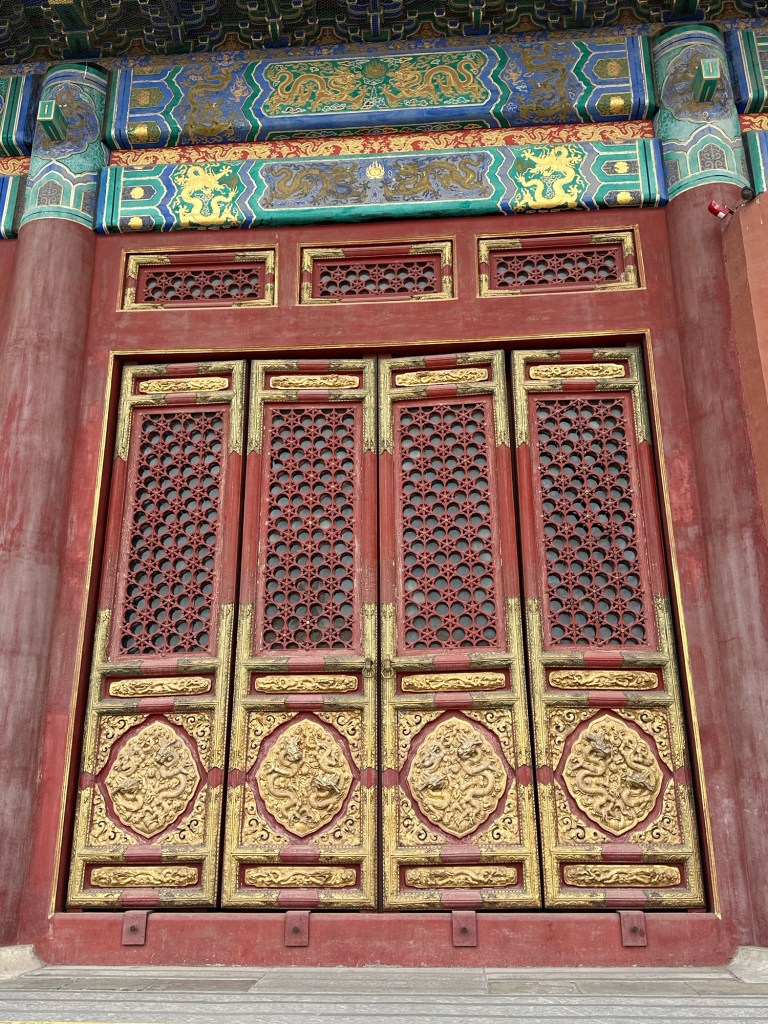
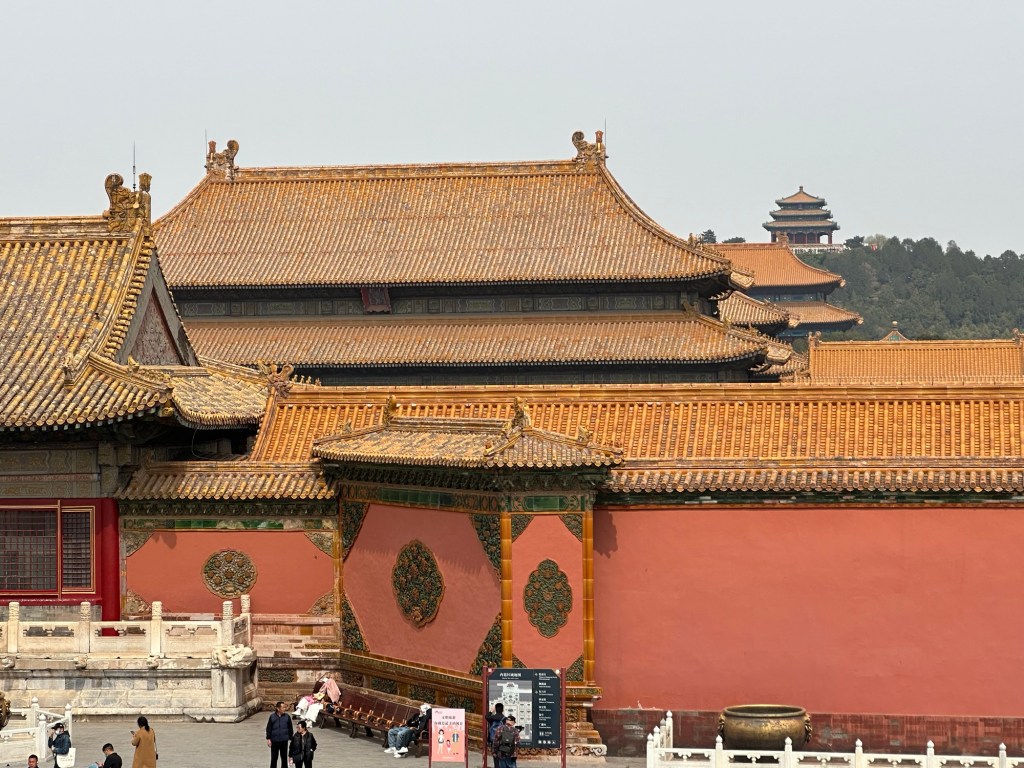
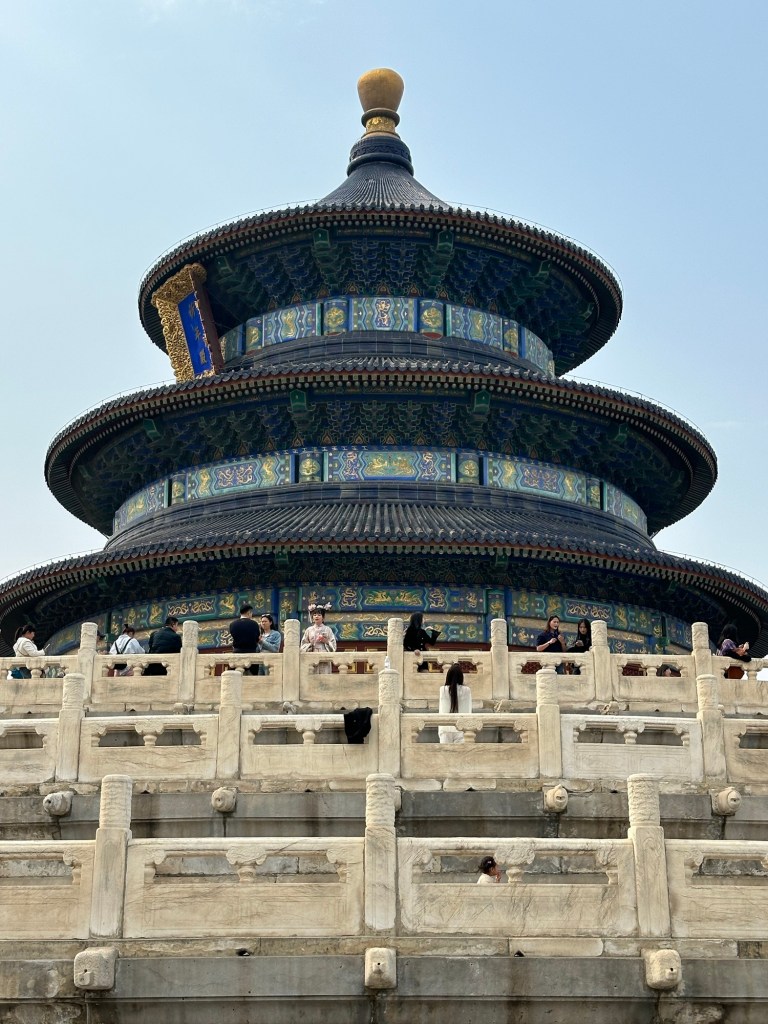
After lunch of traditional local food, we went to the Temple of Heaven — a series of religious buildings that the emperors of the Ming and Qing dynasties visited. By this time, we were losing our attention span.
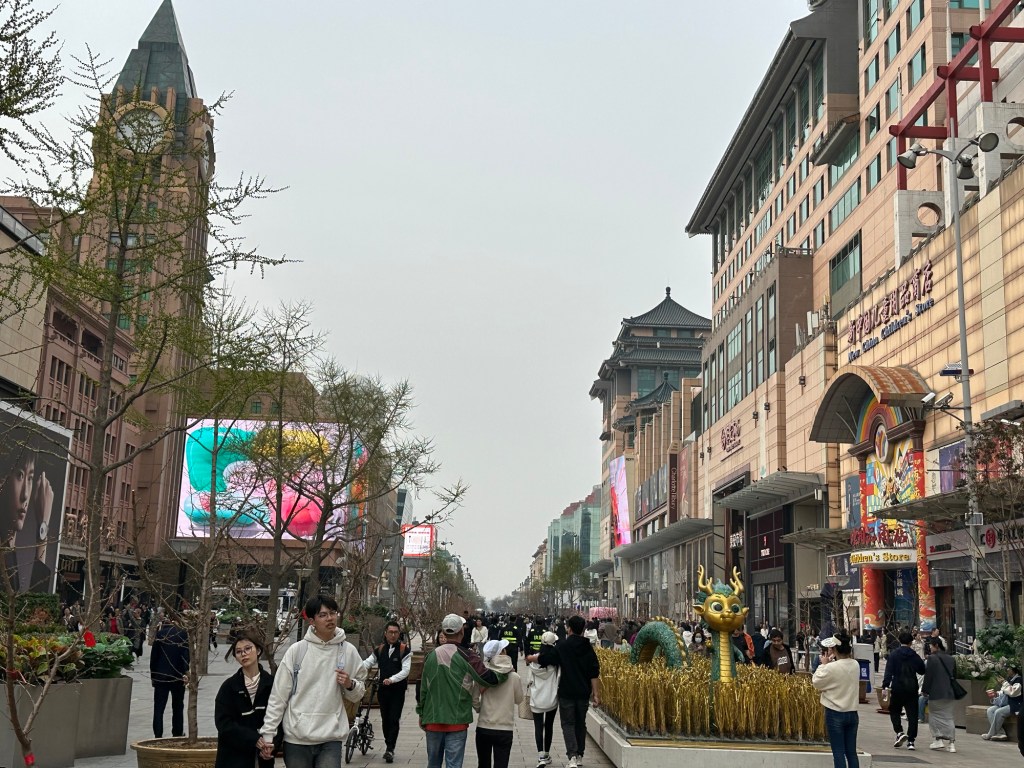
After the Temple of Heaven, we had Yang and the driver drop us off at Wangfujing Avenue. The pedestrian street wound up being a shopping area of designer stores for China’s nuevo riche (or new middle class). We left soon after we arrived and took the subway back to our hotel.
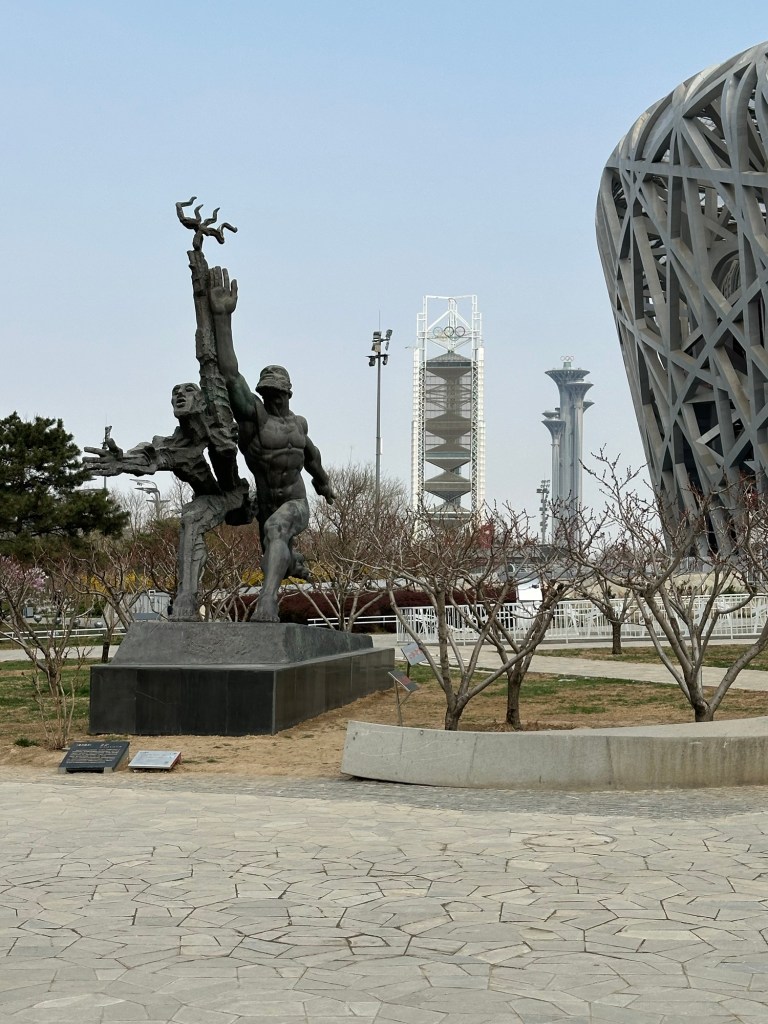
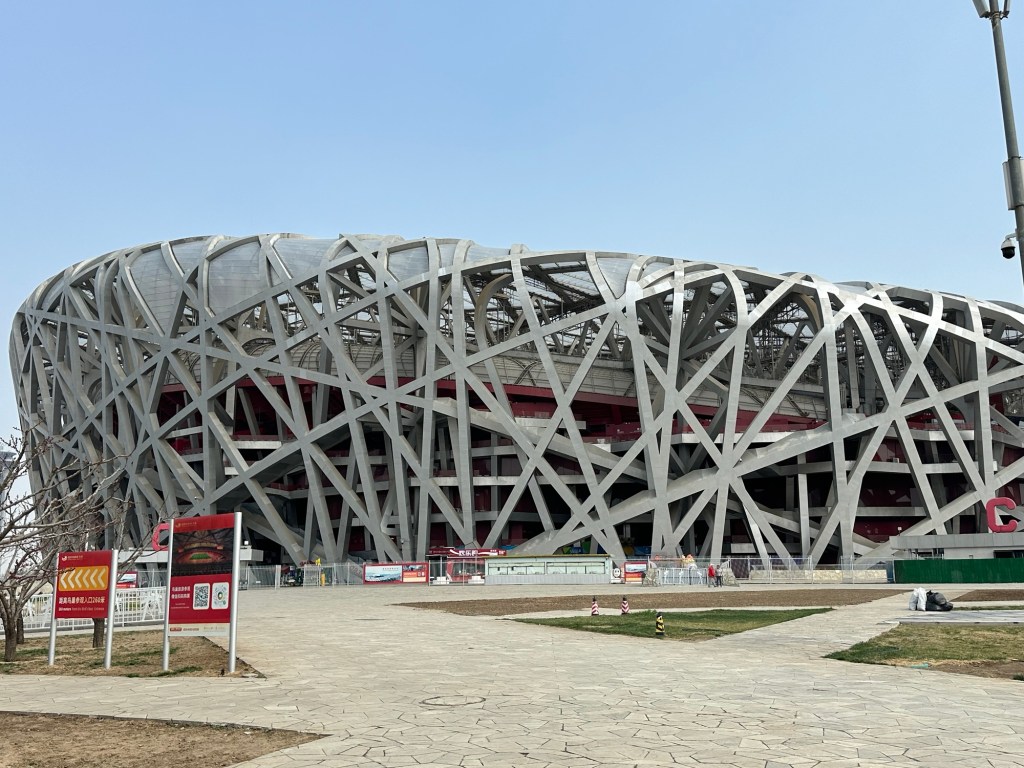
Today we had a couple of hours before we had to leave for the airport. We went to Olympic Park. We walked along a wide pedestrian boulevard past various Olympic venues. I remember the 2008 Summer Olympics in Beijing but I completely forgot they hosted the 2022 Winter Olympics.
You can’t talk about Beijing without talking about the police state and censorship that is everywhere. While Vietnam and Laos are Communist countries, neither is a police state. In Beijing, there are soldiers as well as police stationed in every subway station and nearly every street corner. To get on the subway, you need to walk through a metal detector and get your bags screened. To buy a subway ticket, they ask for identification. When we were visiting sites over the last three days, we had to show our passports constantly. Chinese nationals must scan their identification cards everywhere they go as well, so the government is able to track their movements. There are closed circuit cameras everywhere and security guys with ear pieces standing outside of almost every building.
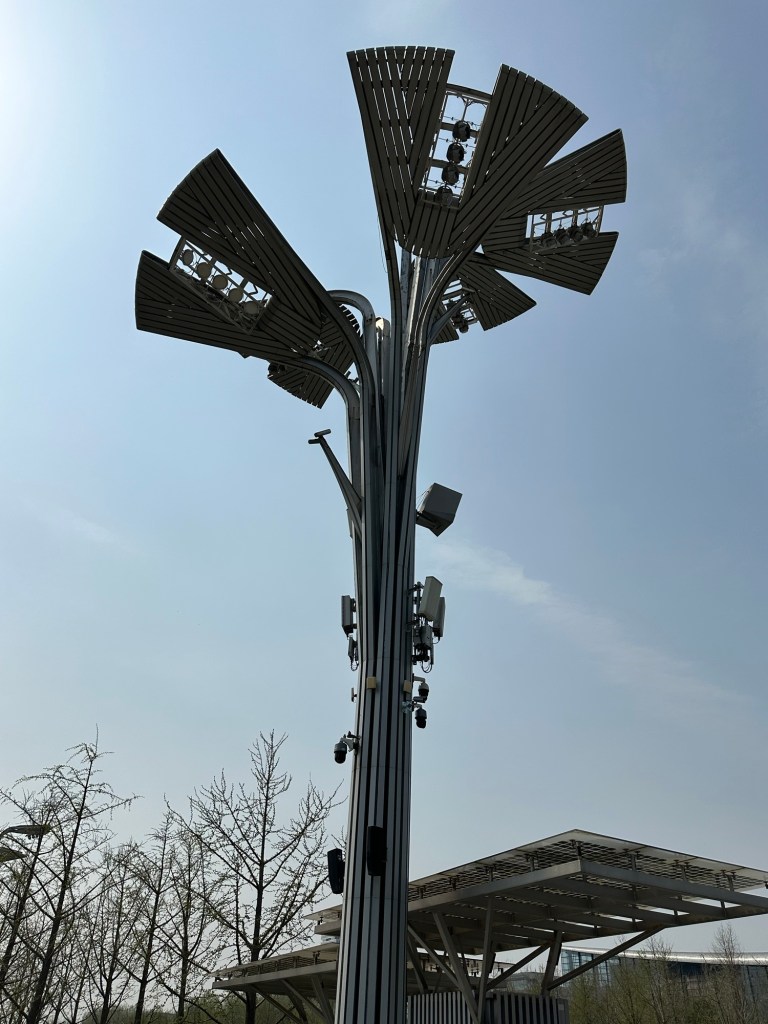
On the censorship side, we had no access to any US newspaper sites, social media and Google search, and Gmail didn’t work. When I tried to download a library ebook on Libby, it was blocked.
While we in the west are familiar with Tiananmen Square because of the 1989 protests and subsequent crackdown by the government, most Chinese citizens are unaware of the events due to government censorship.
Beijing is very clean and we didn’t see any graffiti and we felt safe in regards to personal safety, but having multiple closed circuit cameras and a police presence on every block (and in many places a military presence), is just too much to give up for personal liberties.
In spite of the last four paragraphs, I am glad we came to Beijing. Seeing historic sites, especially the Great Wall was incredibly gratifying. Living in a police state with rampant censorship was also worth experiencing, as I hope we never encounter this in the U.S.

 Traveling Walters